Chapter 23
Between Two Shores
How an old pattern is replaced, stage by stage.
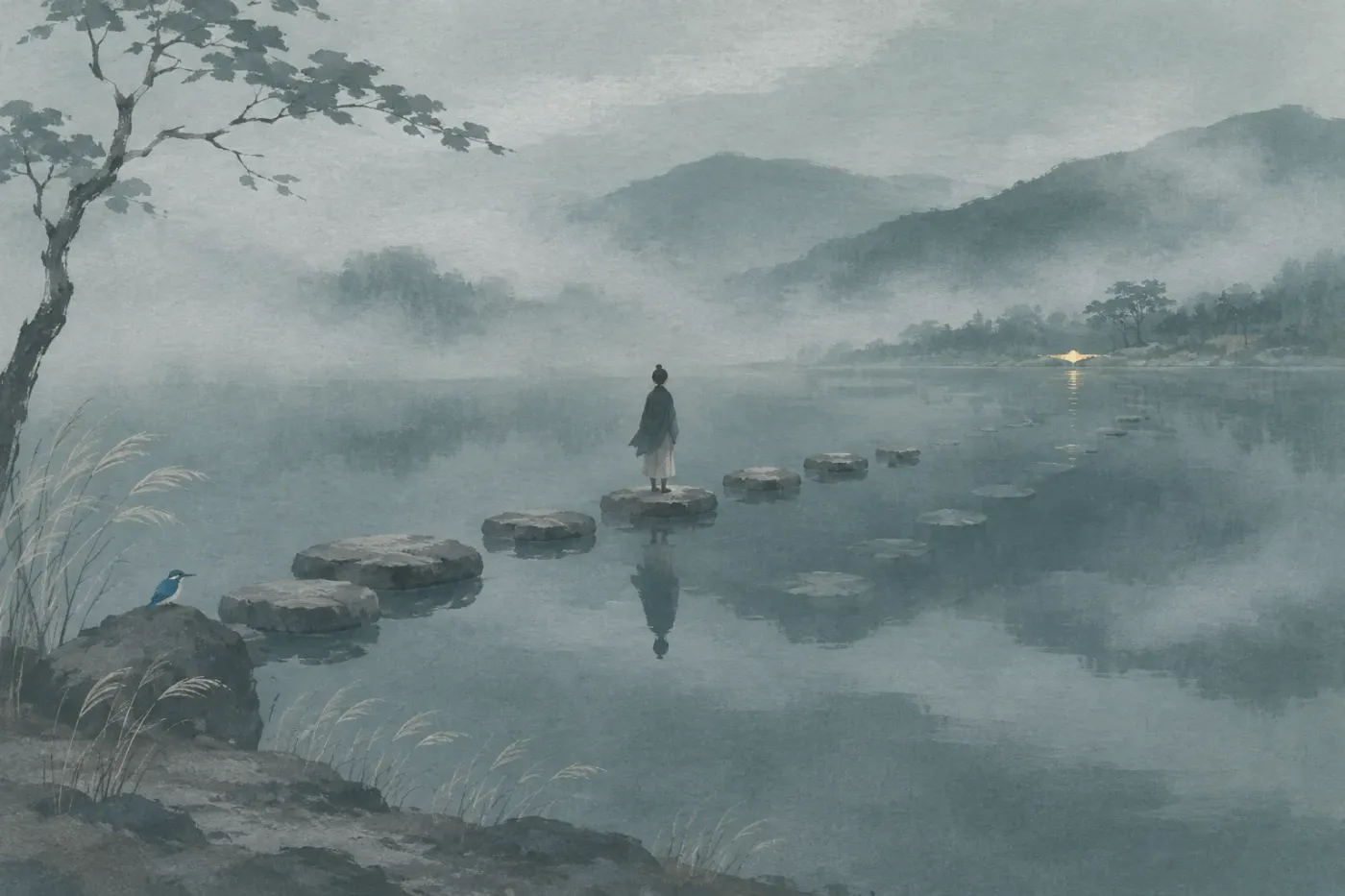
For the first three weeks, Teo felt like he’d found a secret door.
He read every page twice. He caught his old thoughts in the act. He wrote down small wins every evening, and there were many: a parking space, a cheque he’d forgotten about. He told two friends, started waking up early, and felt lighter than he had in years.
Then, somewhere in the fourth week, the light went out.
It wasn’t dramatic. He just felt nothing. The pages he’d underlined looked like any other pages. The practices felt like chores. A bill came that he hadn’t expected, then an argument at work exactly like the arguments he’d had for ten years. One evening he caught himself in the old chair, thinking the old thoughts in the old order, and a voice said, very calmly: See? Nothing has changed. You’re the same as you always were. He nearly believed it.
If you have practised anything in this book for more than a few weeks, you’ve probably met that evening. This chapter is about what it actually is, and about the whole road it sits on, because change has a shape, and once you know it the hard parts stop looking like the end.
A crossing, not a switch

Most of us expect change to work like a switch. Read the right idea, flip it on, and the room is lit. When it doesn’t happen that way, we decide we’ve failed, or the idea was wrong.
But a life isn’t a room with one switch. It is a set of patterns, each one walked so often that the feet find it alone. You learned to brace before opening letters, or to feel small in front of certain people. Those patterns weren’t installed in a day, and they aren’t removed in a day.
Here is the most important thing in this chapter: you don’t remove an old pattern. You replace it. Fighting an old thought only keeps your attention on it, and whatever you attend to, you strengthen. What actually works is quieter and more patient. You choose the new response and you repeat it. Each time you choose it, the new path gets a little more worn and the old one a little more overgrown, until one day your feet take the new path without asking you. You met this in the chapter about the worn path; here we follow the walker over a whole season.
The stages of the crossing
Not everyone meets these stages in this order, and some people pass through one of them in a day and stay in another for months. But nearly everyone meets them, and naming the stage you’re in keeps you from mistaking it for failure.
1. The spark
You see it. Something clicks: the world is answering me. There’s a rush of hope, and small wins seem to appear everywhere. You read late into the night. You want to tell people.
Enjoy it; the spark is real. It isn’t the change itself, though, only the light that lets you see where the stones are.
What to do: start the simple daily practices now, while it’s easy. Segment intending, say, and the evening list of what went well. Habits built in the bright weeks carry you through the grey ones.
2. The wrestling
Now you see the old pattern everywhere, and it seems louder than before. It isn’t louder. You’re simply listening for the first time. Every worried thought and every sharp word to yourself jumps out at you. You might feel tired, or swing between high and low within one afternoon. You may start fighting your thoughts, arguing with each one, and find it exhausting.
What to do: stop fighting. When a dark loop starts, put down what you’re doing, admit the feeling without judging it (I feel awful right now, and I’m letting it be here), and turn to something neutral: a walk, a shower, music, sleep. Aim for relief, not joy. Relief is the next stone. Joy is three stones further on, and trying to leap there is how people fall in.
3. Flat water
This is Teo’s evening. The excitement fades and the practices feel mechanical; even the book gives you nothing. You suspect it has all stopped working.
It hasn’t. Flat water is the most misunderstood stage of all, and one of the best signs you can get. Excitement is what newness feels like. When something stops being new, when it starts becoming part of you, the excitement goes. You don’t feel thrilled about owning shoes; you just wear them.
A closer lookFlat water is the most misunderstood…
Teo’s evening in the old chair felt like the end of everything. The pages meant nothing, the practices felt like chores, and the old voice said nothing has changed. Yet that evening was one of the best things that happened to him, because it meant the newness had worn off, and newness is the one thing a pattern has to lose before it can become yours.
Think about how excitement works. You feel it for the first week in a new flat, the first month in a new city. Then one morning you walk through the door without noticing the door. Nobody concludes the flat has stopped being theirs. They conclude they live there. The same thing happens inside you. When the thrill goes, it can mean the idea has stopped being a visitor and started to be part of the house.
The trap is to read the quiet as failure and then go hunting for the old high. People reread the book looking for the spark, pile on new techniques, or decide the whole thing was a phase. All of that just feeds the story that you’re back where you started.
So do less, and do it plainly. Keep one light practice going even though it feels like nothing: the three lines in the evening, ten seconds at a door. Rest when you’re tired, and don’t add guilt to the rest. Then open your evidence notebook and read the last month back. Flat water is where the ordinary work of settling happens, and it needs you to stay on the stone, not to leap.
What to do: don’t try to manufacture the old feeling. Keep the light practices going, even if they feel flat. Rest when you’re tired, without guilt; guilt is heavier than any missed practice. Read your evidence notebook, and trust the stillness.
4. The test
Usually it comes just before something you care about: a date you’d hoped for, or a result. The old voice returns, loud and persuasive. It’s not coming. Be realistic. Maybe an old situation repeats itself in an almost perfect copy, as if the world were asking: are you sure?
What to do: recognise the test for what it is, the old pattern making its last strong case. Don’t make big fear-driven moves in the middle of it. Don’t keep checking for proof. If you set yourself a date, widen it; that date was always yours to set. Answer the voice lightly rather than seriously (ah, you again) and go back to the feeling of it being settled.
5. First arrivals
Results begin to come. Often not all at once, and not in the order you imagined. Sometimes they’re smaller than you pictured; now and then they come in a shape so different that you almost miss it.
What to do: write every one down. Celebrate the small ones as much as the big ones. And read the shape of what arrives, because it shows you what you still believe. If everything comes with a struggle, look for the belief that says things must be hard and change that sentence; the next arrival tends to come easier.
6. The new normal
This stage is so quiet that most people don’t notice entering it. What used to be a wish becomes simply how things are. You no longer think about the old fear, because it doesn’t come up. The relationship that used to hurt is just a relationship. The money you used to worry about is just money. You stop practising for that part of your life, because there’s nothing left to practise.
What to do: notice it, on purpose, at least once. Look back and remember how it used to be. That memory is the strongest proof you will ever have, and you’ll need it for the next crossing. There is always one: you’ll want new things, the far shore becomes the near shore, and you look up and see another river.
Signs you are moving
On the days when nothing outside seems different, look for these on the inside, because they come first.
- The dark moods are shorter. They still come, but you’re out of them in an hour instead of a week.
- You notice a thought before it becomes a mood, while it is still only a thought.
- You check less. You’ve stopped asking where is it? ten times a day.
- Things you used to want desperately now feel calm, even a little boring. That calm is ownership.
- You laugh at the old voice sometimes, instead of obeying it.
- Small pieces of luck and good timing turn up more often. Take them as nods, not as tests to pass.
- Other people say you seem different before you can see it yourself.
Falling back
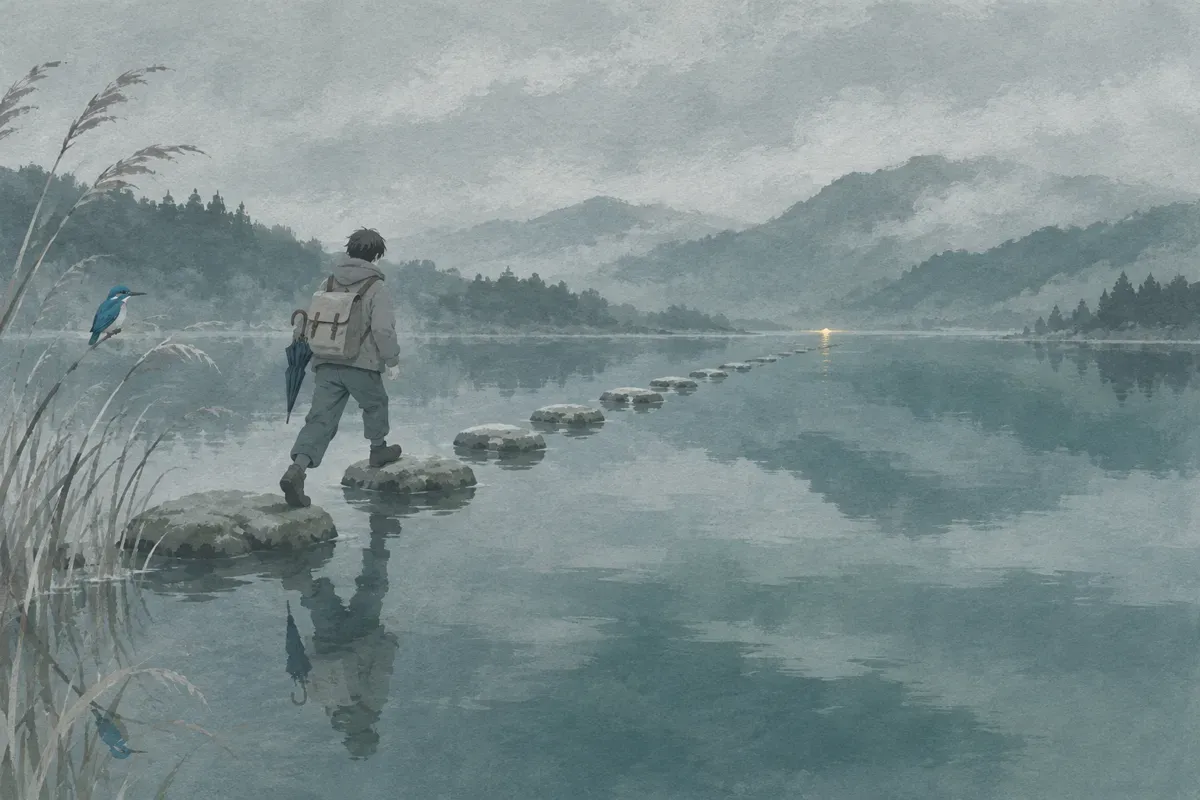
You will fall back. Plan for it, the way a hiker plans for rain.
You’ll have a week where you slip into every old habit at once. You’ll wake up one day and realise you haven’t done a single practice in twenty days, and that you’ve been living in the old house again without noticing you walked back to it. Nearly everyone does this, some of them many times.
A fall is not proof that you never changed. The path you wore is still there; the grass doesn’t grow back over it in a week. And the old self you slipped into isn’t stronger than you, only more familiar.
What matters is not that you never fall. What matters is how quickly you come back. Measure your progress by that. In the beginning a fall might last a month, and later only an afternoon. You’re not aiming for a life without old moments, just one where they are short.
A closer lookWhat matters is not that you…
Most people secretly measure their progress by a clean record. No bad days, no old thoughts, no slipping. By that measure everyone fails, and fails often, so they quit at the first wobble and call it honesty.
The better measure is the length of the fall. A fall that once lasted a month lasts a week. Then an afternoon. Then you catch yourself mid-sentence, laugh at the old voice, and you’re already back. The fall itself never goes to zero, but it keeps shrinking, and the shrinking is the real evidence of change. It’s the same path as before, only you spend less time lost on it.
This changes how a bad week feels from the inside. Instead of I’ve ruined it, you can say this is a fall, and my work now is the return. A return is a small, definite task. It doesn’t need you to understand why you fell, or to be in a good mood, or to feel any belief at all. It needs one breath, one kind sentence to yourself, one tiny practice.
Notice also that the path you wore doesn’t disappear while you’re away. The grass doesn’t grow back in a week. The old self you slipped into is not stronger than you, only more familiar. It looks big because you’ve stood in it for years.
Next time you fall, start a clock without judging it. Write down the day you noticed, and the day you were back. Over a season, watch that number shrink. That list is the proof you’ve been waiting for.
When you notice you’ve fallen:
- Name it, kindly. That’s the old program. It isn’t me.
- Ask yourself one question: How would it feel if the thing I want were already settled? Find that feeling, even faintly.
- Breathe out slowly and let your shoulders drop.
- Do one small practice today. Only one. An evening list with three lines is enough.
- Begin again tomorrow as if the fall hadn’t happened. Every moment is a clean start, and a few dark days don’t lock your future.
Don’t add a second fall on top of the first by punishing yourself; guilt is just the old pattern in a different coat.
The gap between inside and outside
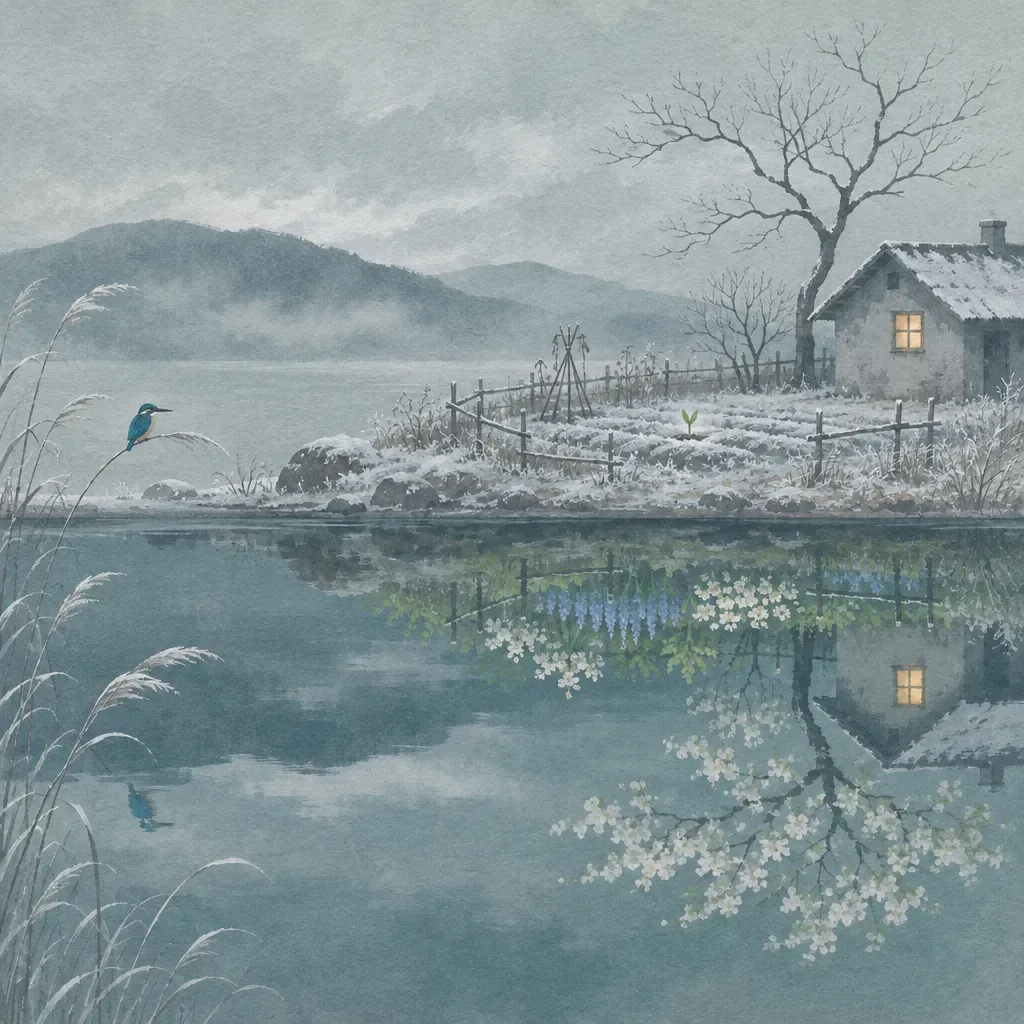
Here is the part that tests people most: you change inside before anything changes outside.
A closer lookyou change inside before anything changes…
There is a stretch of every crossing that tests people more than any wobbling stone. You wake up calm about money, or gentle with yourself, or quietly sure of something that used to frighten you. The far shore has been reached inside. And then you look at the bank account, the job, the person who is still distant, and it all looks exactly as it did.
It’s tempting to trust the outside and decide the inside was wishful thinking. But you are looking at light that left its source a while ago. What you see around you was sent by the person you used to be. The new you has sent new light already, and it hasn’t landed yet. If you judge by the old light, you’ll always feel behind.
This is why the inner signs matter so much, and why they’re worth writing down with dates. The dark mood that lasts an hour instead of a week. The worry you caught while it was still only a thought. The thing you wanted desperately that now feels calm, even slightly dull. Those are the first results, and they’re real. They also come before the others in nearly every case.
During the gap, two things help. First, leave the seed alone. Digging it up each morning to check on the root only disturbs it. Second, don’t hand the world a deadline. If your timeframe is making you tense, widen it until it feels easy.
Tonight, write three inner changes from the last month, with dates. Read them whenever the outside looks unchanged. They’re your proof that the crossing is underway.
The inner crossing happens first. One morning you realise you’re calm about money, or quietly certain about something that used to frighten you. The far shore has been reached inside. And yet the bank account looks the same, and the person is still distant.
Remember the chapter about old light. What you see around you now was sent by the person you used to be. The new you has already sent new light, but it takes time to arrive. If you judge your change by the old light, you’ll always think you’re behind.
So during this gap:
- Don’t dig up the seed. Checking every day whether it has sprouted only disturbs the root. Water it and leave it alone.
- Keep your evidence notebook open. The inner changes are evidence too, so write them down with dates.
- Don’t set the outer world a deadline. You set the timeframe in your own mind; if it’s making you anxious, make it wider instead of fighting it.
- Act when you feel inspired and light. Wait when you feel tight and urgent. A fearful action taken to force a result usually carries the old pattern straight back in.
The gap closes, and when it does it often closes faster than you expected, as if the world had been preparing behind a curtain and only now drew it open.
The new normal
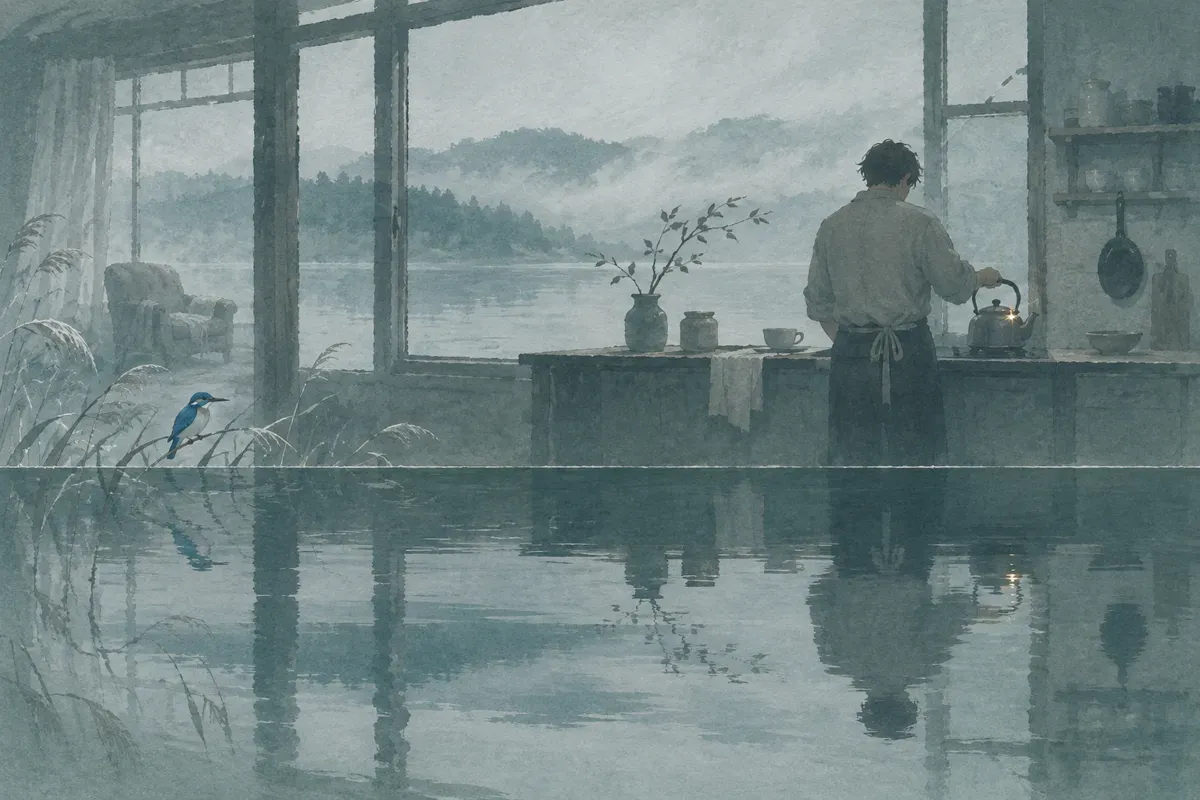
A year later, Teo can’t quite remember the evening in the old chair.
He remembers it existed. He remembers he almost quit. But the man who sat in that chair now feels like someone he used to know. The arguments at work stopped, not because he won them, but because he stopped walking into the room ready for one. The money is calmer. He wakes up mostly in a good mood and doesn’t think it remarkable.
That’s what arrival feels like. There are no fireworks and no raised arms on the far shore, only an ordinary morning in which you notice, with a small surprise, that you live here now.
And then, because you’re alive and the dreamer always dreams forward, you see another river. Something new to want, another old pattern to replace. This time you know the shape of it. You know about the wobbling stone, the flat water, the test, the gap. You step onto the first stone without fear, because you’ve crossed before.
Today, find out which stone you are standing on. Then take only the next step.