Chapter 25
Coming Home
You were never far.
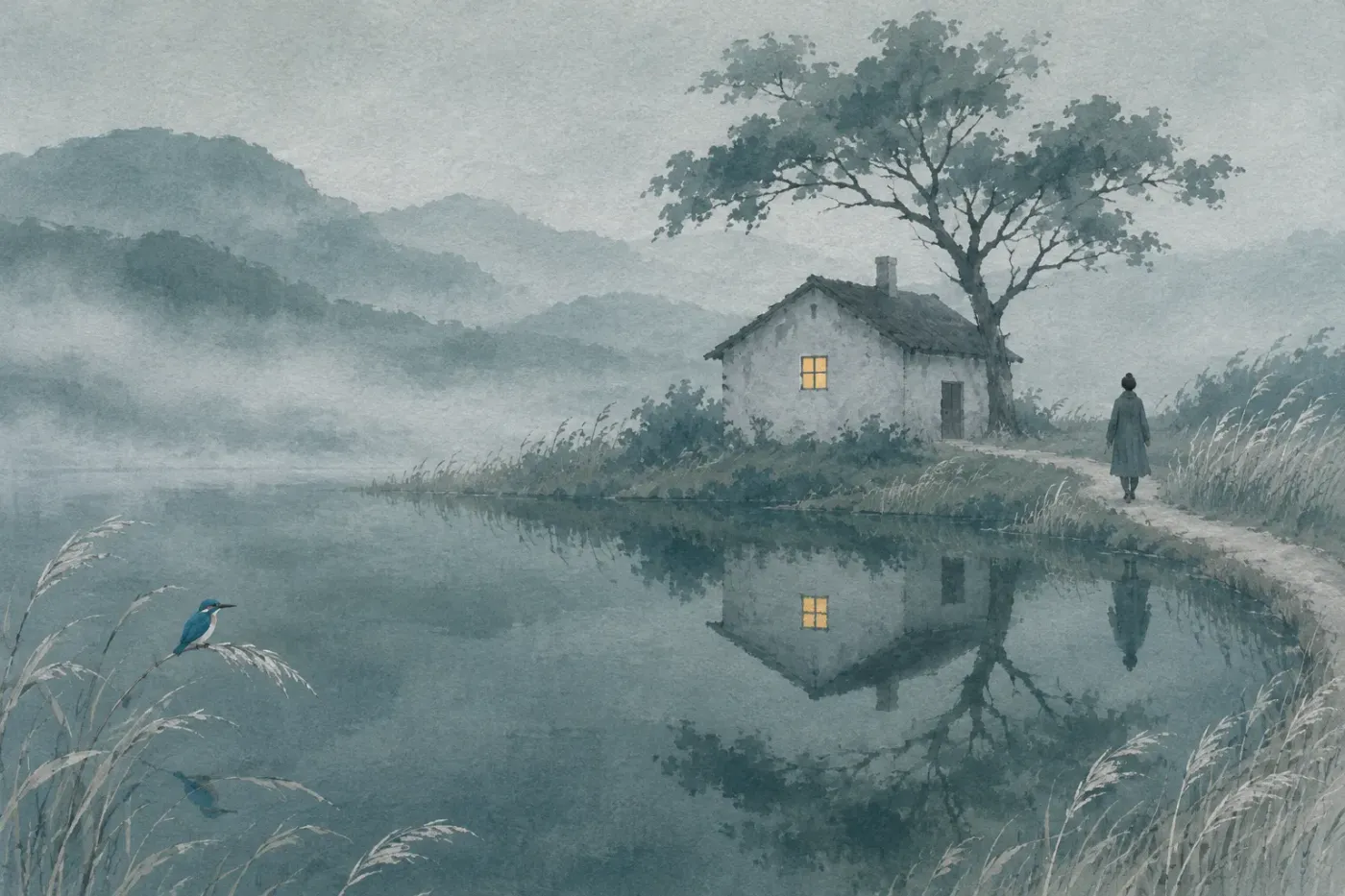
When you were small, perhaps someone used to leave a light on for you.
A lamp in the window, or the light over the front door, burning late into the evening. You could see it from the end of the street, coming home in the dark. Before you reached the door, before anyone opened it, you already knew: someone is waiting. I belong here.
The light didn’t make you come home. It simply told you that home was there, and had been there the whole time you were away. This book has been that kind of light.
The long way round
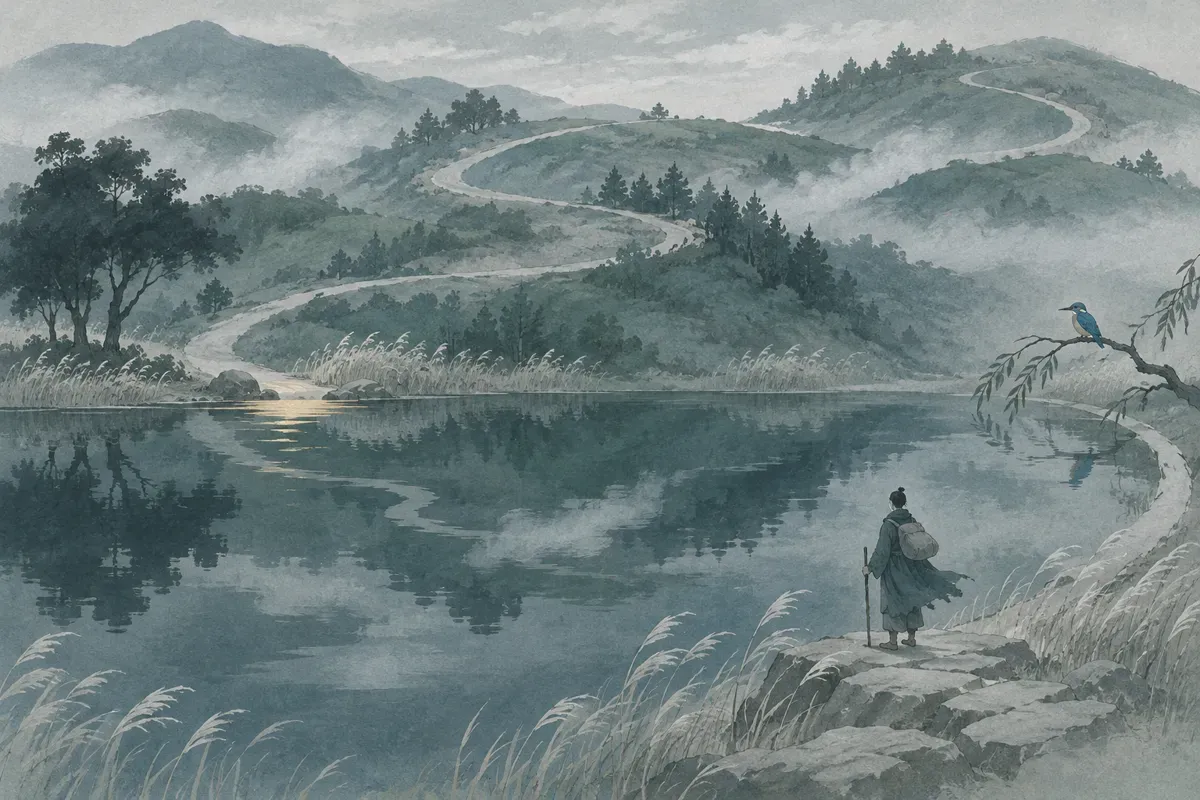
Look back at the road you’ve travelled in these pages.
You began in front of a mirror, waiting for your reflection to smile first. You learned that it never would, because the world doesn’t happen to you but answers you, and always answers second.
You remembered who was standing in front of the glass: not a small person in a big world, but the dreamer, the awareness in which the whole world appears.
You learned to read what the mirror reads: not your wishes but your quiet assumptions. You found the compass in your chest and the contracts you signed before you could read, and you met the voice that narrates your days. You learned to live from the end and to rehearse in the dark.
You learned about the echo and its silence, about old light from old selves, about the worn path in the grass, about maps drawn from yesterday, about the open hand.
You took back your pen and your crowns. You learned to say thank you first and to give with open hands. You began casting the people in your life in kinder roles.
Worry, you learned, is only weather, and your life is an unwritten page; purpose turned out to be a thread you follow, not a puzzle you solve.
You learned to stop at each door and choose the next ten seconds, and to cross the river one stone at a time without mistaking the middle for the end. By the last pages you were meeting your own doubts with answers instead of fear.
Every one of these was a different window in the same house, and now you can see what they were all showing you.
What you were looking for
The love you wanted was the love you’re able to give, and the peace you looked for was the sky behind your weather. The abundance was the river you are. Even the success turned out to be the thread you were always holding. Everything you searched for in the mirror was simply you, reflected, waiting for you to stand in front of it as yourself.
You weren’t looking for a better world. You were looking for yourself in it.
A closer lookYou weren't looking for a better…
Think of all the places you have looked for the thing you wanted. The next job, the next city, the next person, the next version of the year. Each time the search carried a promise: when I find it, I will finally feel at home. And each time, for a while, you did. Then the feeling thinned, and you started looking again.
This sentence names what was happening. The search was real, but the address was wrong. You were looking for peace in the circumstances, and peace was never stored there. You were looking for love in the reflection, and love was the thing you were doing in front of it.
That does not make the world unimportant. Better rooms, better work and better company are all welcome. They simply cannot give you the one thing you were asking of them, which is yourself. That, you already have.
The shift can happen in an ordinary moment. You are washing a cup. Nothing has changed outside. And you notice a small, steady feeling: I am here. I am enough for this. There is nowhere I need to be. That is what you have been travelling toward. It does not arrive with a fanfare. It arrives quietly, like a light you realise has been on all along.
Here is something to do with it. Choose one thing you are still waiting for before you will feel complete. Write: “When I have ___, I’ll feel ___.” Then close your eyes, find that feeling in your chest right now, and stay there for a minute. Then go and pursue the thing as someone who is already home.
You have never been far. You were looking for yourself, in a world that kept showing you the way.
That is what coming home means: not arriving somewhere new, but recognising where you’ve always been.
The days you forget
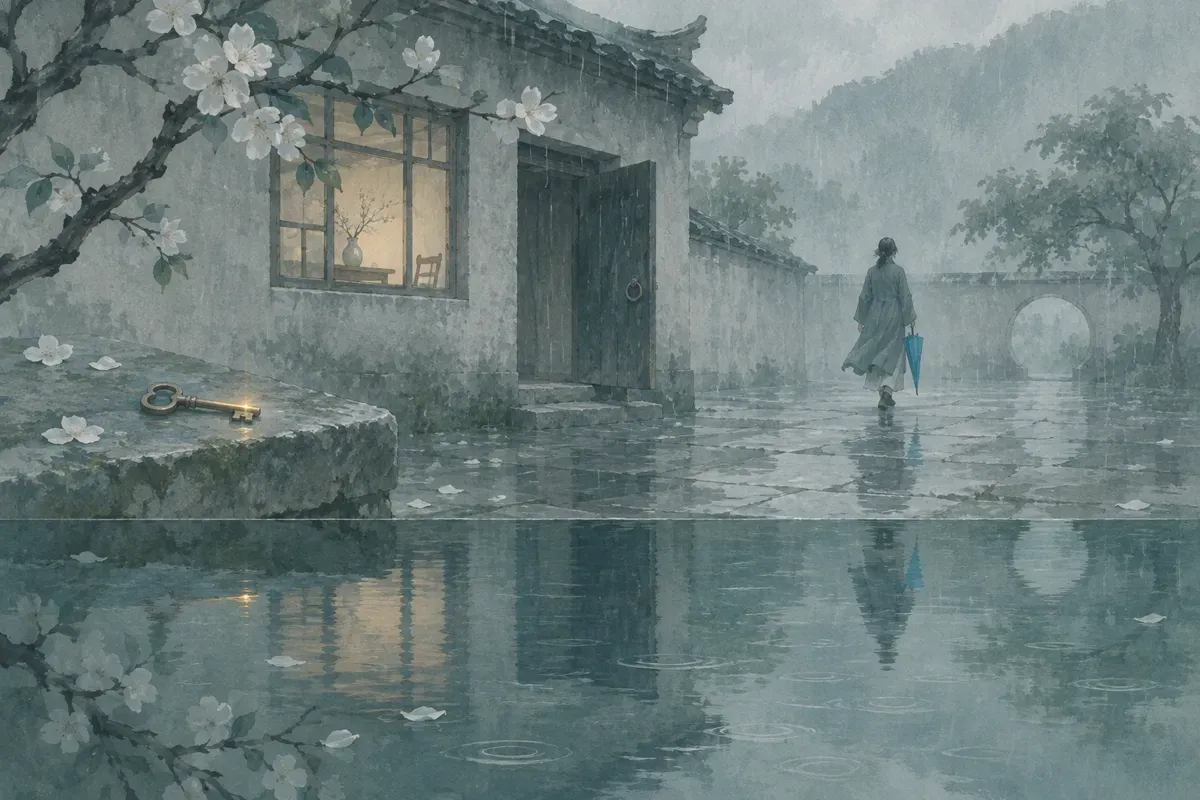
Here’s something you need to know, so it doesn’t frighten you: you will forget.
There will be days, maybe weeks, when you’re back in the old room, waiting for the reflection to go first. You’ll worry at three in the morning, or blame someone, and you’ll hear the old radio in the kitchen and sing along without noticing.
This is not failure. It’s part of the game. Remember the child behind the curtain? Forgetting and remembering is the rhythm of being human. Each time you forget and then come back, the way home gets shorter. You’ll notice sooner, and you’ll smile at yourself sooner.
A closer lookThis is not failure
Of all the sentences in the final chapter, these three words may be the ones you need most on a difficult Tuesday.
You will forget. That is not a threat; it is a promise made kindly in advance. You will have a day of snapping at someone, or going round in the old worry, or waiting for the world to apologise. You will catch yourself in the old room, with the old radio playing, and for a moment you will feel the old shame: after everything, here I am again.
That sentence, after everything, here I am again, is the only real danger. Not the forgetting, but the scolding that follows it. The scolding adds a second storm, and from inside a second storm it is hard to remember the light.
So decide now what you will do on that day. Perhaps you say, out loud, “Ah. I forgot. Welcome back.” Perhaps you smile, the way you would at a child who wandered into the wrong room. Then you do the simplest thing in the book: go first. Pick one feeling you would like to see in your life and be it, for one small act. Speak kindly to someone. Breathe out slowly. Say thank you.
Each return teaches you the route. The distance between forgetting and remembering gets shorter, until some day you notice you have remembered before you finished forgetting.
This is not failure. It is how a person learns to live at home: by leaving, and noticing, and coming back, a little more gently every time.
A closer lookEach time you forget and then…
Imagine a path across a field. The first time you walk it, you push through tall grass and lose your footing. The tenth time, there is a faint track. The hundredth time, you hardly think about it, your feet know. Nobody built that path. It was made by returning.
Your way home is built the same way. Every time you notice you have drifted into the old story and gently step back into the new one, you are treading the track a little firmer. It does not matter how many times you wandered. What matters is that you came back, and that the coming back was kind.
You can speed the track with small markers. Choose one gesture that means “I’m home”: a hand on your chest, a slow breath out, a line like I go first. Use it often, on easy days, so that on hard days your body knows where to go. Put a note where you will see it. Pick a time of day, perhaps the evening, to ask: where did I wander today, and where did I return? The answer is not an accusation. It is a map of your own path.
You can also count the returns instead of the lapses. At the end of the week, write down three moments when you noticed yourself and came back. Let those be the story you tell about the week.
The road home was never long. It only felt long when you thought you had to walk it without noticing you were already on it.
When you notice you’ve wandered, don’t scold yourself. Just do the simplest thing in this book. Go first. Choose one feeling, right now, that you’d like to see in your world, and be it. That’s the way home, and it always will be.
A simple way to live
If you take only a little from this book into your days, take this:
Every morning, before the world speaks to you, decide who you’ll be. Choose your state the way you’d choose your clothes.
Through the day, check your compass. When it points away, turn gently toward the next better thought.
Listen for your inner voice, and speak to yourself like someone you love.
When circumstances shout, remember they’re old light. Respond to them, but don’t take orders from them.
Hold what you want in an open hand, and thank life for it before it comes. Give what you’d like more of.
Cast the people around you in their best roles.
And at night, rewrite what hurt, rehearse what you want, and fall asleep inside the scene where it’s already done.
That’s all: not a system to master, just a way of standing in front of the mirror.
The smile
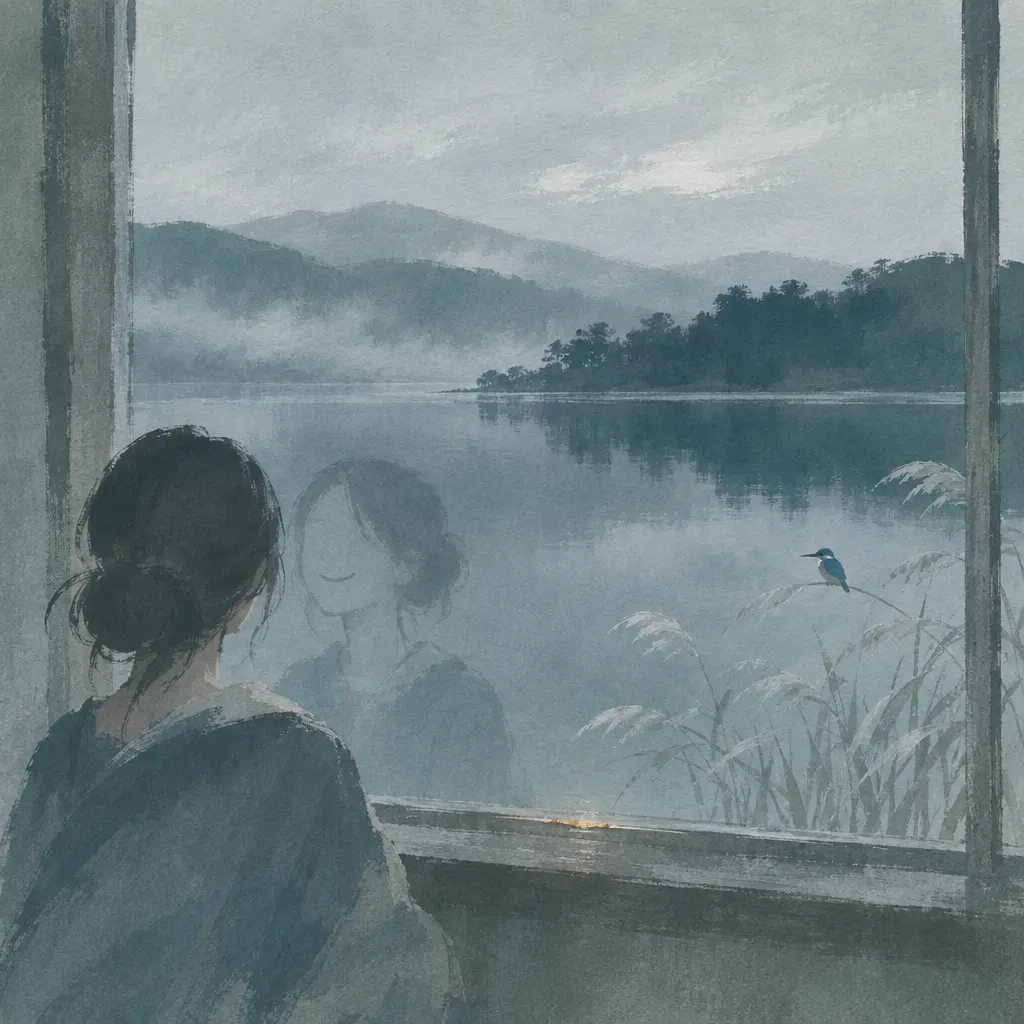
Come back now to where we began.
Stand in front of the mirror, not the bathroom mirror but the great, living mirror of your life: the people and the streets, the morning light, the work, the money, the strangers at the bus stop.
You know now that it won’t smile first, and you’ve found that you don’t mind. You’re not waiting anymore.
So you smile, not to get something back but simply because you’re home, and you’re glad, and there’s nothing else you’d rather put in front of the glass.
And across the whole wide world, quietly and without a moment’s hesitation,
it smiles back.
Welcome home. Go first, and let the world answer.