Chapter 1
You Go First
Nothing happens to you. Everything answers you.
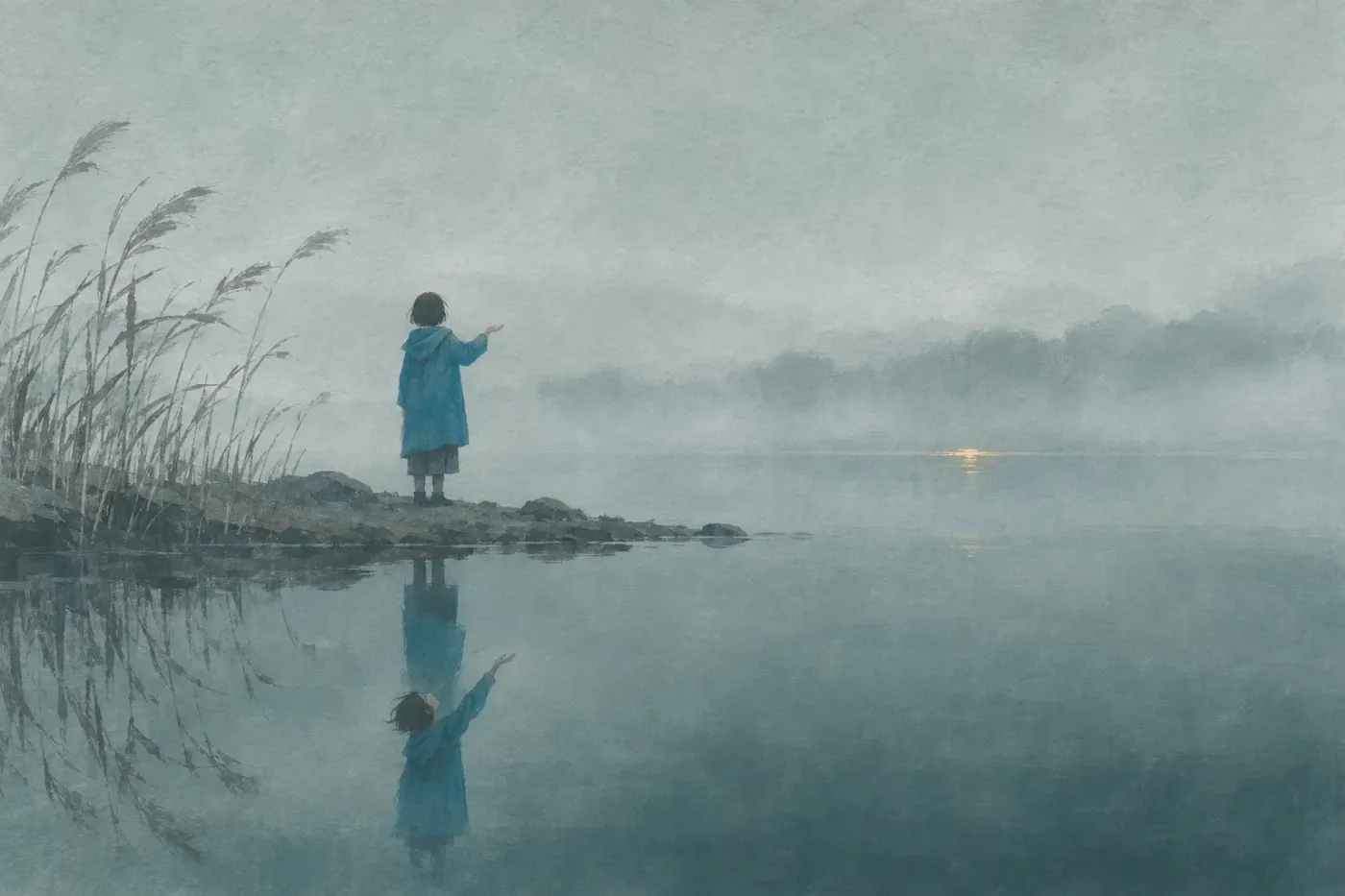
It is a quarter past seven on an ordinary Tuesday. A woman stands at a bus stop with her coat buttoned wrong. She overslept and spilled the coffee, and somewhere between the kitchen and the door she decided that today was going to be one of those days.
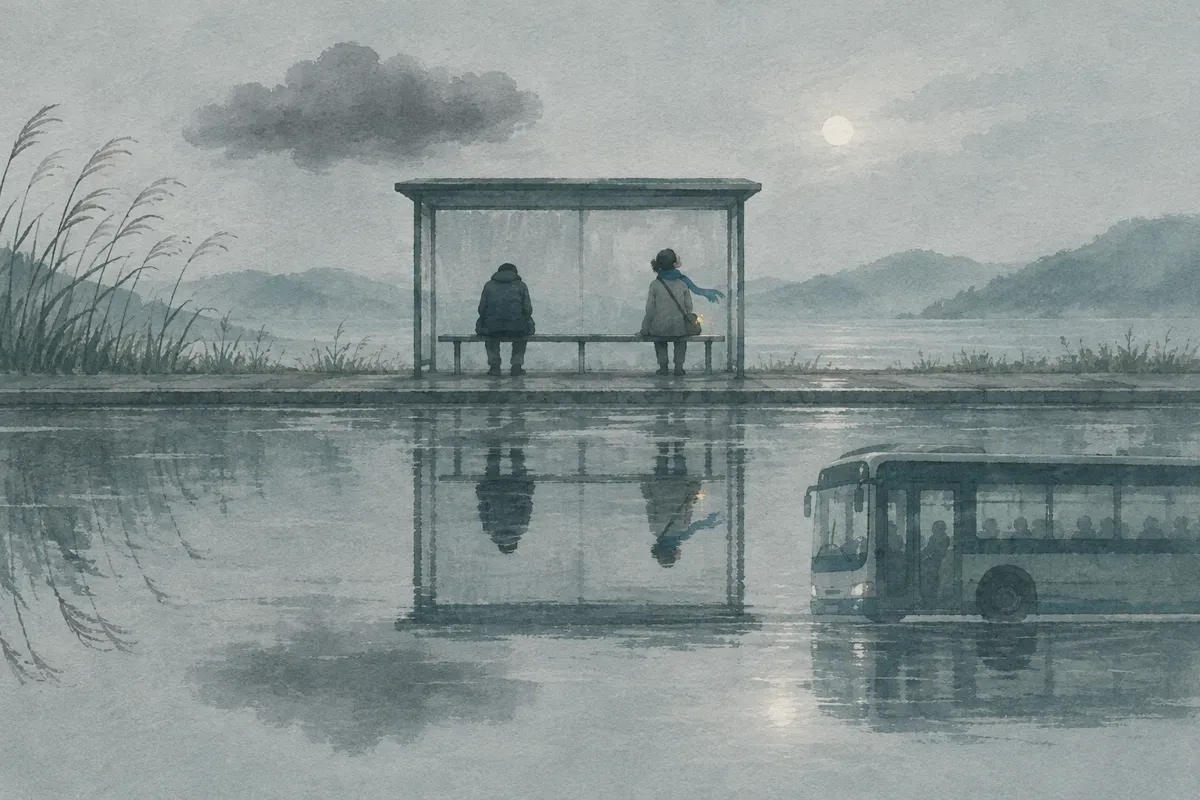
The bus comes late. The driver is curt. The seat she wants is taken. At work, the email she dreaded is waiting at the top of her inbox. By noon she has a story, and the story is airtight: the world is against me today.
Across the street, at the same stop, a man is waiting for the same bus. It is late for him too. He shrugs, turns his face to the thin October sun, and thinks about nothing in particular. When the bus comes, the driver nods at him. A seat by the window opens up at the second stop. Later, a colleague he barely knows brings him a pastry for no reason at all. The two of them waited at the same stop for the same late bus, and spent the day in different worlds.
You have been taught to explain this with luck, mood, coincidence, or the hidden moods of bus drivers. I want to offer you a simpler explanation, and a far more dangerous one. Dangerous, because once you see it, you can never again pretend that you are a spectator in your own life.
The world is not happening to you. It is answering you.
A closer lookThe world is not happening to…
Read the sentence slowly, because it moves the whole centre of your life.
If the world is happening to you, then you are a leaf in the wind. Your job is to brace, to predict, to protect yourself, and to hope the wind is kind today. Every morning becomes a weather report you have no say in, and most people live exactly like this and call it being realistic.
If the world is answering you, everything turns around. An answer needs a question first. That means something in you always speaks before anything out there responds. Your mood at the bus stop, the conclusion you drew in the kitchen, the quiet sentence “today is going to be one of those days”: these are not reactions to the day. They are the question the day is answering.
This is not a small shift in attitude. It is a change of address, from the receiving end of life to the sending end, and it happens the moment you stop waiting. From there, a bad morning is no longer a verdict; it is information. It tells you what you have been sending. And anything you have been sending, you can stop sending.
Notice also what the sentence does not say. It doesn’t say the world is against you, and it doesn’t say the world is for you. It says the world is responsive, which is a different thing altogether. It is neither your enemy nor your parent. It is your echo. That is a far greater freedom than having a kind world. A kind world could change its mind. A responsive world can’t. It will always answer, and it will always answer you.
The mirror never moves first
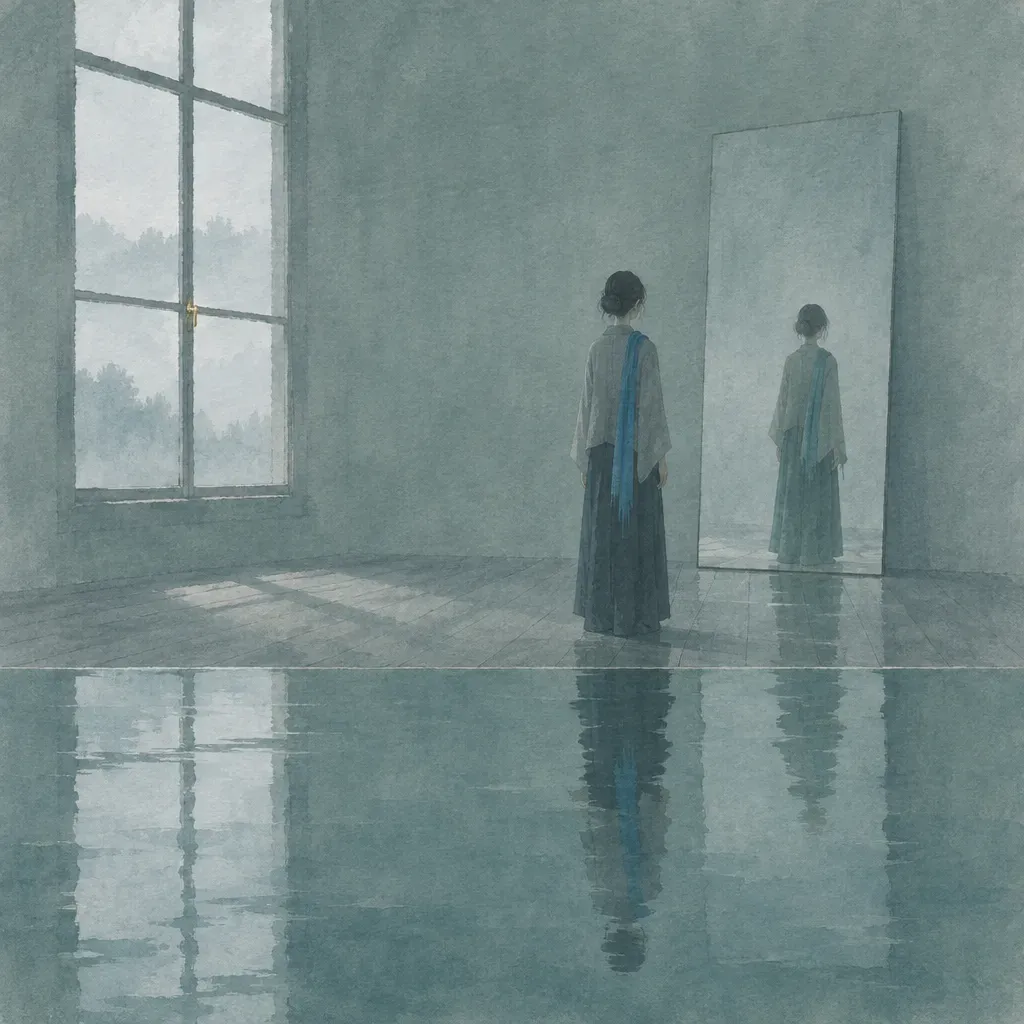
Stand in front of a mirror and wait for your reflection to smile.
Wait as long as you like. Pray, if you want to, and bring the most sincere and deserving heart in the world. The reflection will not smile, and it isn’t being cruel or punishing you for something you did. It will not smile because a reflection cannot move first. It has never moved first. It never will.
A closer lookIt will not smile because a…
Here is the trap almost everyone lives in, and it is worth seeing clearly so you can step out of it.
We wait for the reflection to move first. We say, quite reasonably, “Show me a reason and I’ll feel better.” Show me the money and I’ll stop worrying. Show me that they love me and I’ll open up. Show me that it’s safe and I’ll relax. It sounds like common sense. It is a request the mirror cannot fulfil.
Think about what you are asking: that the reflection change while you stay exactly the same, standing before the glass, worried, hoping it will show you someone who isn’t worried. The mirror, being honest, shows you the worried person asking, and then you take that as proof that you were right to worry, and the circle closes.
The way out is not to try harder, or to wait longer, or to deserve more, but to accept the one rule that has never had an exception: the image follows the source. Not sometimes. Always.
This rule can feel strict at first, almost unfair, but in time it becomes the most comforting thing you know, because it means you never have to wait for anyone. You never have to win the lottery of circumstances. You never have to persuade the world to be different. You can begin, right now, with nothing but yourself, because yourself is the only thing the mirror has ever been looking at.
The moment you smile, it smiles, and it never stops to ask whether you have earned it.
This is the first and the last idea of this book. Everything else is just this idea, seen from another angle.
Most of us live our whole lives waiting for the reflection to go first. When I have more money, I’ll relax. When they apologise, I’ll soften. When I’m loved, I’ll feel lovable. When life gets easier, I’ll be at peace. We stand before the glass, arms crossed, waiting for it to show us a reason to smile. And the mirror, faithful as ever, shows us a person with crossed arms, waiting.
The reflection is not the problem. It is the proof.
Why it doesn’t feel like a mirror
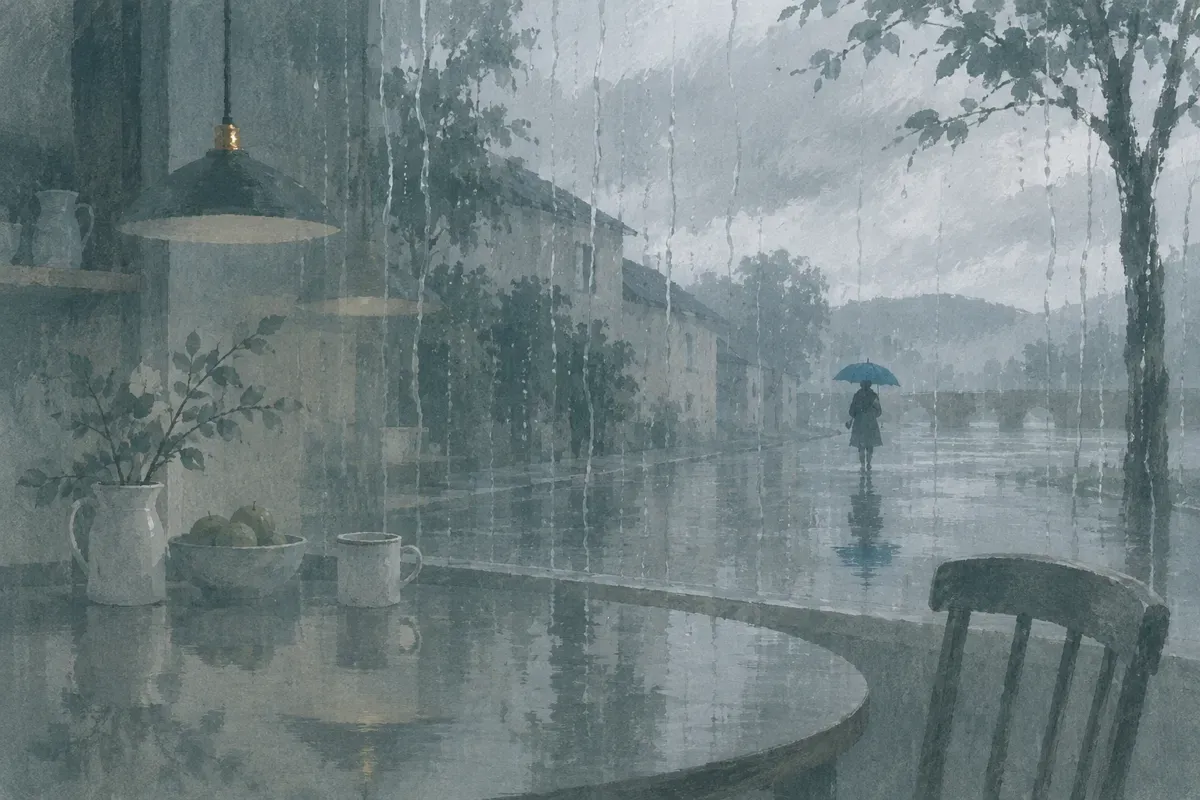
If life is a mirror, why does it feel so solid? Why does it seem to push back and surprise you?
Because it is very good at what it does. A bathroom mirror reflects you in a fraction of a second, in one flat image. Life reflects you through thousands of faces, through weather and timing, through prices and phone calls, through the words a stranger happens to say in a queue. It reflects you in three dimensions and with a delay. And because the delay is there, you rarely connect the image to its source. You frowned on Monday. The frown came back on Thursday wearing a different face, and you didn’t recognise it as your own.
So you called it bad luck, or other people, when all along it was you, coming back.
What exactly does it reflect?
It doesn’t reflect your words or your wishes, or the version of you that you post online.
The mirror reflects what you are being: the state you live in, and the assumptions under your days that you hold as obviously true. You can say “I am grateful” through clenched teeth, and the mirror will reflect the clenched teeth. You can say nothing at all and simply be at ease, and the mirror will find a thousand ways to agree with your ease.
This is why so many people try “positive thinking” and give up. They paint a smile on the glass with a marker and wonder why the reflection doesn’t change, when the only thing that has ever changed a reflection is the person standing in front of it.
The good news is hidden right there. If the mirror only reflects what you are being, then you never need anything from the outside to begin. You don’t need permission. You don’t need a better boss, a kinder partner, a different country or a fatter bank account. You need one thing that is always within reach: a decision about who stands in front of the glass.
You go first

Here is the whole practice, and it is simpler than anything you have tried:
Whatever you want to see, be it first.
If you want to be respected, respect yourself first, in the way you speak about yourself and in the promises you keep to yourself. If you want abundance, feel rich first, in small and honest ways: the warm water in the shower, the friend who still answers your calls. Peace works the same way. You can choose it right here, halfway through this paragraph, before anything outside agrees.
It will feel backwards. Every instinct you were raised with says: first the evidence, then the feeling. First the money, then the relief. First the love, then the confidence. That is the order the whole world seems to run on. It is also the order of the reflection, and the reflection is always late.
The order of the source is the reverse: first the feeling, then the evidence. First you stand differently, then the image catches up. You don’t have to force it; a mirror has no way to refuse.
A closer lookThe order of the source is…
This is the most counterintuitive line in the chapter, and the one everything depends on.
Your whole life has trained you in the opposite order, and so you hardly notice it. A child gets the gift, then feels happy. An adult gets the payment, then feels relief. The evidence comes, the feeling follows. We assume this is simply how feelings work: they are the receipt for something that happened.
But look closer at your own experience. Have you ever felt deeply safe in a moment when nothing outside had changed? Have you ever been happy for no reason, sitting on a step in the sun? Those moments prove that feelings don’t actually need evidence, that they can arise first, and you have done it before without even trying.
The mirror principle asks you to do it on purpose. Feel the relief before the payment. Feel the love before the message. Not as a pretence, and not by fighting what you feel right now, but by gently reaching for the feeling you would have if it were already done, and letting yourself rest there for a while.
At first this feels like walking backwards. Your mind will protest: “But it hasn’t happened yet!” Let it protest, because the reflection always looks like the old order when it arrives late. The feeling is the new image you are placing in front of the glass. The evidence is the glass catching up.
Start small. Feel generous before you are paid. Feel calm before the meeting. Then watch which order life really follows.
You are not waiting for life. Life is waiting for you.
But what about the hard things?
Somewhere in you there is a quiet objection, and it deserves to be heard. What about the things I never chose? The loss, the illness, the injustice, the childhood I didn’t pick?
Hear this clearly: seeing life as a mirror is not a way of blaming you. Blame looks backwards and asks who is guilty? The mirror looks forward and asks what will I put in front of the glass now? You may not understand why a certain image appeared. You don’t need to. You only need to know that the next image is yours to shape, starting with the very next breath.
And there is no image so dark that it cannot be met by a different you. Not by pretending it isn’t there. By refusing to let it decide who you will be while it is there. You may never control what comes, but who meets it is yours to choose, and your power has been hiding there all along.
The first experiment
Don’t believe me. Test it.
For the next seven days, before you leave the house, pick one quality you want to see more of in your world: kindness, ease, respect, generosity, lightness. Then, for that day, be it first. Be the kindness you want to receive, and give the respect you are hungry for.
Don’t do it in order to get something back. Do it the way you would smile into a mirror, simply because you want to see a smile.
Then watch the bus driver, and the email that arrives at four o’clock. Watch how the people closest to you begin, without a word of explanation, to move differently around you. You may see small things first. Small things are how the mirror says yes, I heard you.
You have spent years waiting for the world to go first. It can’t, because that was never its job. Going first was always yours.
Today, smile first, and let the world catch up.