Chapter 5
The Quiet Contracts
You signed them before you could read.
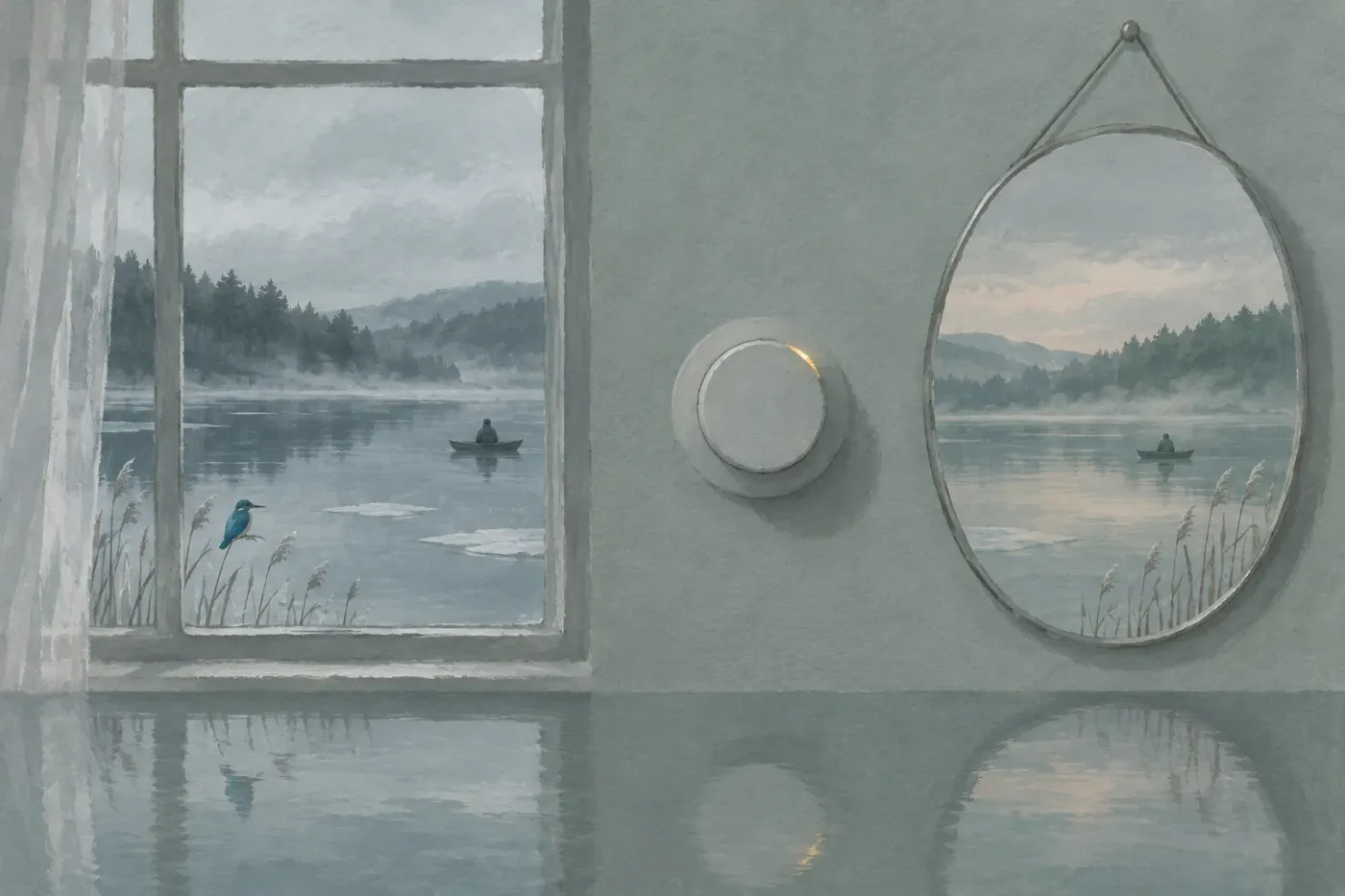
Every January, Marek made more money than the year before. And every December, he had roughly the same amount left as always: almost nothing.
It wasn’t dramatic. No gambling, no disasters. Just a car repair here, a loan to a cousin there, a sudden dental bill, a sale too good to miss. Every time the account grew, something came along to bring it back down, like water finding its level.
The worst part was the evening in December when he finally sat down and looked. He knew the routine by heart. The banking app took a second to load, and in that second his stomach went quiet and cold, the way it does before a phone call you’d rather not take. Then the number. Then a small, tired laugh, because of course. He would scroll back through the year looking for the moment it had gone wrong and never find it. There was no single moment. There were forty small ones, each perfectly reasonable on the day it happened.
“I’m just bad with money,” he said. He had said it so often that it had become his name. But Marek wasn’t bad with money. What Marek had was a thermostat.
The thermostat in the wall
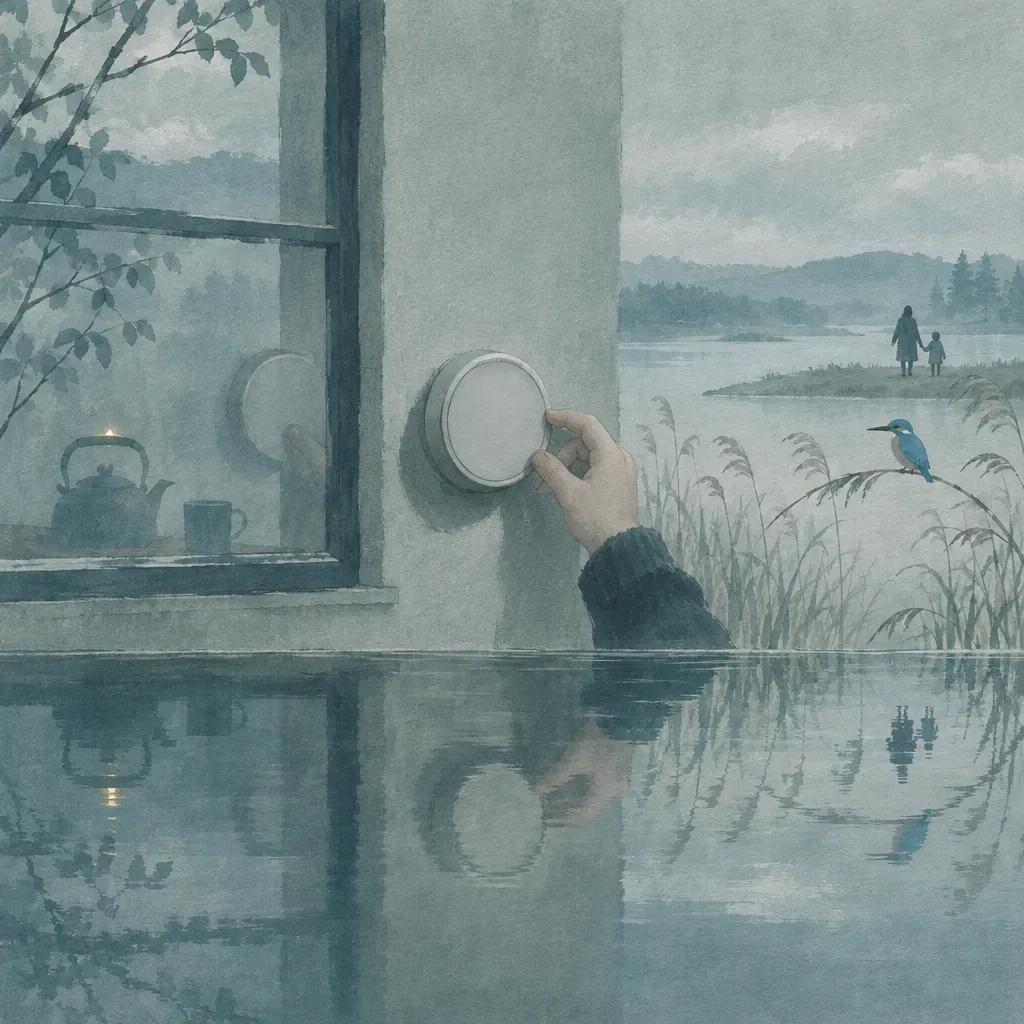
In many homes there is a small box on the wall. You set it to twenty degrees. If the room gets colder, the heating switches on. If it gets warmer, the heating switches off. The room may drift for a while, but it always comes back to twenty. The room has no preference of its own; the dial has one.
Marek’s dial was set to just about enough, never more. So when more came, life found a way to cool it, with a repair, or a cousin who needed a loan.
Look at what this means for all the effort he had put in. Marek had tried budgets. He had tried an app that sorted his spending into coloured circles, and one whole year of writing every purchase in a little black book. Each of these worked for a while, the way opening a window cools a hot room for a while. Then the window closed and the room went back to twenty. He blamed himself for having no discipline. Discipline was never the issue. He had spent ten years fighting the temperature without once touching the dial.
You have dials like this everywhere. In love, in health, in how people treat you, in how hard things are. And because they work so smoothly, you probably think they’re just how things are.
Where the contracts came from

Here is the strange part: you never chose most of your beliefs. You signed them when you were very small, before you could read the small print. A tired parent said “money doesn’t grow on trees” one too many times, and a grandmother said, with love, “people like us don’t get too big for our boots.” You watched what adults feared and what they never talked about. And without a word, you signed.
A closer lookYou signed them when you were…
Think of the last time you signed something without reading it: an app’s terms, a form at a clinic, a delivery receipt. You didn’t agree with every line. You were in a hurry, and the person in front of you seemed to know what they were doing.
Now think of a child. A child has no choice about hurrying. Everything an adult says, they sign, because their survival depends on those adults. If a parent sighs every time a bill arrives, the child concludes: “Money is a source of danger.” If a teacher praises only perfect work, the child concludes: “I am loved when I am flawless.” Nobody intended these contracts. They were simply the child’s best interpretation of the room.
And here is the thing worth noticing: the child was right to sign them. At that age, in that house, these conclusions kept them safe. They were clever, loyal and protective.
That is why it is not helpful to hate your old beliefs. They did a job. But the child is now an adult with a wider room, a wider income, and a wider choice of who to be.
Do this today: choose one belief you hold about money, love or work. Ask yourself, “How old was I when this made sense?” Picture that child. Thank them, honestly, for protecting you. Then tell them what you know now that they could not have known. That is how a contract is renegotiated: with respect for whoever signed it, and with the authority of the one who is reading it now.
Money is hard. Love must be earned. Rest is laziness. Wanting too much is dangerous. I am too much. I am not enough.
These are the quiet contracts. Nobody read them to you. Nobody asked for your signature. You simply absorbed them, the way a sponge takes on the colour of the water it sits in, and from then on they set the dials.
Nobody is to blame for this. The people who handed you these contracts had signed them too, long before you, and most were doing their best with the dials they had. Still, a contract signed by a five-year-old who didn’t understand it has no real authority over your life today. You are allowed to read it now, as an adult, and to tear it up.
You signed it before you could read. You are allowed to read it now.
Two costumes
If beliefs walked in wearing name tags, this would be easy. They don’t. The two costumes they wear most often are realism and protection.
Realism sounds like a grown-up talking. Let’s be realistic. Money doesn’t come easily to anyone. The good partners are gone by our age. You can’t have everything. It has a sensible voice and a slightly weary face, and it makes anyone who disagrees sound naive. But listen to what it actually says. It takes what has happened so far, to you and to the people you grew up watching, and calls it a law. Of course a belief that has run your life for thirty years has thirty years of results to point at, because that is what running a life produces.
Protection is softer, and harder to catch, because it sounds like love. Don’t hope too much, you’ll only get hurt. Don’t let them see how much you want it. This voice really does think it’s helping you. Once, it was. A child who stops hoping can’t be crushed in quite the same way. But the adult who still obeys it lives in a smaller room than they need, and calls the smallness safety.
So carry one question with you, for any sentence that feels too sensible to touch: Is this true, or is it something I accepted? Ask it slowly. Most of the time you’ll feel the answer before you can put it into words. A truth sits still when you look straight at it. A belief that was handed to you shifts its weight a little, like someone caught standing where they shouldn’t be.
You might push back here. Surely some limits are simply real. The rent is real. The age on your passport is real. Fine. Nobody is asking you to argue with the number on a bill. What you’re being asked to question is everything you’ve stacked on top of the number. And so it will always be like this. And so it’s too late. The bill is a fact. Every and so that follows it is a contract.
How to recognise a contract

Beliefs are hidden, but they leave fingerprints everywhere.
They repeat. If something keeps happening in your life, such as the same kind of partner or the same moment when things go wrong, a contract is probably underneath.
They sound like facts. Beliefs rarely announce themselves as opinions. They say “that’s just how it is” or “it’s not realistic.” If a thought about yourself or the world feels too obvious to question, question it.
Every contract also has an emotional signature. When you touch it, the compass of the last chapter reacts with a tightness or a sinking, and that reaction is the contract’s seal.
And they defend themselves. Challenge a belief and it will argue back with a list of evidence. Of course it will. It has been arranging your life to collect evidence for decades. The evidence doesn’t prove the belief is true. All it proves is that the belief has been running.
A closer lookThe evidence doesn't prove the belief…
When you challenge an old belief, it fights back with a long list. “But last year this happened. And in 2019, that. And your cousin too.” The list is long and convincing, and it makes you suspect the belief must be right.
Look at how the list was built. A belief is also a filter. It decides what you notice, what you remember, and what you consider “typical.” Someone who believes “people leave” remembers every goodbye in detail and forgets every faithful friend. Someone who believes “money slips away” remembers every unexpected bill and files the savings under “luck.”
So the evidence is real, but it is selected. It is a collection, not a verdict. A museum that only collects landscapes will naturally conclude that all paintings are landscapes.
The practical consequence is liberating. You do not need to win the argument with your past. You only need to start a second collection. This is what the seven-day evidence log in this chapter is for. Each day, you write down one thing that supports the new contract: the colleague who thanked you, the invoice that arrived on time, the stranger who held the door.
Be generous about what counts. The new belief is a young plant; it needs sunlight, not a courtroom. In a week you will have seven entries your old filter would have thrown away. In a month, you will have noticed that your world has been full of them all along.
A page from the notebook
When Marek finally sat down with a pen, he expected to write one line. He filled half a page. This is roughly what came out, in the order it came, with nothing tidied:
You have to work very hard for money. Money goes to people who already have it. Talking about money is greedy. I’m not a numbers person. Rich people stepped on someone to get there. Someone always needs it more than I do. More would be dangerous.
Reading it back, he noticed two things. Several lines contradicted each other, and he had been obeying all of them at once. And almost none of them sounded like him. They sounded like his father at the kitchen table, or an uncle at Christmas after the second glass. He had been carrying a whole committee around and calling it his personality.
He didn’t rewrite every line that night. He took the ones that stung and wrote, under each, the version he would sign today. Under you have to work very hard for money he wrote: Money can come through work I enjoy, and sometimes in ways I didn’t plan. Under someone always needs it more than I do: I can be generous and still keep what’s mine. The last line, more would be dangerous, he left alone. Something told him it needed an evening of its own.
Love is the other room where these pages fill up fast. A nurse who worked nights sat down one quiet morning to write what she believed about love, and her hand moved quicker than she could think. The good ones are taken. Love always ends in some kind of pain. I have to earn it. If I relax, they’ll leave. Nobody really understands me. You take what you can get. Then a long pause, and one more line, written smaller than the rest: I’m a lot to deal with.
That last line was the root. Every other sentence on her page was a way of bracing for it. If she was a lot to deal with, then of course love had to be earned, and of course they’d leave the moment she stopped earning it.
That’s the usual shape of a page. You write six or ten sentences, and one of them makes your throat tighten as you write it. Start with that one, because it’s usually setting the dial for all the others.
Rewriting the dial
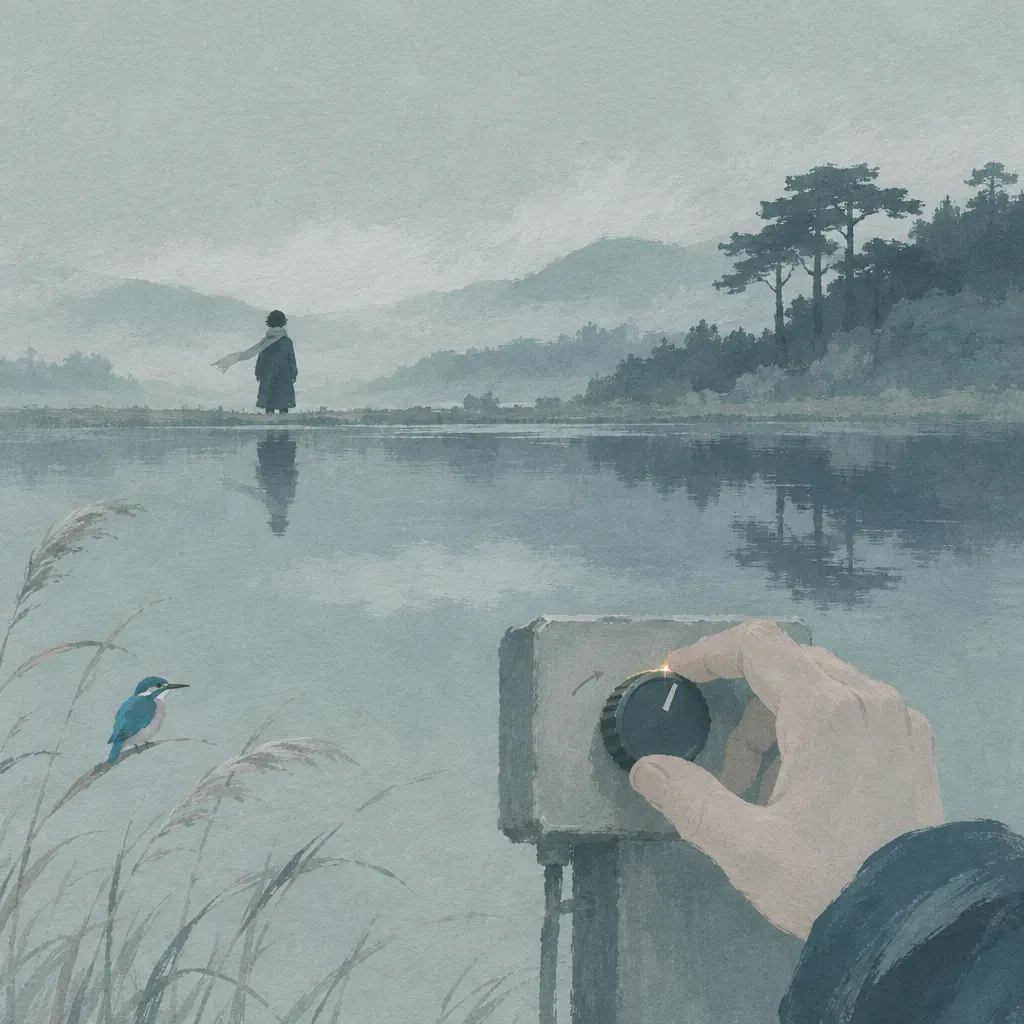
You can’t change a belief by force, any more than you can heat a room by shouting at the thermostat. But you can rewrite it, deliberately, in four movements.
The first movement is to read it. Write the belief down in plain words. Not a softened version, the real one. “If I rest, I’ll fall behind.” Seeing it in ink, outside your head, already loosens it, and a contract you can read is one you can renegotiate.
Then ask what it costs. What has this belief cost you? In energy, in joy, in relationships, in money? Be honest. The point is to make sure you really want to let it go, because every belief also gives you something: safety, or the comfort of being right. You need to see that the price is higher than the reward.
Third, write the new contract. Not the opposite of the old one, which often feels false. Write the version you would choose, if you were choosing freely and kindly. “Rest is part of my strength.” “I am loved as I am.” Read it aloud. Notice how your compass responds. Adjust the words until it feels like a door, not a wall.
Fourth, collect new evidence. This is the step most people skip, and it’s the step that turns the dial. For the next week, look for anything at all that supports the new contract. The rest day after which you did better work, or the friend who loved you on a bad day. Write each one down.
The old belief has had years of evidence. The new one needs a head start, and every piece you collect turns the dial a little.
A closer lookThe old belief has had years…
This sentence quietly explains why so many fresh starts end in disappointment.
You decide to believe something new. You say it for a day or two. Then a bad Wednesday arrives, and the old belief shows up with its decades of records. The new one, which has had two days, loses the debate, and you conclude: “See? It doesn’t work for me.”
But it was never a fair contest. Of course the old one wins; it has a head start of thirty years. The question is not “which belief has more evidence?” It is “which belief am I feeding from now on?”
Think of a young tree next to an old one. The old tree is tall because it has had time. The young tree is not wrong to be small. It is simply young. Your task is not to prove it is as big as the old one today. Your task is to water it daily.
Here is how you water it in practice. Each morning, read your new sentence aloud once. Not to convince yourself, only to remind the soil. During the day, when something small supports it, stop for three seconds and say, “That counts.” In the evening, write one line in your log.
And when the bad Wednesday arrives, do not ask whether the new belief survived it. Ask: “Which contract is speaking right now?” Then water the young one anyway. Dials turn slowly, and then all at once.
Say it until it bores you
Here is the part nobody finds glamorous. You learned the old contract by hearing it over and over, until you couldn’t hear it anymore. You unlearn it the same way.
The deep part of you doesn’t argue. It doesn’t weigh your new sentence against the old one and pick the better case. It keeps whatever it hears most often and with the most feeling. That is how the old contract got in, and it’s the same door the new one uses.
So make the new contract a habit. Write it on a card and keep it where your hand finds it: in your wallet, or tucked into the corner of the bathroom mirror. Read it aloud once in the morning, before the day starts talking to you, and once more at night. On the days the old story comes back loud (and it will, usually right after you’ve told yourself you’re over it), don’t fight it in your head, where it has home advantage. Go back to the paper and read what you wrote when you were clear, because you wrote it for exactly this day.
A few weeks in, reading the card starts to feel a little silly. You know this already. Why are you still reading it? That silliness is the sign you’ve been waiting for. The new sentence has stopped being news and started being furniture. Keep reading anyway, a while longer, until you forget it was ever new.
And claim the contract as yours. Yours, which is a different thing from your fault. As long as the belief belongs to your father or the town you grew up in, you can complain about it, but you can’t touch it. The moment you say this is a belief I am holding, your hand is on the dial.
What Marek did

The line he had saved, more would be dangerous, got its evening. He sat with it at the kitchen table until a memory came up that he hadn’t looked at in years: his father, who had once had a little more and lost all of it in a business that failed, and who had told his son, more with silence than with words, that having more only meant having more to lose.
He understood, sitting there, that he had been loyal to that silence his whole adult life. Every repair and every loan had been a way of keeping his father company.
He wrote a new one: “Having more makes me safer, and I’m allowed to keep it.”
Then he did one small, practical thing to collect evidence: he opened a separate account and moved a little money into it each month. Not much. Enough to feel. And every time the old dial tried to cool things (a sale, a “necessary” expense) he paused and asked: which contract is speaking right now?
The first real test came in April. The car made a sound he knew, a low grinding from somewhere under the passenger seat, and he felt the old machinery start up in his chest before the mechanic had even opened the bonnet. Here we go. There it goes. This time he heard the sentence. For thirty years it had run without him noticing, the way you stop hearing a fridge hum, and now it was suddenly loud. Standing in the garage forecourt, he said under his breath: that’s the old contract. He felt ridiculous. He said it anyway.
The repair cost less than he’d feared. He paid it from his ordinary account and left the other one alone, and on the drive home he noticed his hands lying loose on the wheel. A small thing. He wrote it down that night.
The account grew, slowly at first, and it stayed. In December he sat down to look, the same as every year. The same app, the same second of loading. His stomach stayed warm. He hadn’t known it would, and he only noticed afterwards. There was more in the account than there had ever been. He looked at the number for a while, then closed the app and went to cook dinner, and he didn’t think about money again that evening.
Today, find one sentence that starts with “That’s just how it is,” and ask who wrote it.