Chapter 4
The Compass in Your Chest
Your feelings are not the problem. They are the needle.

Lucía had two job offers on the table and a spreadsheet to compare them. The first was better on paper in every column: salary, title, distance from home, even the parking. The second paid less and was in an older building on the other side of the city.
She looked at the spreadsheet for an hour. She added a column for holidays, then one for the pension, then deleted both, because they changed nothing. The first offer kept winning. Then she did something that wasn’t in any column. She closed the laptop and imagined, eyes shut, walking into each office on a Monday morning.
The first one made her shoulders rise toward her ears. The second one made her breathe out.
She didn’t understand it. She couldn’t defend it, and when her brother asked why, she heard how weak her answer sounded. She took the second job anyway. Two years later, the first company had shut down its department, and Lucía was running hers. The spreadsheet had only ever looked at the reflection, while her body had been reading the source.
A needle, not a verdict

You were probably taught that some emotions are good and others are bad. Joy is good. Anger is bad. Calm is good. Envy is shameful. And so you learned to keep the good ones and hide or medicate the bad ones, as if your feelings were weeds in a garden.
Try another picture: your emotions are a compass. A compass needle has no opinion about where you should go. It doesn’t scold you when you walk the wrong way. It simply points, always, honestly, showing you your direction relative to north. And your emotions do exactly this: they show you, in every moment, whether the thoughts you are thinking point toward what you want, or away from it.
A closer lookA compass needle has no opinion…
Most of us were raised with a very different relationship to our feelings. They were either approved or corrected. “Don’t cry.” “Calm down.” “Be happy.” “Don’t be so sensitive.” Each of these sentences carries a hidden verdict: this feeling is acceptable, that one is not.
A compass doesn’t work like that. It doesn’t care if you are heading to the sea or to the mountains. It only tells you where north is, so you can choose. And your emotions can be read the same way. Anger is not “bad.” It says: “something here is pointing away from what I want, and there is energy to turn it.” Sadness says: “something I value is not in front of me right now.” Anxiety says: “my thoughts are facing a future I would not choose.”
Once you drop the verdict, you also drop the second layer of suffering, the shame about the feeling. A great deal of what hurts is not the emotion but the argument with the emotion.
Here is a practice for today. Whenever a feeling arrives, before you judge it, give it a short, neutral reading, like a weather report: “Right now, the needle says heavy.” Then add: “Interesting. What am I thinking that points this way?” That’s all. You are not fixing the feeling. You are reading it.
Notice how different the next minute feels. When a feeling is read instead of judged, it stops being a threat and becomes information. It is allowed to be there, and so it can move.
When you think about your future and feel lightness or eagerness, the needle says: this way. When you think about the same future and feel dread, the needle says: you are facing away from what you want. It never says you are bad. All it says is turn.
Why this matters for the mirror
Remember: the mirror reads what you are being, the deep layer, the assumptions. You can’t see that layer directly, but you can feel it.
Your emotions are the surface where the deep layer becomes visible. A feeling of dread is an assumption of danger, rising up so you can see it. A feeling of peace is an assumption that all is well. Every emotion is a message from the depths: this is what you are currently assuming. Which means you never have to guess what you are placing in front of the mirror. You can feel it right now, without a spreadsheet.
Your feelings are the mirror’s preview. They show you the image before the world does.
You don’t have to wait for the reflection to find out what you’ve been sending. You can catch it at the source, while it is still a feeling, and turn the needle before the world has to show it to you in the form of circumstances.
Watch how fast it happens. You’re making coffee, thinking about the trip you’ve wanted for years, and you feel a lift, a little brightness behind the ribs. Then a second thought slides in, almost politely: with what money, though? And the brightness goes. Your chest tightens a notch. Nothing outside you changed. The kettle is still boiling. The needle moved because a thought moved, and it told you, within a second, that the new thought points somewhere you don’t want to go.
That second thought isn’t a fact about the trip. It’s one possibility out of countless, the one you happened to pick up, and the tightness in your chest was the needle saying so.
Feeling better comes first
Most people meet a bad feeling with one question: how do I fix this? How do I fix the money, the marriage, the body, the job. And they go at the problem while still feeling dreadful, which means every move they make is made from the dread. The mirror reflects the dread, and the problem holds.
Try a smaller question. How can I feel a little better, right now, from here?
It sounds almost childish next to the size of your problems. Do it anyway. Look at how everything around you works. The sun doesn’t strain to come up in the morning. A tree doesn’t lie awake wondering whether it will manage to grow leaves in April. The whole living world runs on ease, and you are part of it. When you feel good, you’re back in step with it, and the right ideas and people start finding you instead of you hunting them.
You may hear an objection in your head: isn’t that just running away from the problem? Running away would mean pretending there’s no problem, and you know perfectly well there is one. You’re simply refusing to work on it from the worst possible state. A surgeon who has been awake for thirty hours puts the scalpel down and sleeps first, and nobody calls her a coward for it.
So make it a priority, above fixing. Feel better first. Then act, if acting still seems necessary. Often you’ll find the action looks completely different from the clearer place.
The bad day
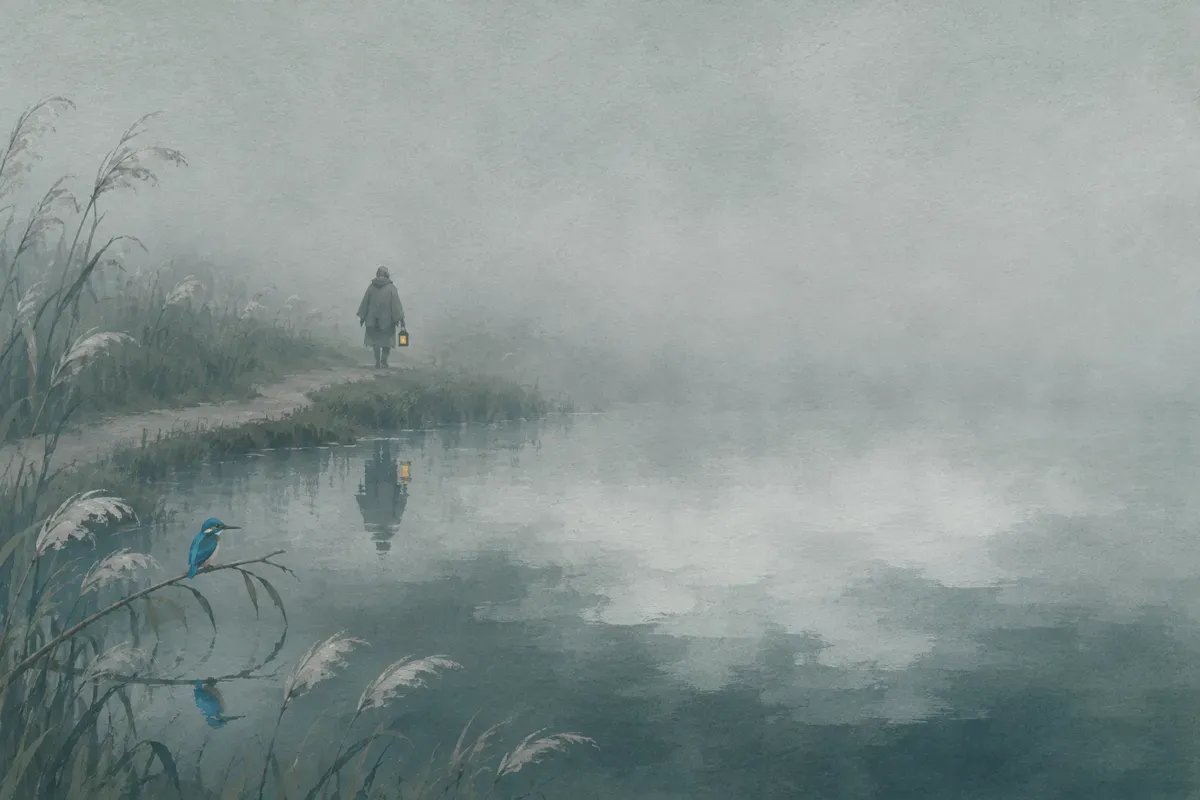
Now, a word for the days when the needle points at fog. There will be days when you feel heavy and don’t know why. Days when you’re sad or anxious and you can’t think your way out. On those days, the worst thing you can do is to add a second layer of suffering: I shouldn’t feel this. Now I’m attracting bad things.
Hear this: a difficult feeling is the compass working. And you never have to leap from despair to joy in one jump. That leap is too far for anyone, and trying it only makes you feel further away.
Instead, reach for the next better feeling. Not the best one, just the next. If you feel hopeless, frustration is an improvement, because there’s energy in it. From frustration, impatience is lighter, and impatience sits close to hope. Each step is small and real. You climb a ladder rung by rung, and every rung is closer to the light than the one below it.
A closer lookInstead, reach for the next better…
This is the most practical sentence in the chapter, because it removes the pressure that makes people give up.
When you feel low, you have probably been told, by others or by yourself, to “just think positive.” And you have probably felt how false it is. If you are sunk in despair and someone tells you to feel joyful, it is like being in the cellar and being told to jump to the roof. You cannot reach it, and failing makes you feel worse.
The next better feeling is a single stair. It is always within reach. From despair, you don’t aim for joy. You aim for something that looks like relief: a sigh, a rest, a slightly less heavy thought. From there, frustration is already higher. From frustration, impatience is lighter. From impatience, a little hope. Hope is only one step from optimism.
You can use this tonight. Write the feelings in a column, from heaviest to lightest, and find where you are. Then write the thought that would take you one rung up. Not the thought that would be perfect. The thought that would be slightly kinder.
From worry: “I don’t know how it will go, but I have handled uncertain things before.” From resentment: “I would like this to be fair.” From exhaustion: “I need rest, and rest is allowed.”
And sometimes the next better feeling is not a thought at all. It is a glass of water, a short walk, a window opened. Let the body vote. A feeling that is allowed to move will move on.
And sometimes the next better feeling is simply rest. Lie down, or walk outside and let the feeling move through you without a story attached. A feeling that is allowed to move usually moves on; the ones we fight tend to dig in.
When it rolls downhill
Some bad days have momentum. One sour thought pulls the next one after it, and by lunchtime you’re not thinking about the late invoice anymore, you’re thinking about how your whole life has always been like this. It feels like thinking, but really you’re rolling.
You can’t stop a rolling thing by standing in front of it. If you try to argue with a spiral at full speed (no, I’m not a failure, look at all the things I’ve done), it simply runs you over and keeps going. So step to the side. Leave the subject completely for a while. Put on music you like, or take a long, hot shower. Your only aim is that the slope gets less steep.
When it has slowed a little, don’t jump straight back to the problem. Go general first. Specific thoughts about the invoice will drag the old feeling straight back in, because that’s where the momentum lives. General thoughts carry no charge. Things usually work out for me, one way or another. I don’t need to solve it all tonight. Say whatever general sentence your body can agree with without a fight. Notice the small loosening when it lands.
Only then, when you feel neutral or a little lighter, come back to the specific thing, and this time choose a thought about it that faces the way you want to go. That invoice will get paid. I’ll call them in the morning and it’ll be a short call. From the bottom of the slope that thought would have sounded like a lie; from neutral ground it sounds ordinary.
Allowed to cry
There’s one more trap on a heavy day, and it’s a quiet one, because it looks like honesty.
You are allowed to feel terrible. Cry when you need to cry. Tell one friend the truth. But notice the moment when the feeling turns into a role. When you start telling the story of your bad luck the same way each time, with the same sigh in the same place. When some part of you is a little proud of how much you’ve suffered, as if it earned you something.
It earns you nothing. No one is keeping score up there, adding up your hardships to pay you back later. The world doesn’t reward misery with good fortune; it reflects misery as more of the same. Grief that moves through you is healthy. Suffering you hold on to because it has become who you are is a contract with the old room. So feel it fully, and when you’re ready, put the story down.
Reading the needle in daily life
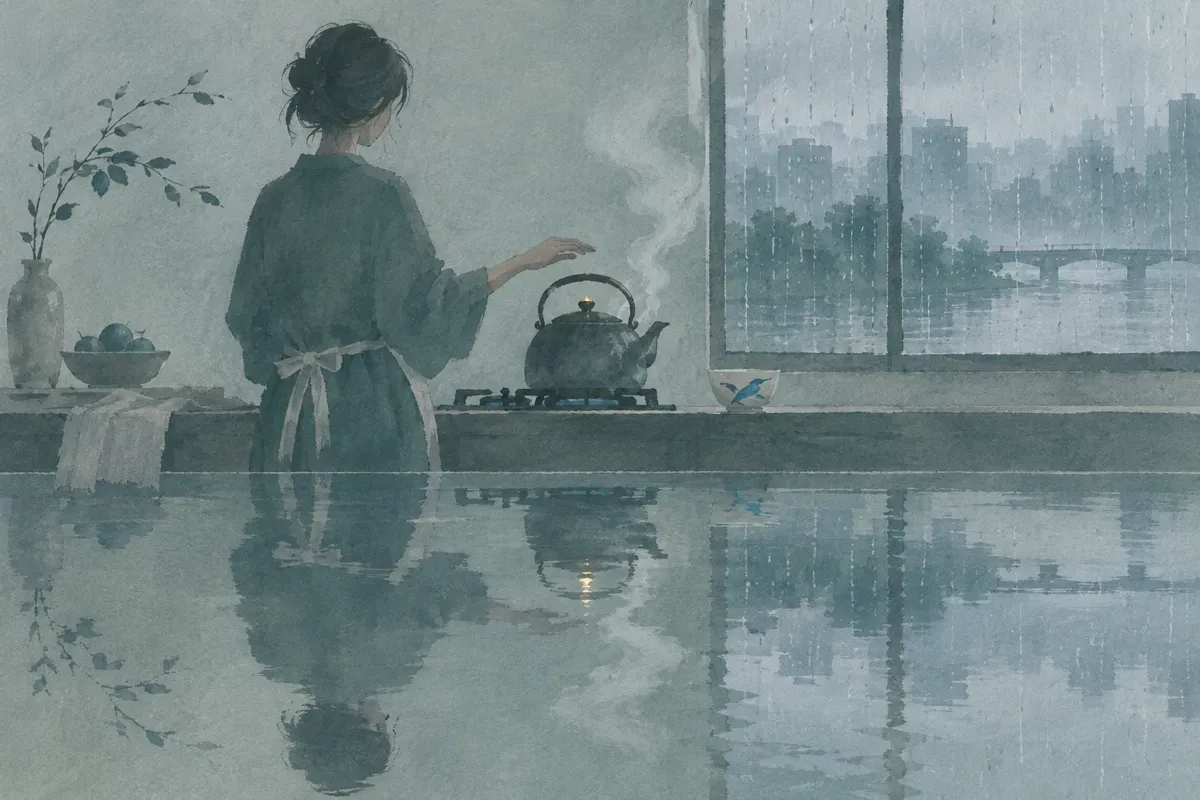
Start using your compass on small things. They’re the best practice, because there’s little at stake.
Two routes home: which one makes you breathe out? Saying yes to an invitation: does it lift you, or does it make you shrink? You’ll be surprised how often the body knows instantly, while the mind is still making lists.
Use it on your company too. Some people leave you lighter after ten minutes, and some leave you checking your phone for bad news you didn’t know you were waiting for. Spend a week with someone who complains about everything and you will start complaining too, without deciding to. Guard your feeling the way you’d guard your food. You wouldn’t eat from a plate you knew was spoiled just to be polite. You’re allowed to leave a conversation that’s poisoning your afternoon, and you’re allowed to spend an evening alone rather than an evening sinking.
Then use it on your thoughts. When you catch yourself thinking about a person or a plan, pause and feel. Does this thought make you lighter or heavier? You’re not checking whether the thought is true. You’re checking whether it points where you want to go. A thought can be accurate about the past and still point you away from your future.
There’s one subtle trap here. Your compass is not the same as your comfort. Sometimes the direction you truly want to go makes you nervous, because it is new. Excitement and fear live in the same body; they feel almost alike. The difference is in what’s underneath. Fear contracts: it wants you to get small and hide. Excitement expands: it wants you to move, even if your hands shake. Lucía’s hands were shaking when she signed for the second job, but her chest was open.
A closer lookExcitement and fear live in the…
Many people read the compass wrongly at exactly the moment when it matters most. They feel a flutter in the stomach before a new step, interview, conversation, a first week, and conclude: “This must be wrong. I’m afraid.” They turn back.
But a trembling hand does not always mean “stop.” It can also mean “yes, and it is new.”
How do you tell the two apart? Do not ask whether it is comfortable; the right direction is often unfamiliar. Ask what the feeling wants you to do.
Fear contracts. It wants you to get small, to postpone, to keep things as they are. It tells stories of what might go wrong and shrinks your attention to the exits.
Excitement expands. It wants you to move, to say yes, to tell someone, to begin even though your hands shake. It leans forward.
A simple test is to imagine the answer as if it were already decided. Imagine you said yes to the thing. Does your chest open or close? Then imagine you said no. Does your chest open or close? Often the body answers within seconds, even when it cannot give a reason. Lucía could not defend her choice in a spreadsheet, but her breath told her everything.
Before your next decision, run this two-way check. Give it a minute for each answer. Then act from the one that opens your chest, even if your hands are trembling as you do it.
Turning the needle

You don’t have to obey every feeling. You get to use them.
When the needle swings toward dread, ask: what am I assuming right now? Find the sentence. Then ask: what could I assume instead that’s also true, and feels even a little better?
“This meeting will go badly” might become “I’ve handled harder meetings than this.” “I’ll never have enough” might become “I’ve always found a way so far.” You aren’t lying to yourself. You’re choosing, from many true thoughts, the one that faces the direction you want to walk.
On the rare day when everything breaks at once (the call from the hospital comes on the same morning the car dies on the motorway) this narrows to one rule. Think only about the way out. Your mind will offer you a hundred versions of what if I can’t get out of this? Each time, answer with the same sentence: I’m already finding the way out. You won’t believe it completely, and you don’t need to. You’re pointing the needle, not proving anything. Panic looks at the wall while you look for the door. Do it again, and again after that. Each turn is small, and the mirror reads the direction you face rather than the speed you walk.
Lucía still keeps spreadsheets. She’s good at them. She just doesn’t let them have the last word anymore. Before she signs anything now, she closes the laptop for a minute and goes to Monday morning in her mind, and waits to see whether her shoulders rise or fall.
Today, before you decide anything, ask your chest.