Chapter 7
Living From the End
Don't walk toward it. Live from it.
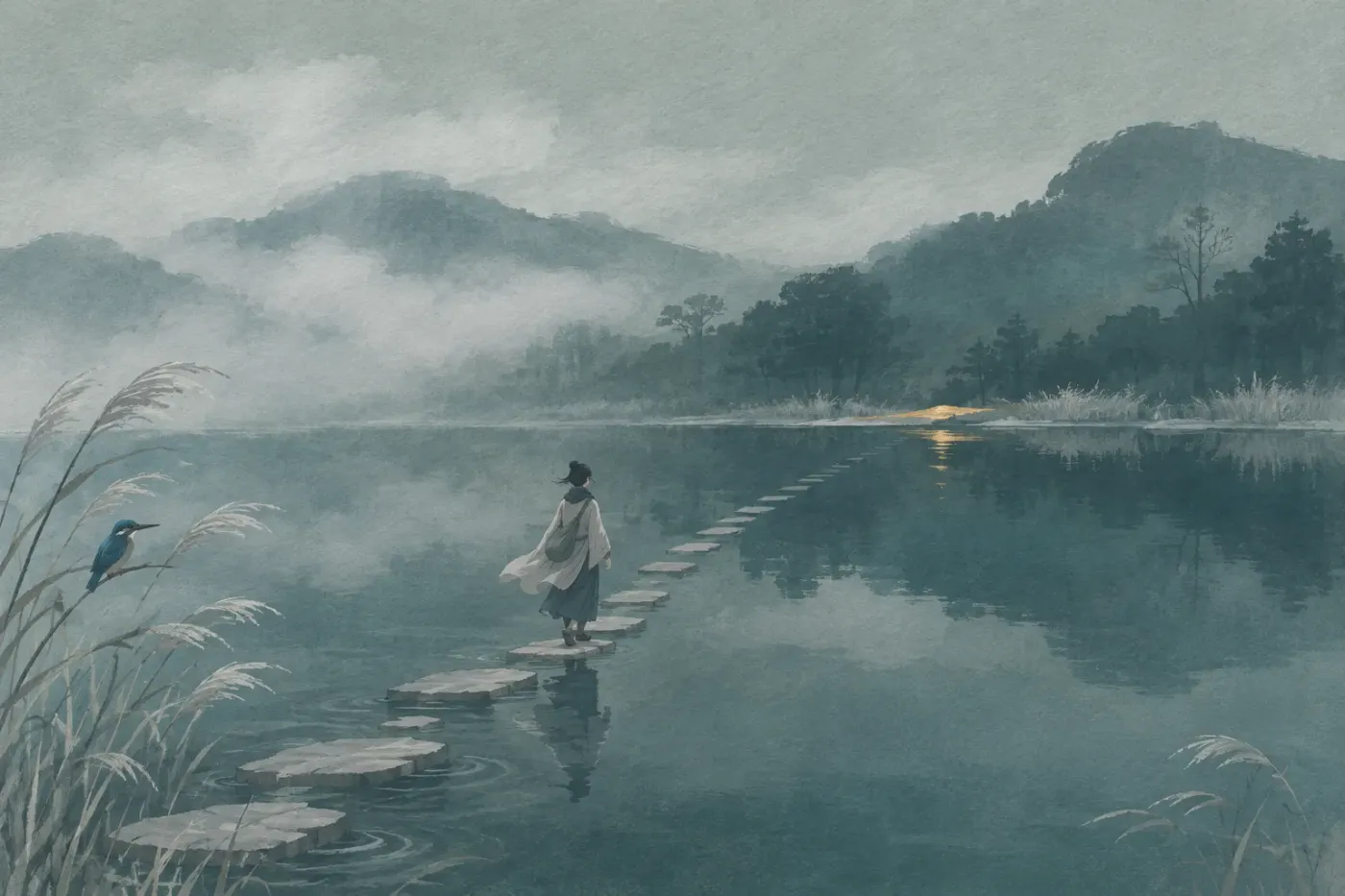
Elena had a shelf of empty notebooks. For years she wanted to be a writer: she talked about it at dinners, read books about writing, and felt a quiet ache each time someone else published something. She was always on her way, always walking toward it.
Then one autumn, almost by accident, she stopped wanting it. It happened at a party in a crowded flat, with coats piled on a bed and someone’s playlist too loud in the kitchen.
A friend introduced her to someone by the window as “Elena, she’s a writer,” and Elena, instead of correcting him, simply said, “Yes.” Something in that word changed her. On the way home she thought: If I were a writer, what would I do tomorrow morning?
The answer was embarrassingly simple. I’d write. Before breakfast. Like writers do. So she did, and not as someone trying to become a writer. She was one, and in the morning writers write.
Thinking of and thinking from
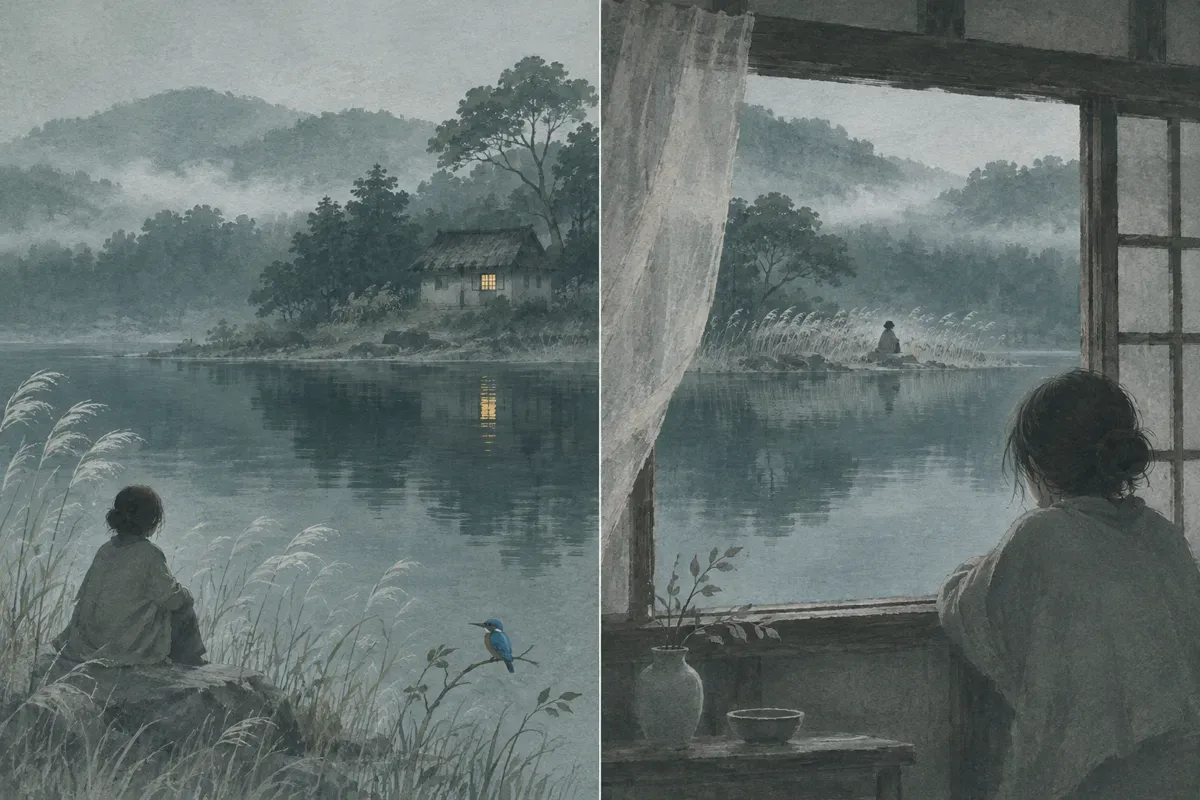
There are two ways to hold anything you desire. You can think of it. You stand here, in your current life, and look out at the thing you want, far away on the horizon. You long for it and measure the distance. And every time you look, the distance is confirmed, because you are looking at it from somewhere it isn’t.
Or you can think from it. You step into the end, into the life where the thing is already true, and look out at the world from there. You don’t long for it. You live it. You stop measuring the distance, because from inside the end, there is no distance to measure.
The mirror reads the place you are standing. Think of the end, and it reflects someone looking at a far horizon. Think from the end, and it reflects someone who has arrived.
A closer lookThe mirror reads the place you…
Where you stand decides what you see, and also what you send.
Picture two people looking at the same house on a hill. One stands at the bottom of the road, looking up, and says: “One day.” The other has the key in her pocket, is already inside, and is looking at the view from the kitchen window. Same house. Completely different relationship to it.
The first person is distance. Everything they feel, hope, doubt, hurry, is measuring the gap. And the mirror reads the gap, which is why people who long for something for years often get very good at longing and not much else.
The second person is place. They are not hoping to arrive. They are already at home, thinking about what to cook.
This is a change of address, not a change of effort. It costs nothing to move your standing place; you do not have to earn the right. You only have to decide, “I will speak and act today from where it is already true.”
What does that look like on an ordinary Wednesday? Notice your first sentence of the morning. If it begins with “I wish,” or “when I finally,” you are at the bottom of the road. Rephrase it with “I am” or “I have,” and feel what changes in your shoulders. Notice what you talk about with others. Do you describe the climb, or the view?
You are never stuck at a distance. You are only standing there out of habit. The key was in your pocket all along.
Don’t look at the house from the street. Go inside, and look out of its windows.
Entering the room
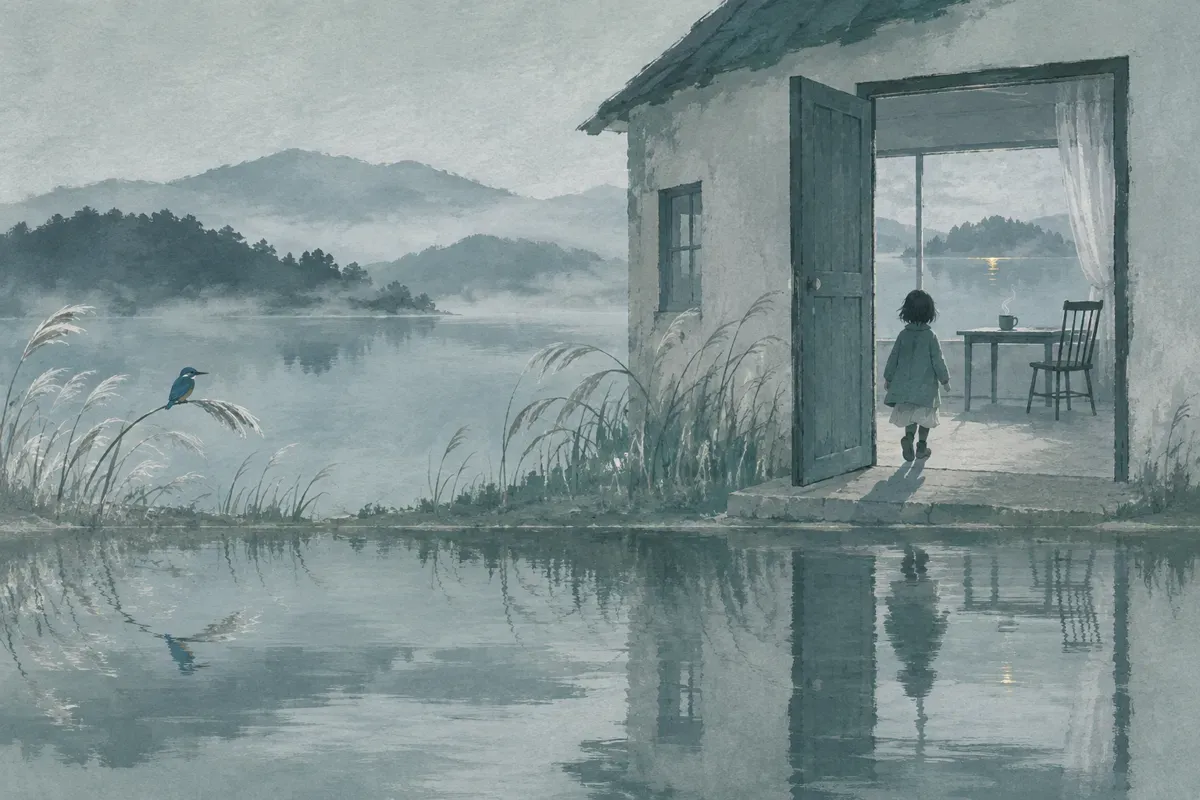
Living from the end is the practice of walking into that room, first in feeling, then in behaviour, and staying there long enough for it to become home.
How do you know you’re in the room? By the feeling. In the room where you are already the writer, there’s no ache. There’s a kind of ordinariness. Of course I write. It’s Tuesday. That’s what I do. In the room where you’re already financially at ease, you don’t check your account with dread. You glance at it the way you glance at the weather.
That ordinariness is the key. People imagine that living from the end must feel ecstatic. Usually it doesn’t. Arriving at a place you belong feels natural, like of course.
A closer lookThat ordinariness is the key
A great deal of imagination work goes wrong because people expect fireworks.
They picture the dream achieved: the applause, the embrace, the huge number in the account. And then they try to produce that excitement in the present moment. When it doesn’t come, they conclude it isn’t working. Or they pump up an artificial feeling that the mirror, honest as always, recognises as effort.
But think about how it actually feels to live somewhere you belong. You don’t walk around your own kitchen in a state of ecstasy. You pour water, you notice the light, you think about nothing in particular. There is ease. There is a quiet “of course.”
That is the feeling to aim for: not thrill, but settledness. A writer on an ordinary morning doesn’t feel triumphant. She feels like someone who has work to do and a cup of tea beside her. A person who is financially at ease doesn’t gasp at the balance; he glances at it and gets on with the day.
So when you practise living from the end, drop the grand scene. Ask a smaller question: “What does an ordinary Tuesday feel like in that life?” Feel the shoulders loose, the breathing unhurried, the absence of the ache. Stay there for a minute. If you notice the feeling is quiet, that’s good news. Quiet is the sign that you are standing inside the room and not peering at it through a keyhole.
The questions that open the door
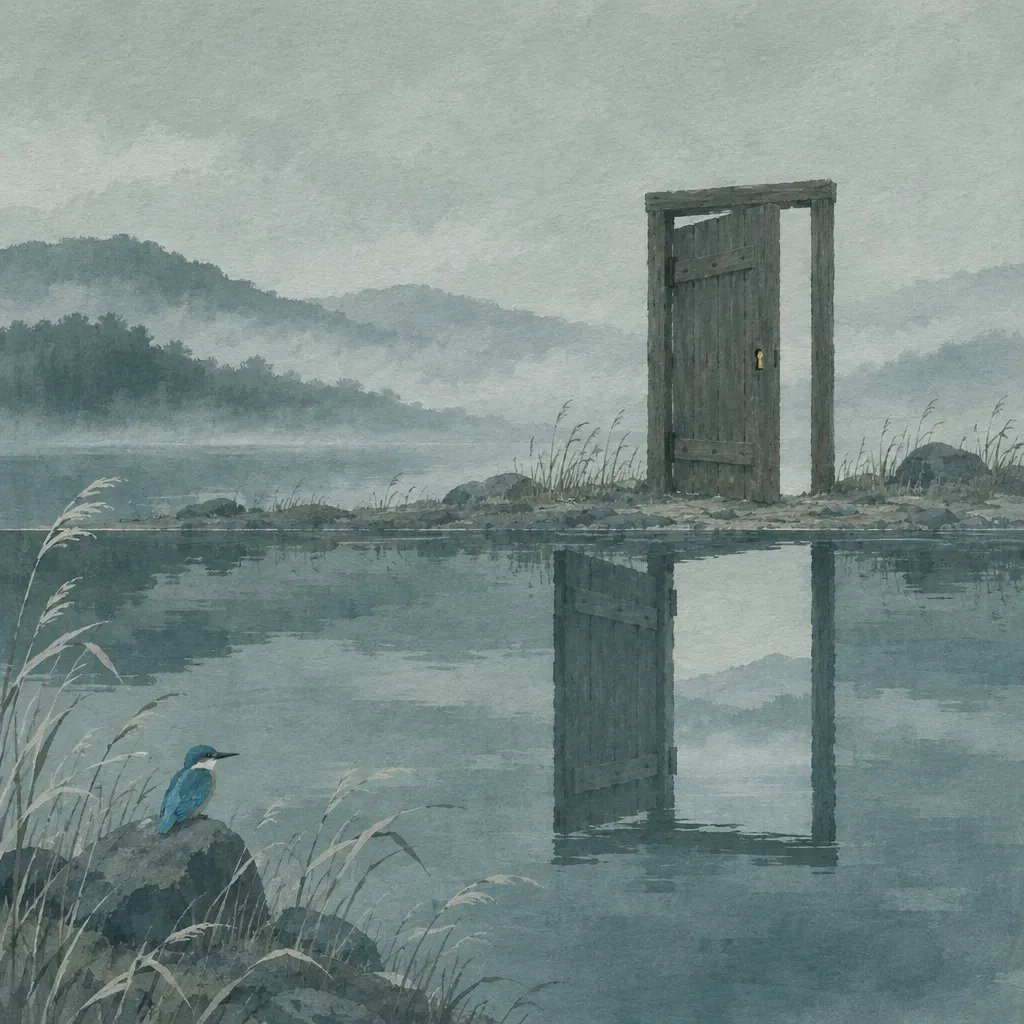
The easiest way into the room is through a single question:
“If it were already done, what would I do now? How would I feel?”
If you were already healthy and strong, how would you climb the stairs this morning? If you already had the relationship you long for, how would you spend this lonely Saturday? Would you sit waiting, or would you live it fully, as someone whose love life is fine and who enjoys their own company?
The answers are rarely grand. They are small, and you can do them today. You cannot conjure the outcome by force. But you can do one thing that the person who has it would do, and in doing it, you become that person a little more.
The way a winner reads the day
Spend an afternoon with someone who lives from the end and you’ll notice something odd about them. They don’t seem to be trying very hard. They aren’t forever chasing the next result, swinging between triumph and despair. They move through the day as if the day were on their side.
That’s the whole secret, and it’s almost too plain to write down. A winner assumes, before anything happens, that life is working in their favour. They don’t wait for the evidence to decide. They decide, and then they read the evidence through the decision.
Watch what this does to an ordinary setback. You knock a glass off the counter and it shatters across the kitchen floor. One person sighs, typical, nothing goes right today, and carries that sentence into every room of the afternoon. Someone living from the end shrugs and fetches the brush. Maybe the sweeping kept them home three minutes longer than planned. Maybe it didn’t matter at all. I don’t know what that was for, but it’s for me, and they genuinely don’t need to know.
Or two people miss the same bus. One stands at the stop rehearsing how late they’ll be and how bad it will look. The other walks to the corner café to wait out the twenty minutes, and runs into someone they haven’t seen in years, who turns out to be looking for exactly the kind of help they offer. You might call that luck. Look at it again. Both people had the same twenty minutes. Only one of them was standing in a room where twenty unplanned minutes could be good news.
The event is neutral when it arrives. The meaning you give it is what decides where it leads. And you give it that meaning in the first second, usually without noticing, from whichever room you happen to be standing in.
It takes the drama out of your days, too. When you have to wait for each result before you know how to feel, you live on a rollercoaster: up when the email is good and down when it isn’t. Someone who has decided in advance gets off the ride. Good news is welcome, and expected. Strange news is assumed to be good news that hasn’t explained itself yet. People sometimes mistake that steadiness for luck, or for not caring. They care a great deal. They’ve simply settled how the story ends, so the middle chapters don’t frighten them.
Small things first
You don’t learn this certainty on the big things. On the big things, too much is riding on it, and your old doubts are watching closely. You learn it on the small ones, where nobody is watching, including you.
Walking to the letterbox, assume there’s something good in it. Paying for a coffee, hand the money over the way you’d hand it to a friend, assuming it will come back to you in some form you can’t predict. Before a call you’ve been dreading, decide how it goes: this will be easy, and we’ll both hang up in a better mood. Before you walk into the shop, decide the queue will be short. You aren’t bargaining with anyone. You’re practising the feeling of having decided first.
Some of these will land exactly as you assumed, and you’ll feel a small spark when they do: there it is. That spark is the thing you’re training. It’s the taste of certainty, and once you know its taste, you can recognise it anywhere.
Then take the same feeling, unchanged, to the thing you really want. Don’t make it bigger or more serious. Don’t add effort because the stakes are higher. A penny and a fortune look different to you; they look the same to the mirror. The only difference between your small wants and your large ones is how hard you believe the large ones are.
If that sounds too simple, try it for one week and keep a tally in the back of a notebook. Count the moments you caught yourself deciding first, and let the results arrive at their own pace. Most people are surprised how rarely they used to do it, and how soon it starts to feel like their own way of walking into a day.
When the old room calls you back
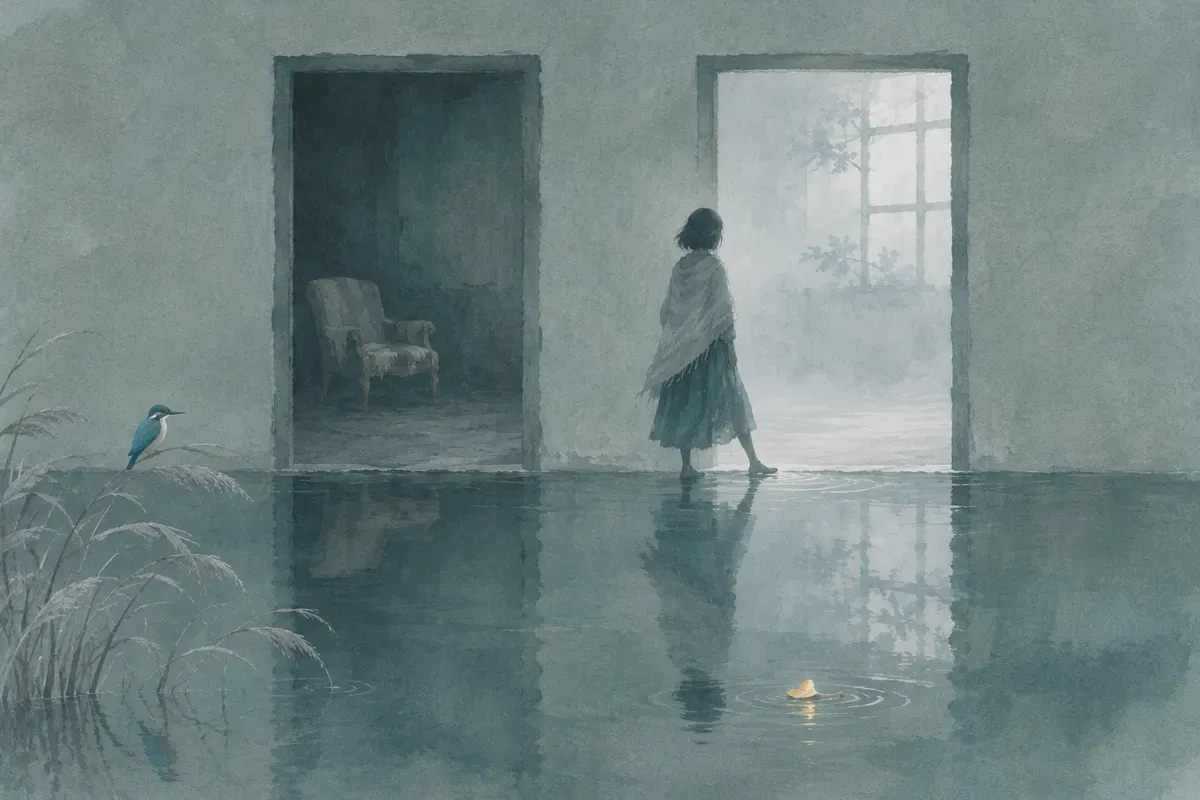
Of course, the moment you step into the new room, the old one will call. You’ll get a bill, or someone will say no, and on a tired morning the old reflection in the mirror will ask: who are you kidding? You’ll feel it in your body before you can think about it: the small drop in the stomach, the sudden, sensible-sounding wish to give the whole thing up. It feels like waking from a pleasant dream into the real world. This is where most people walk back out into the hallway and close the door.
Understand what is happening. The reflection is late. It is still showing you the old room, because that’s where you were standing a little while ago. If you treat it as evidence that the new room isn’t real, you return to the old one, and the mirror, faithful as always, keeps showing you the old one.
Instead, look at the bill from the new room. How does someone who is financially at ease handle a bill? Calmly. They pay it, or they make a plan, and they don’t make it mean anything about who they are. Look at the “no” from the new room. How does a writer who is already a writer handle a rejection? With a shrug, and back to work tomorrow morning. You’re not ignoring what’s in front of you. You’re refusing to let it tell you which room you live in.
A closer lookYou're refusing to let it tell…
This is the sentence you will need on the difficult days, so it is worth knowing how it works.
When you begin to live from the end, the old reflection will keep arriving for a while. It is late; that is its nature. A bill appears. A message goes unanswered. A tired morning offers you the old face in the mirror. If you treat each of these as a vote on whether the new room is real, the old room will win, because it has a long history of votes.
So don’t treat them as votes. Treat them as deliveries, parcels sent to the old address before the forwarding is complete. You receive them politely, you deal with them, and you don’t move house because of them.
The practical technique is to answer from the new room. When the bill arrives, ask: “How does someone who is at ease with money handle this?” Probably calmly, with a plan, without making it a story about worth. When a no arrives, ask: “How does someone who already has what I want treat a no?” Probably as one stop on a long road.
You are not pretending the bill is not there. You are choosing the manner in which you meet it. And manner is exactly what the mirror reads.
Keep one small anchor on your desk or phone, a single sentence such as “I live here now,” and touch it each time the old room calls. A few weeks of this, and you will notice that the calls come less often, and have less power.
Living it in small things
You don’t need to move your whole life into the new room at once. Start with one corner of it.
If you want to feel abundant, buy the slightly better bread, and enjoy it like someone for whom this is normal. If you want to be loved, treat your evening alone as a gift you give yourself, the way a loved person would.
Each small act is a footstep in the new room. Each one says to the mirror: this is where I live now. And the mirror, which has no choice, begins to rearrange the reflection, and the people and opportunities that belong in that room start to appear, one by one, like furniture arriving in a home you’ve already moved into.
Elena didn’t publish a book that winter. But she filled four notebooks. Some mornings the words came and some mornings she sat for forty minutes and wrote three sentences she later crossed out, and on those mornings she closed the notebook the way a baker closes the shop after a slow day: a bit flat, and back at six tomorrow. The next autumn, a small magazine took one of her stories. The year after that, a publisher called.
At every step, people congratulated her on “becoming a writer.” She smiled and didn’t correct them. She knew she’d become one on a Tuesday morning, before breakfast, when she stopped walking toward it and sat down inside it.
Today, ask once: if it were already done, how would I do this?