Chapter 8
The Rehearsal Room
Reality rehearses in your imagination first.
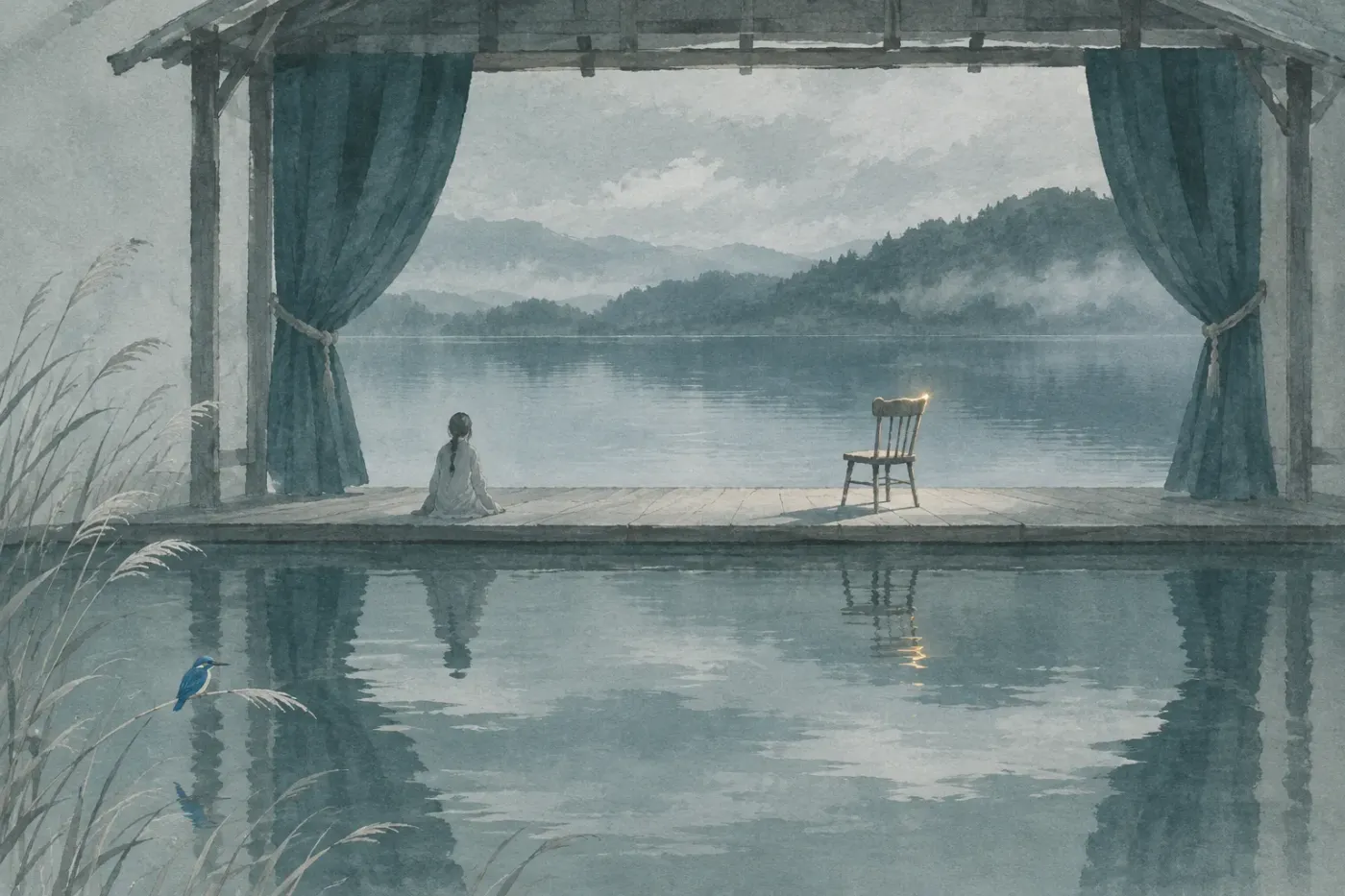
The night before the premiere, the little theatre on the corner is empty except for the cast. There’s no audience yet, and nobody to clap. The costumes are half-pinned. Someone’s coffee has gone cold on the edge of the stage, and the whole room smells of fresh paint because the set still isn’t finished. And yet, if you sat in the dark at the back and watched, you would see the whole play, every entrance of it, down to the moment when the lights go down and the old man finally forgives his son.
Watch the actor who plays the son. He has said his last line forty times this week. He said it under his breath on the bus, and once in the shower so loudly that his neighbour knocked on the wall. Tonight he no longer reaches for it. It comes up by itself, the way your own address comes when someone asks for it. His voice cracks in the same place it cracked yesterday, and nobody told it to.
By the time the curtain rises for real, the play has already happened a hundred times. Opening night is only the night the audience gets to see it.
Your life works the same way. Whatever has reached your world was rehearsed first, somewhere nobody could see, inside you.
The room behind your eyes
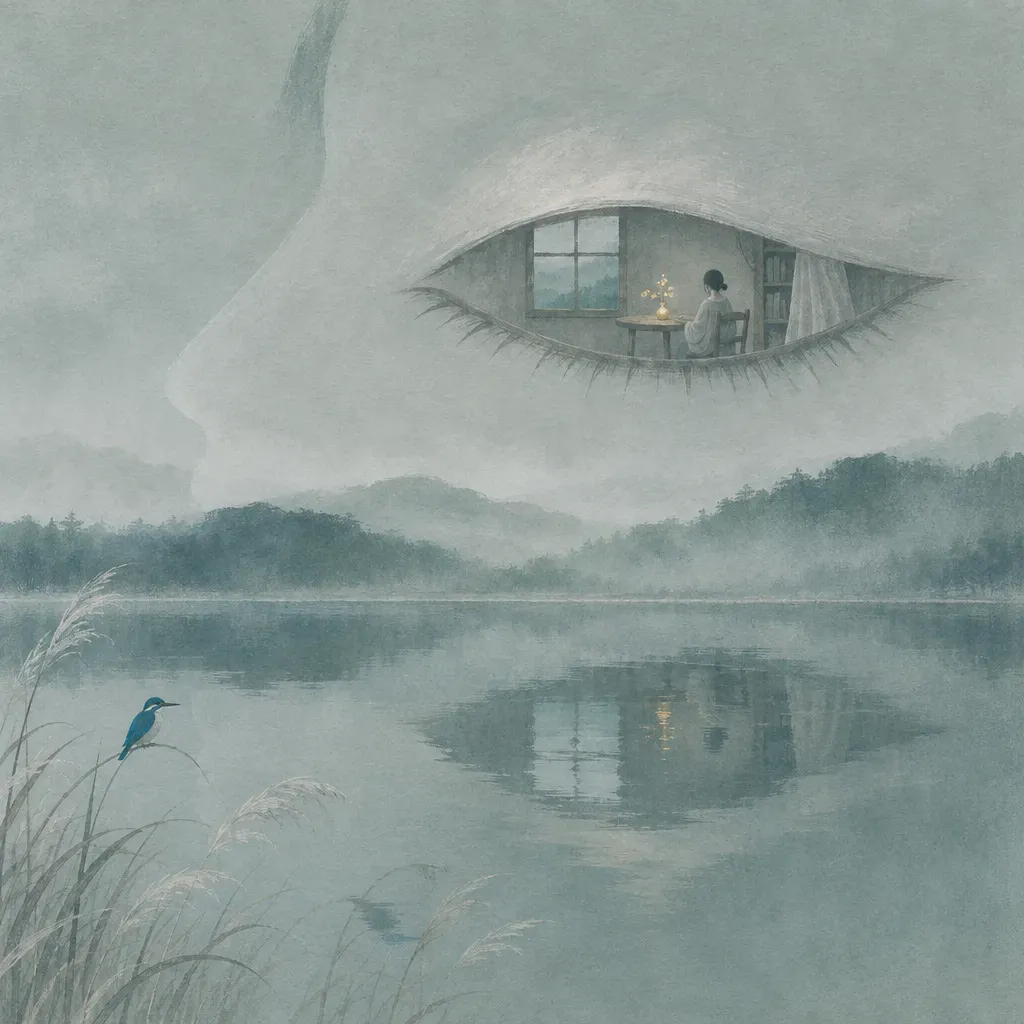
You have a rehearsal room. You use it every day, mostly without knowing.
It’s three in the morning and the house is quiet. You’re lying on your side, and the conversation with your boss has started again. You didn’t invite it. It began on its own, like a radio switching on in another room. He says the thing about the numbers. You answer, badly. He raises an eyebrow. You go back to the beginning and try again, and this time the eyebrow goes up sooner. Your jaw is tight and your feet are cold. You turn the pillow to the cool side, and the scene starts a third time, sharper now, with details you hadn’t thought of before: the creak of his chair, the colleague who looks away at the window.
Nobody would call that imagination. You’d call it worrying, or not being able to sleep. But look at what you’re actually doing. You’ve chosen a scene and you’re running it, adding gestures, adjusting the lighting, until you know it by heart. Any director would recognise the work.
The same room is busy when you imagine the doctor’s call, or the moment they say they’re leaving, and each time you’re on stage.
And then you’re surprised when the premiere looks exactly like the rehearsal. You walk into the office at nine, and before your boss has said a word, your jaw is already tight. Your body knows its marks. And he, who has no idea what you were doing at three in the morning, somehow finds the lines you wrote for him.
A closer lookWhatever you rehearse with feeling, you…
The word that matters here is scheduling. You are not hoping, you are not wishing. You are putting something in the diary.
Notice how much of your diary you have already filled without looking. The conversation you replay in the shower, the one where you say the perfect thing, or the terrible thing, or nothing at all and swallow it. The route you imagine to the hospital, to the bank, to the meeting. Each replay has a time and a place and a mood, and each one has been run so many times that when the real scene arrives, your body already knows its lines.
This is why a day can feel strangely like a script. It was one. You wrote it yesterday, in small pieces, while doing the dishes.
The good news is that the diary is not locked. A scene is scheduled by two things only: how often it is run, and how much feeling is in it. You can’t stop running scenes, because the room is always in use, but you can choose which scene gets the stage.
Here is a small, concrete way to begin. The next time you catch yourself rehearsing something you dread, don’t scold yourself and don’t push it away. Just say, cut, the way a director would, and run the scene again with a different ending, two minutes of it, until you feel the shoulders drop and the last line land well.
You are going to be rehearsing today anyway. You are simply deciding what goes on the schedule.
So you don’t need to learn how to rehearse. You’ve done it for years and you’re good at it; what’s new is choosing the play.
Why feeling matters more than detail
Many people try to “visualise” and give up, though they try hard. Eyes squeezed shut, they build the dream house room by room: the white kitchen, the garden through the glass doors. The picture is quite good. And they sit there in front of it like someone flicking through a brochure in a waiting room, polite and a little bored. After ten minutes they open their eyes, and the room they’re really in feels exactly as it did before. Nothing happens, and they decide that imagination doesn’t work for them.
But the mirror doesn’t read pictures. It reads what you assume, and assumption is made of feeling. A blurry scene felt deeply is far more powerful than a sharp image felt from a distance.
A closer lookA blurry scene felt deeply is…
If you have ever closed your eyes, tried to “see” something, and got only fog, this line is for you. Fog is fine. Fog is a beginning.
We are taught that imagination is a screen, and that a good imaginer has a bright, high-definition picture. So when the picture is dim, we decide we are bad at it. But watch how you imagine your fears. Is the picture sharp? Usually it isn’t. It is a flicker, a half-sentence, a feeling in the chest, and yet it works on you for hours, long after the thought itself has gone.
The power is never in the resolution. It is in the inside-ness. A sharp image you watch from across the room asks nothing of you. A blurry moment you stand inside asks for your whole body: the weight of the keys in your hand, the warmth of the room, the small breath of relief.
So change the question you ask while you practise. Don’t ask “Can I see it clearly?” Ask “What does it feel like to be me, here, now?” Then follow the answer through the senses you trust most. Some people hear first, some feel the floor under their feet, and some only smell something, the coffee, the wet stone of the entrance, and that is enough.
Try this tonight with your eyes closed: forget the picture entirely, and find just one sound from your scene. A voice saying your name. A door closing softly behind you. Stay with that sound until your chest answers it. That is a full rehearsal.
Go back to three in the morning for a moment. How sharp was that scene with your boss, really? You couldn’t have told anyone the colour of his shirt. You could have described, though, the knot in your stomach and the exact weight of the silence after you spoke. You weren’t watching the bad scene. You were in it.
So the art is to step inside one small moment of your desire and feel it from there, as if it were happening to you now, with your own eyes looking out.
And the feeling you’re looking for is quieter than most people expect. When we finally feel something about a wish, we tend to reach for fireworks: a shout of joy, or tears. Those are lovely, and they burn out in a minute. The feeling that lasts is much smaller. It’s the one you have about things that are already yours, like your own front door, or the way you take your coffee. Nobody gets excited about their own front door. They just walk through it. That flat, warm of course is the feeling of having arrived, and the mirror reads it more easily than any amount of excitement.
One small scene
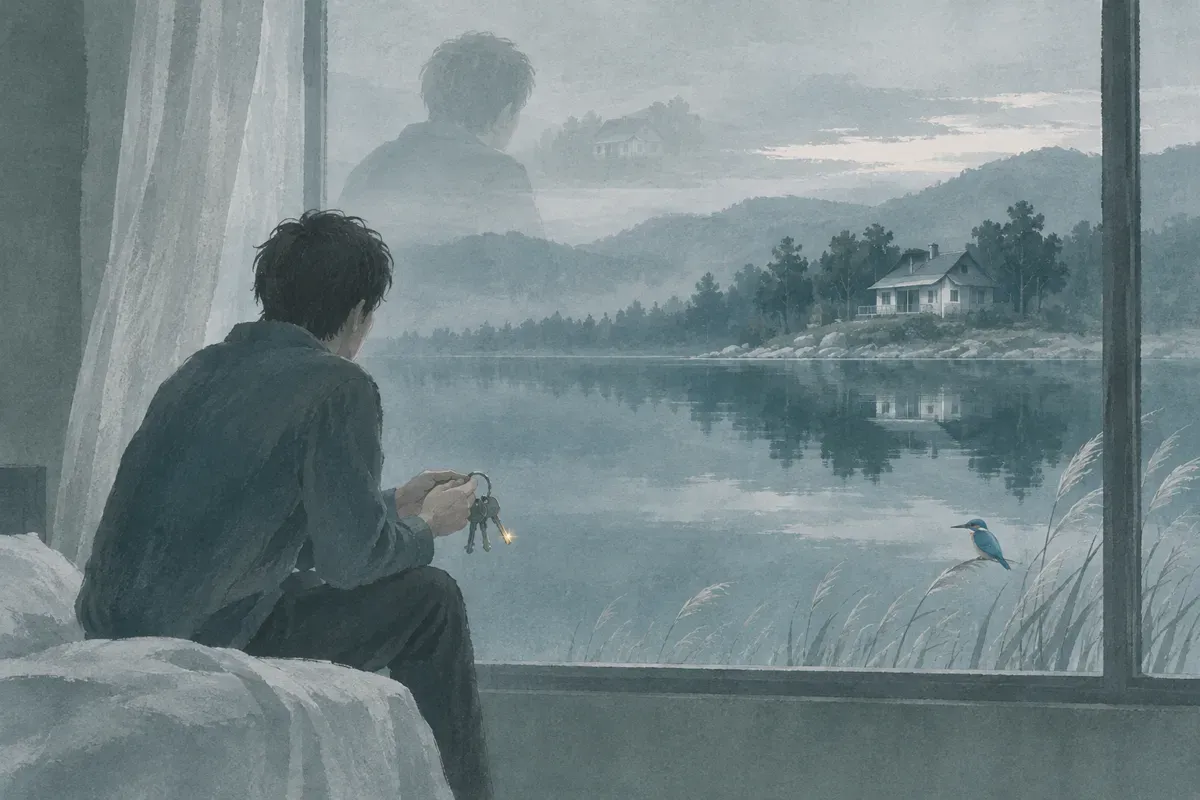
Here is the practice, and its smallness is its strength. Don’t imagine your whole new life. Choose one short scene that would naturally happen after your wish has come true. A scene that implies it’s already done.
If you want a new job, don’t imagine the interview. Imagine Friday evening, a month later, when a friend asks “How’s the new place?” and you hear yourself say, “Honestly? I love it.” If you want a home of your own, imagine the click of your own key in your own lock, and the particular smell of the hallway.
A scene of a few seconds, a sentence or a sound, something that could only happen if the wish were already fulfilled.
Don’t imagine getting there. Imagine a moment that happens after you’ve arrived.
How do you know you’ve picked well? Run the scene once, slowly, and pay attention to your body. If your shoulders drop a little, or a breath goes out longer than it came in, the scene fits. Your body is saying yes, this is mine. If instead something tightens, a small inner voice muttering who am I kidding, the scene is too big for you right now. Shrink it. Instead of the speech at the award dinner, take the moment afterwards when your sister squeezes your arm in the corridor. Instead of the house by the sea, take the sand you shake out of your shoes at the door. A small scene you can believe will carry you further than a grand one you can’t.
Put someone else in it, or something you can touch. Scenes with only you in them drift off into daydream. A voice saying one sentence, a hand on your shoulder, a key, a warm cup: these pin the scene to the ground the way a real day is pinned down.
Then keep it. The same scene, every night, for at least a week. Changing it each evening is like rehearsing a different play every night and hoping one of them is ready for the premiere.
The drowsy door
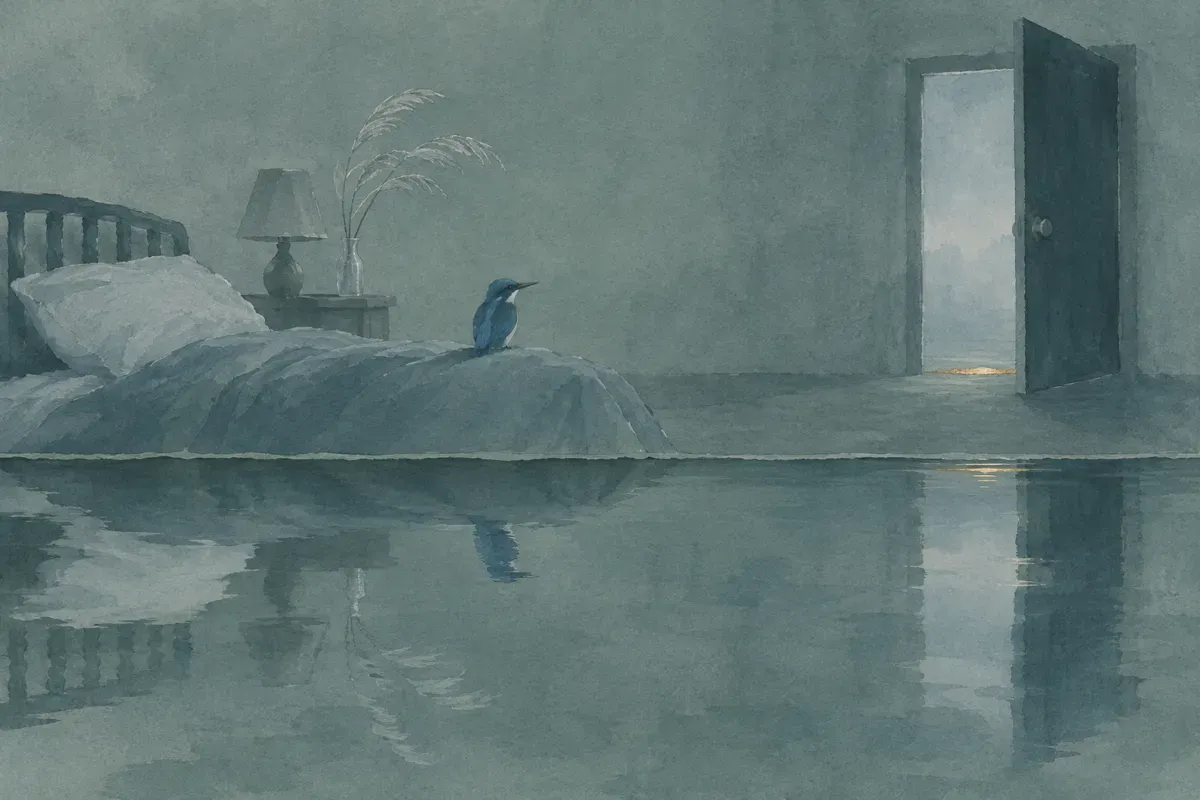
There’s a time of day when the rehearsal room’s door stands wide open: the few minutes just before you fall asleep.
You know the state. Your thoughts go soft and strange, and a face from the afternoon floats up for no reason and drifts away again. In that drowsy place the busy, arguing mind grows quiet and the critic dozes off. What you feel there sinks straight down into the deep layer, the one the mirror reads, without being checked at the gate.
So use it. When you lie down tonight, let your body grow heavy. Breathe slowly. Then step into your small scene. Hear the friend’s question. Feel your own key. Let it play, and when it ends, let it play again. The same few seconds, looping softly, like a song you fall asleep to. Don’t try hard. Let it become more and more natural, until it feels ordinary, the way true things feel. If you drift off in the middle of it, perfect: you’ve carried it down with you.
Rewriting the day
There’s a second rehearsal practice, and on some nights it will be the more useful one: rewriting what has already happened.
Every evening, before sleep, think back over your day. Find one moment that didn’t go the way you wanted. A sharp word you spoke, say, or a message that hurt you.
Now, in your imagination, play it again, the way you wish it had gone. You stay calm instead of snapping, or the message arrives kind. Don’t just think it; feel it, as if this were the true version of the day. Run it a few times until it feels real.
Take an ordinary one. At dinner a child knocks over a glass of juice, and you snap, much louder than the juice deserved. You see the small face close. Tonight, in bed, go back to the table. The glass tips. The juice runs toward the edge. And this time you hear yourself laugh and say, Whoops, grab the cloth, and the child grins and grabs it. Stay with it until you can feel that laugh in your own chest.
You still know what happened. Tomorrow you can still say sorry for the real one, and you should. The rewrite doesn’t replace the apology. It changes who makes it: someone who already knows how to laugh at spilled juice. What you’re refusing is to let the old version be rehearsed again tonight, in your sleep and in your body, and repeated tomorrow. You’re sending the mirror a corrected script. Again and again you’ll find that people and situations you “rewrote” begin to meet you differently, as if they had read the new version too. And you fall asleep without carrying the sting of the day into your dreams.
When it feels like pretending
Somewhere in the first week, a voice will speak up. This is silly. You’re a grown adult lying in the dark, making things up.
Give it an honest answer. Yes, you’re making things up. You were making things up at three in the morning with your boss, too, and that worked so well it ruined your Monday. Nobody called it silly then. You took that rehearsal completely seriously, and it took you seriously back. The only new thing now is that you’ve chosen the script.
A second voice is quieter and harder to dismiss: What if I rehearse it every night and it never comes?
Then look at the rest of your day. Five gentle minutes of the good scene at night can’t do much if the other sixteen hours are spent rehearsing its absence: checking, sighing, telling a friend over lunch how hopeless it all is. Whichever play gets the most rehearsal, with the most feeling, gets the stage. That’s no reason to drop the five minutes. It’s a reason to carry the scene into the daytime too. When you catch yourself running the old play at the bus stop, say cut, quietly, and slip back for one breath into the friend asking and your own voice saying I love it.
Rehearse, then let go
After the rehearsal there’s one last thing to do, and it may be the hardest: let the play go. The cast doesn’t stand at the theatre door at midnight, anxiously checking whether the premiere has happened yet. They rehearse, then go home to sleep. They trust that opening night will come.
Do the same. Rehearse your scene with feeling, then release it, the way you’d post a letter. You don’t open the mailbox every ten minutes to check if it’s still there. You know it’s on its way.
A closer lookRehearse your scene with feeling, then…
Most people will do the first half of this sentence and fail at the second, and the second is where the whole thing is kept or lost.
Think about what a letter in the post box means. You wrote it carefully and put the right address on it. Then you let go of the flap, and you heard it drop. You don’t stand there pushing your hand back in to check it arrived, and you don’t phone the post office at midnight. Dropping it is the act of trust.
Now look at how you handle a wish. You rehearse it, and then you check. Is it closer? Did the message come? Why is nothing different today? Every check is your hand going back into the box, and the mirror reads that hand: I’m not sure it’s there.
Releasing is not forgetting, and it is not pretending you don’t care. It is going about your day as someone whose letter is already on its way. You can feel glad, and you can feel a quiet little thrill whenever you remember it. What you stop doing is supervising.
A simple habit helps. When the rehearsal ends each night, finish with one slow breath out and one sentence, spoken inside: It is done. I let it go. Then turn over and sleep. In the morning, don’t ask whether anything has happened yet. Ask only whether you can find a little more gladness in the day than you did yesterday, because that is the work of the day, and the post office does the rest.
You’ll recognise the checking from inside when it starts. A little lurch every time the phone lights up, or the habit of counting days and feeling the weeks as weight. Each of those is a hand reaching back into the post box, and the mirror reads the hand more clearly than the letter.
If doubt rises during the day, don’t fight it. Just return, briefly, to the feeling of the scene. Ah yes. The friend asking. “I love it.” Then go on with your day as someone whose premiere is already scheduled.
Opening night
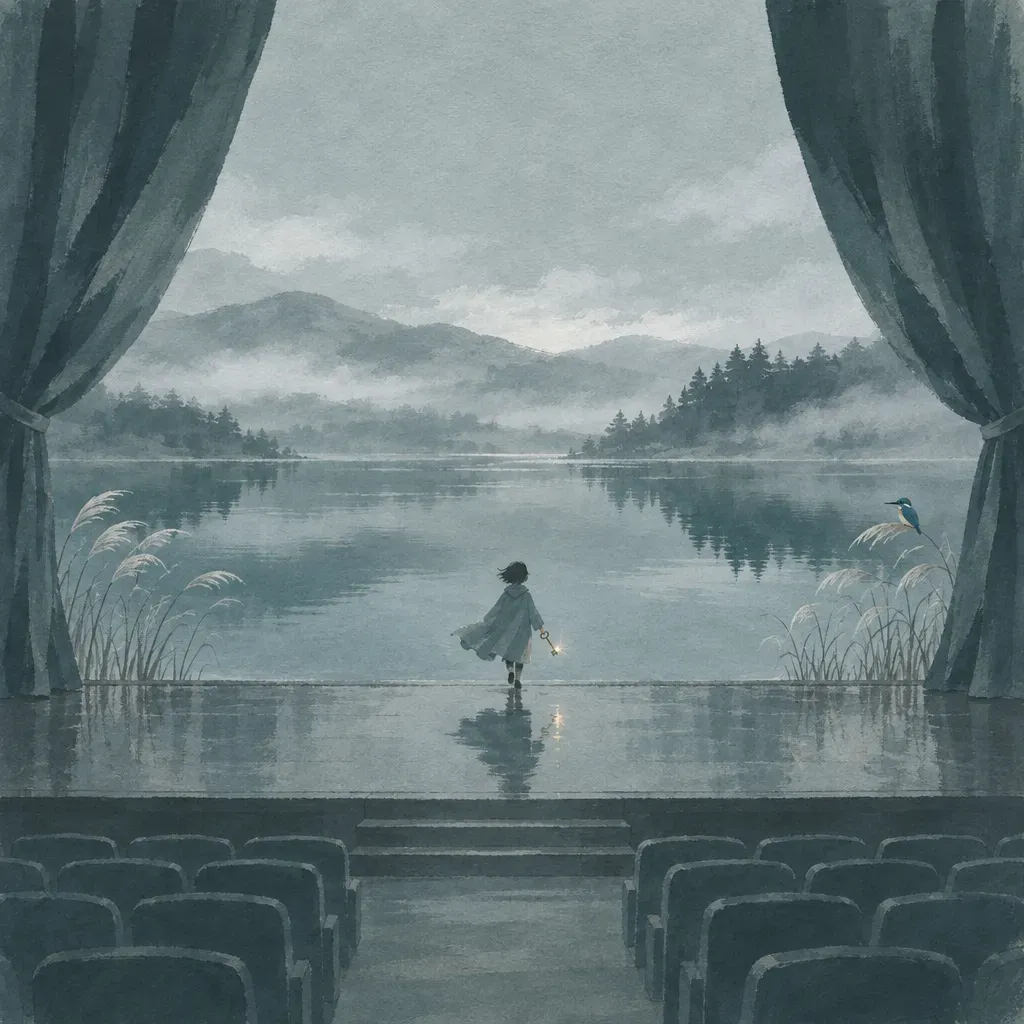
One day, not on your schedule and often in a way you didn’t plan, the curtain will rise. A friend will ask “How’s the new place?” and you’ll hear yourself say the very words you rehearsed. Your key will click in your lock, and you may feel a strange shiver of recognition: I’ve been here before.
You have, many times, in the dark of the rehearsal room, before anyone else could see.
Tonight, before sleep, play one small scene that happens after your wish has come true.