Chapter 9
The Echo
The delay is not a refusal.
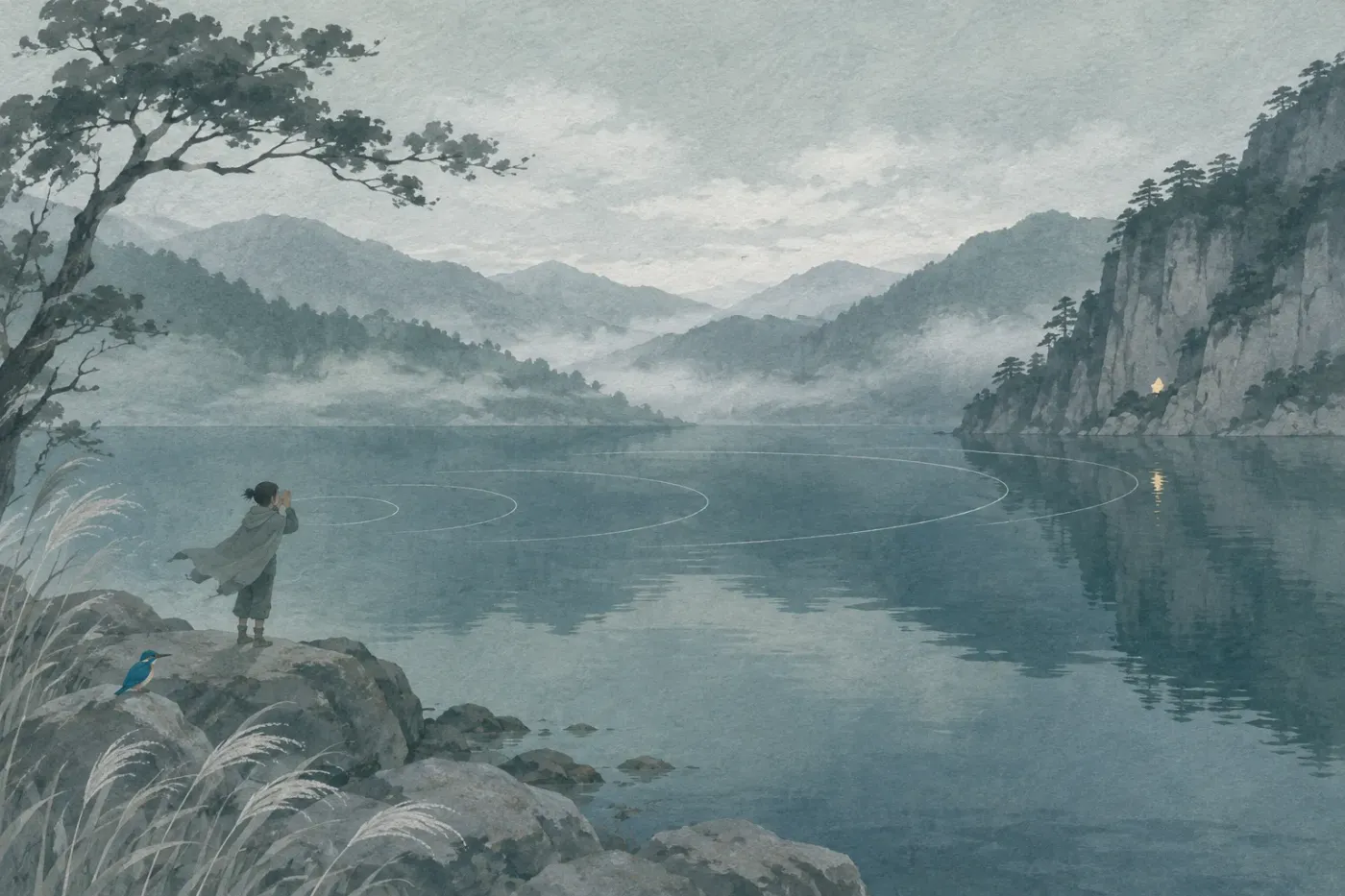
A girl stands at the edge of a canyon with her father. He tells her to call out her name.
She shouts it, as loud as she can. Then: nothing. Silence. The wind. A bird somewhere below. She turns to her father, disappointed. “It didn’t work.”
He puts a finger to his lips. “Wait.”
And then it comes, rolling back across the stone, faint and clear: her own name, in her own voice, from very far away. It had worked all along; the sound had needed time to cross the distance, that’s all.
The silence after the call
If you’ve begun to practise anything in this book (going first, reading your compass, rewriting a belief, rehearsing a scene) you have probably met the silence.
You change something inside. You feel it. And then you look at your life, and… nothing. The same account balance, the same commute, the same job, the same face at breakfast. The world seems not to have noticed.
This is the moment where most people give up. They say: I tried it, it doesn’t work. And they go back to the old way, which at least has the comfort of being familiar.
But the silence is not a “no.” It’s the canyon. Every call takes time to come back, and a big change means a wide canyon, so its silence lasts longer.
Why there is a delay
Why doesn’t the world change the instant you do? Wouldn’t that be easier?
Imagine if it did. Every fearful thought and every flash of “what if it all goes wrong” would instantly become your world, and you’d have no time to notice what you were doing, let alone correct it. Life would be a minefield of your own passing moods.
The delay is a kindness, a buffer of grace. It gives you time to feel what you’re sending and to turn before the old picture hardens into form. It gives you room to practise and to get it wrong a few times. Your new state gets to settle and deepen until it’s steady enough to hold the shape of a new life.
There’s another reason, too. Your current life is held in place by a great many things: habits, routines, other people’s expectations, your own body’s familiarity. A new reflection has to make its way through all of that gently, without breaking what doesn’t need breaking, rearranging the furniture in a way you can live with while you are still living in the room. That kind of moving is done slowly.
The delay isn’t the world refusing you. It’s the world making room for you.
A closer lookThe delay isn't the world refusing…
There is a kind of pain that is not about the thing you want. It is about the waiting, and about what the waiting seems to mean.
When nothing moves, the mind writes a story with a very quick ending: so the answer is no. It feels logical. You asked, nothing came, therefore refusal. But that story has an assumption hidden in it, that the world answers at the speed of your wanting. Nothing else in your life works like that. A seed isn’t refused when there is no shoot on the second day. A letter isn’t refused when it hasn’t arrived by tonight. You already know that distance takes time.
Now try the other reading. The delay is room being made. Your life is full: full of routines, of people, of years of expectation. A new reflection can’t arrive by pushing all that aside. It has to find a place, and make a place. That is what the quiet is doing.
Here is something to do with this. Next time you feel the sting of still nothing, translate it. Replace “It hasn’t come” with “It is making room.” Say it out loud. Then ask one practical question: If room is being made, is there room I can make too? Perhaps it is a drawer, an evening, a conversation you’ve been avoiding. A little tidying on your side is a way of saying to the world, I’m expecting guests.
The waiting stops being a verdict. It becomes preparation, and you are part of it.
Don’t dig up the seed
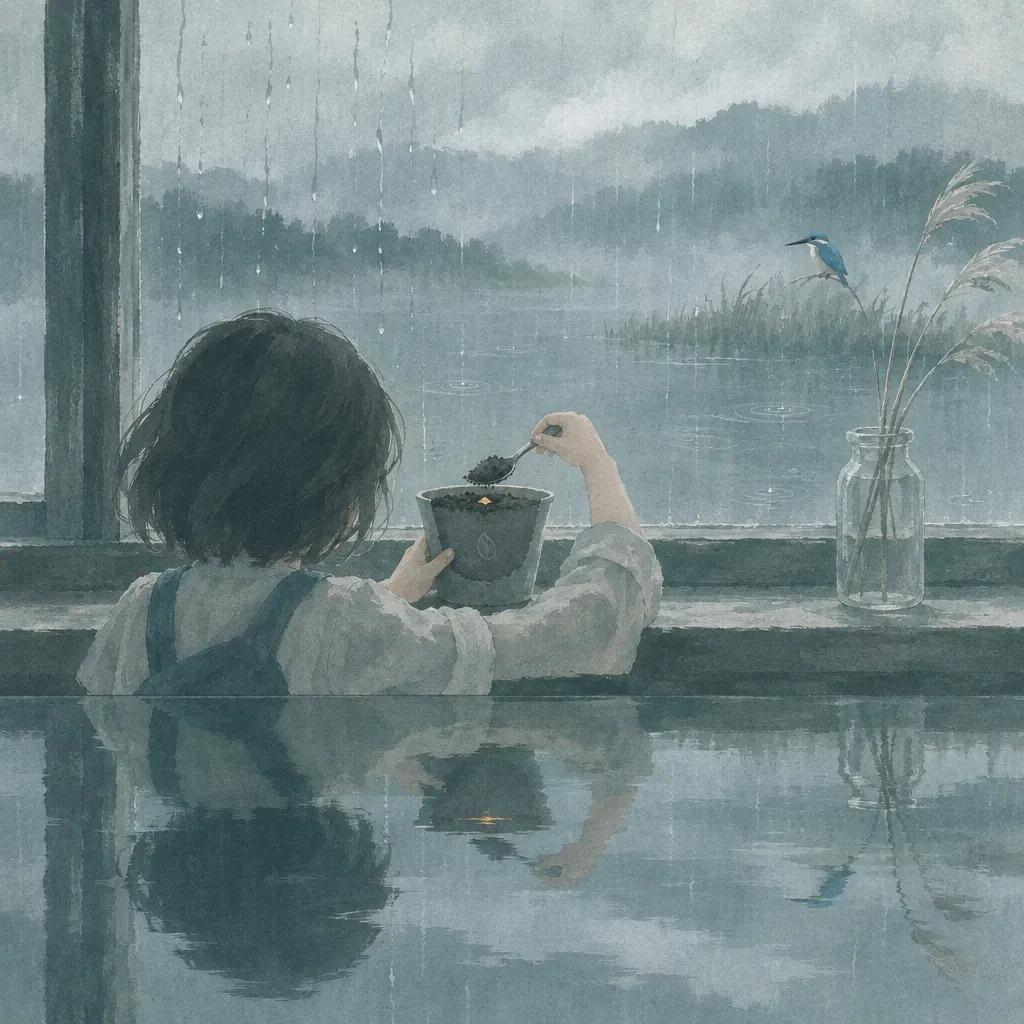
A child plants a bean in a cup of soil. The next morning, she checks. Nothing. The morning after, nothing. On the third day, impatient, she digs it up to see if it’s growing.
It was. There was a tiny white root, just starting. And now it’s lying on the windowsill, drying out.
This is what we do with our new states. We plant them, and then we keep digging them up. Is it working? Has anything changed? Why not yet? Each check is a small act of doubt. Each doubt says to the mirror, I don’t really believe this is growing, and the mirror reflects that as faithfully as it reflects anything else.
A closer lookEach check is a small act…
Be honest about how often you check. Not just the bank app or the phone. The inner check, the half-second glance at your own life every morning to see whether the thing has begun. Is it different? Is it closer? Was that a sign?
It feels harmless. It feels like paying attention. But look at what the check carries inside it: I don’t yet trust that it’s growing. The mirror doesn’t read your words, it reads what you are assuming, and a person who needs to check is assuming that it might not be there.
The child digging up her bean is not careless. She is eager. That eagerness is lovely, and the lesson isn’t to stop caring. The lesson is to move the caring somewhere it can’t damage the root.
So give the checking a home. Choose one time in the week, a Sunday evening, say, and make it the only time you look. Write down what you see, small things included: a kinder tone, an easier morning, an unexpected message. That is a harvest log, not an inspection. For the rest of the week, when the urge comes, simply say: Not today. It’s growing in the dark. Then do something with your hands. Water a plant. Wash a cup.
You will find that the urge to dig has less to do with the seed than with a feeling you haven’t yet given room to: the fear that you’re wasting your time. Feel that fear kindly for a breath. It doesn’t need you to dig. It needs you to stay.
The seed needs the dark. It needs you to keep watering it and otherwise leave it alone, trusting the work underground.
How to live in the silence
The silence is not empty time to be endured. It’s where the real practice happens. Here is how to live in it.
Keep calling. Keep returning to the new state, every day, in small ways. Not with strain. With steadiness. A call repeated with calm confidence carries further than one desperate shout.
Don’t react to the old echo. For a while, the canyon may still be sending back the old calls, the things you used to expect: a bill, or a cold reply from someone you’d hoped would be warm. Recognise them for what they are: old echoes, sent before I changed. Don’t answer them by changing back.
Look for the first faint sounds. The echo often arrives quietly at first. A stranger is unexpectedly kind. You feel calm in a situation that used to frighten you. A small sum arrives. A conversation goes better than usual. These are the first syllables of your name coming back across the canyon. Write them down when you notice them, because they are proof that the sound is travelling.
Make the waiting pleasant. Ask yourself: if I knew for certain that it was coming, how would I spend the waiting? Probably not anxiously. You’d enjoy the days and prepare a little, keeping it to yourself and smiling about it. Do that. Enjoying the silence is the clearest signal there is that you know the echo is coming.
The speed of ease
Here is a secret about time that surprises almost everyone: the less you need the echo to come quickly, the faster it comes.
A closer lookthe less you need the echo…
This sentence is easy to misread as a trick: act uninterested and it will arrive. That is just another way of gripping, and the canyon can tell.
What the sentence describes is a real change in your state. Hurry has a feeling. It is tightness, a low hum of what if not. That feeling is exactly what you are sending while you wait, and it is not the feeling of the thing you called for. You called out in confidence. If your waiting feels like panic, a second, smaller call is going out beside the first, and it says the opposite.
So the work in the silence is not to get rid of the wish. It is to change the flavour of the waiting. Wanting with a smile is a different instrument from wanting with a clenched jaw.
Here is a way to practise. Ask: If I knew the echo would arrive in exactly three weeks, how would I spend today? Write down the honest answer. Probably you would cook something good. You’d tidy a corner. You’d laugh more easily. You’d stop refreshing things.
Now do that today, as though the date were known. You aren’t lying to yourself. You are acting from the certainty you chose when you made the call. And you’ll notice something quietly amusing: the days start to pass faster when you are no longer measuring them.
Care just as much about where you’re going. Care a little less about the clock.
Impatience is a form of doubt. It says: I’m not sure this will happen, so it had better happen soon. That doubt is part of what you’re sending, and it slows the echo down. Patience, real patience, is a form of certainty. It says: this is coming, so the exact day doesn’t matter much. And certainty is what the mirror responds to most clearly.
So the shortest way through the silence is not to push harder. It’s to care a little less about how long it takes, while caring just as much about where you’re going.
The name coming back
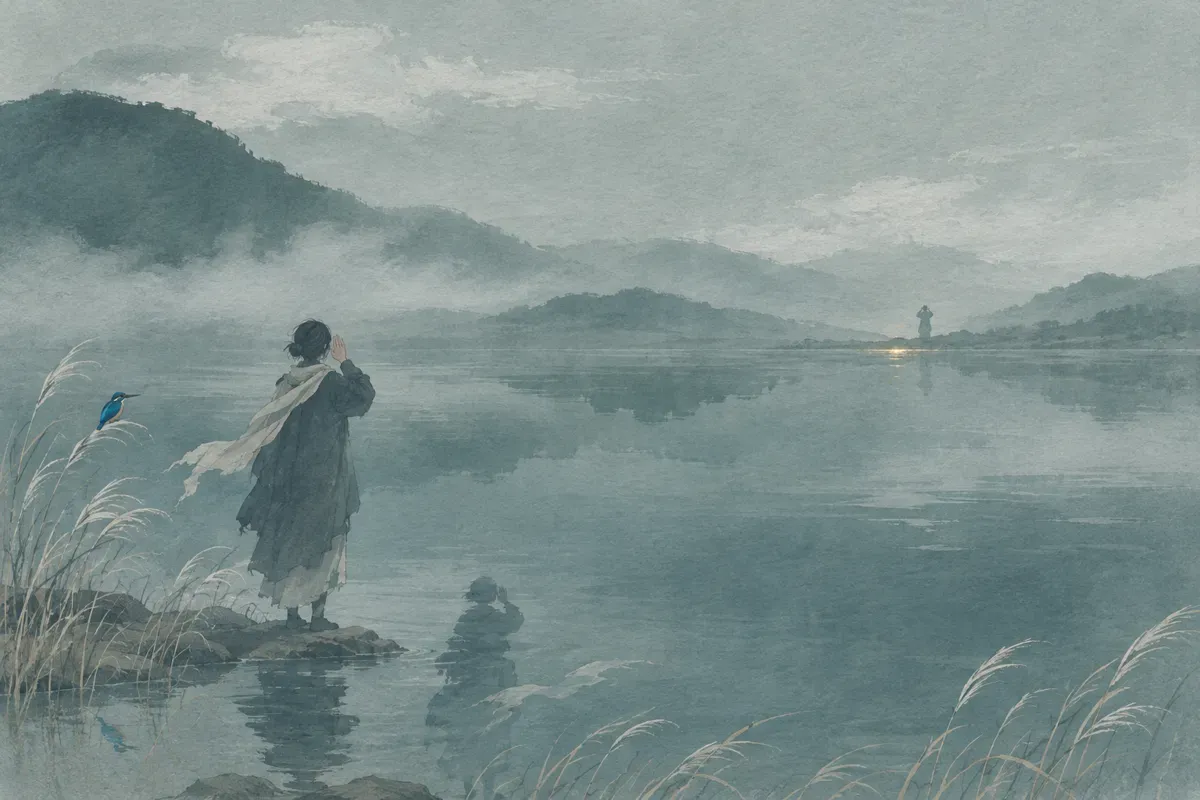
There will be a day, not long from now, when you’ll be standing at the edge of your life and hear it: faint at first, then clear. The thing you called for, coming back, in your own voice.
You may be tempted to say, it took so long. But you’ll know better by then. It came exactly when the sound could cross the distance, and not a moment later.
And by then, you’ll have learned the most useful thing a person can learn about this life: when the canyon is silent, you don’t stop calling. You put a finger to your lips, and you wait, smiling, for your own voice to return.
Today, when nothing seems to change, whisper: the echo is on its way.