Chapter 10
Old Light
What you see now left its source a long time ago.
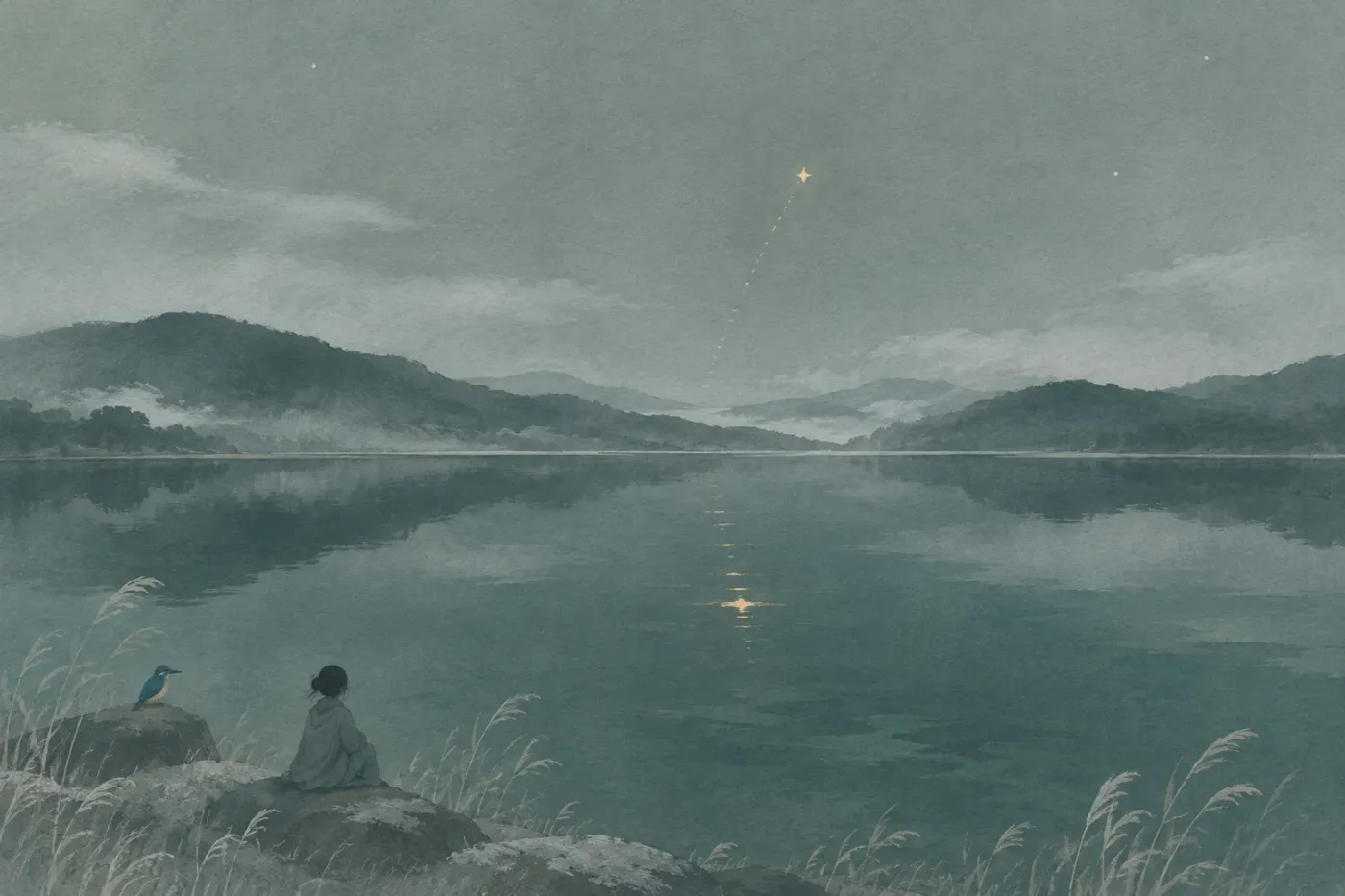
On a clear night, far from the city, you lie on your back in a field and look up. The sky is crowded with stars. One of them, low over the trees, is especially bright.
What you’re seeing isn’t the star itself. It’s light that left it long ago: years, centuries, sometimes thousands of years before you were born. It has been travelling all that time to reach your eyes tonight. The star itself may have changed completely since then. It may have dimmed or shifted colour. It may not even be there anymore. What you call “the sky tonight” is a picture of the past, arriving now.
A closer lookWhat you call "the sky tonight"…
Stay with how strange and how ordinary this is. Every night, billions of people look up and say, “There it is.” And what they are seeing has already happened.
Your life reaches you the same way. The conversation with your boss this morning was the arrival of an old decision about how you are treated. The tiredness you feel on Sunday evening is the arrival of a belief you formed long before this week. None of it is happening to you now. It is landing now. That small difference in grammar changes how you stand.
When you think “this is how things are,” you are looking at a postcard and calling it the weather. The postcard is accurate about the day it was written. It tells you nothing about the day it is read.
Try a quiet experiment. Pick one circumstance you are tempted to take personally: a cold reply, a figure on a screen, a face in the mirror on a bad morning. Say to yourself, slowly: This is a picture of the past, arriving now. Don’t argue with it. Don’t fix it. Just let it be a picture.
Something loosens when you do this. You can look at the light without being ruled by it. You can still pay the bill, answer the message, wash your face. But you do all of it as a person who knows the star has moved, and that the real you is already shining somewhere further on.
The light of your circumstances
Look around at your life. The flat or house you live in. The balance in your account. The state of your body. The people you see every day and the way they treat you. The work you do and what it pays.
It all looks very now, and very much like the truth about you. But it’s old light.
This is why judging yourself by your circumstances is like judging a star by its old light. You look at the bank account and think: this is who I am with money. No. This is who you were, when this light set out. You look at the loneliness and think: this is my life. No. This is the light of a time when you believed something about yourself that you may already be letting go.
Taking orders from old light
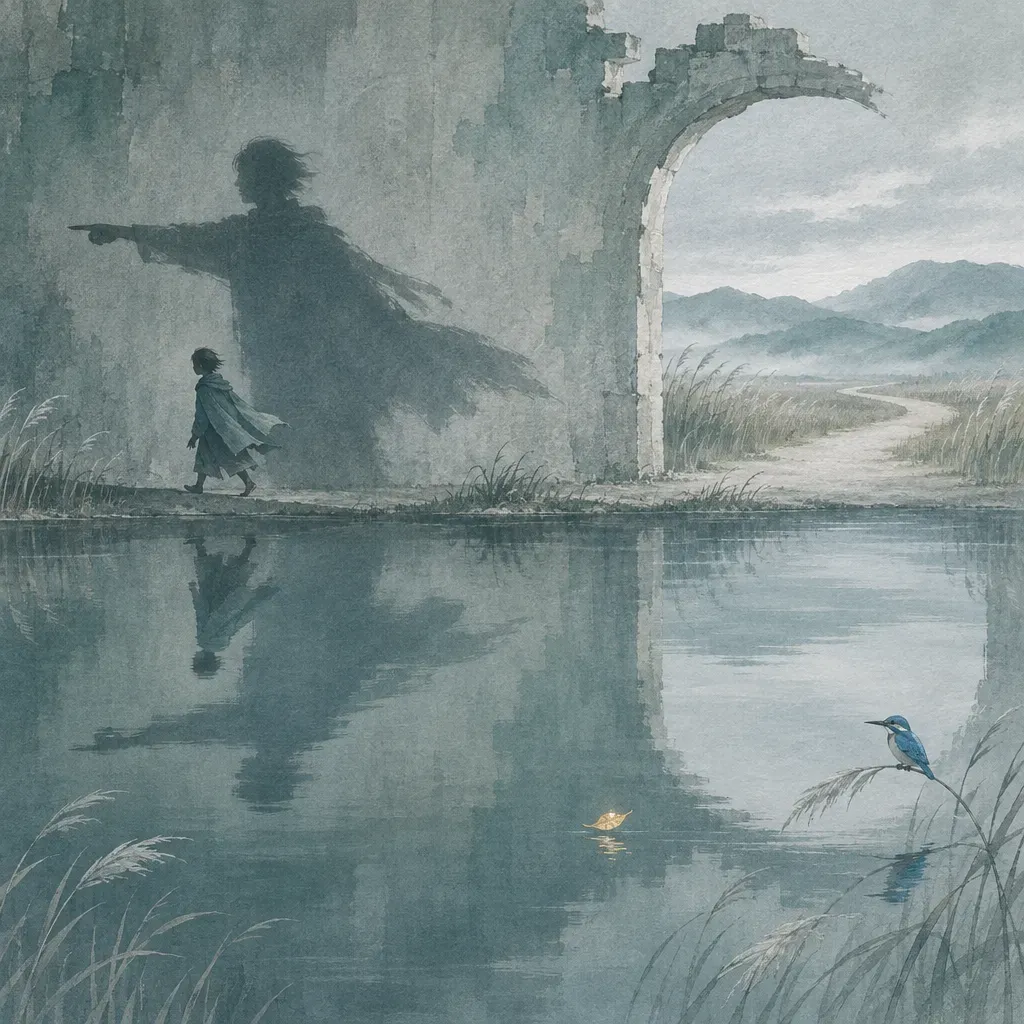
The real trap isn’t that the light is old. It’s that we take orders from it. We look at the circumstances and let them tell us how to feel. The account is low, so we feel poor; the body is tired, so we feel old. And that feeling becomes the new light we send out, which arrives later as… more of the same circumstances.
This is how lives get stuck for years. People aren’t cursed. They keep reading yesterday’s light and sending it back out as today’s.
Circumstances are a report, not an instruction.
A closer lookCircumstances are a report, not an…
A report tells you what happened. An instruction tells you what to do next. Most of us have quietly merged the two.
The account is low: report. So I must feel anxious and hold on to every coin: instruction. Someone hasn’t called: report. So I must feel unwanted and stop reaching out: instruction. The report never gave the instruction. You wrote it, in a voice so fast and so familiar that it sounded like the facts themselves.
Here is how to catch the merge. When something in your life lands, split it in two on paper. On the left, write only what a camera would record: “Balance: 214.” “Message unanswered since Tuesday.” On the right, write what you told yourself to do or feel because of it: “I’m going to be in trouble.” “They don’t care.” The right column is not the circumstance. It is your instruction, and it is the thing that becomes the next light you send.
Now look at the left column alone. It is much smaller, much quieter, much less loud than you remembered. A camera has no opinion.
Then do something you may not expect: write a new right-hand column. Choose an instruction you would like to follow. “I handle this one step at a time and feel steady.” “I send a warm message and go on with my day.” The report stays the same. The next light changes.
You can read any report you like. You only ever obey yourself.
To break the loop, you have to do something that will feel unnatural at first: let your state of being be chosen by you, not by your circumstances.
Circumstances don’t decide
This sentence can sound harsh, so let me say it softly: your circumstances don’t matter nearly as much as you think. They are real, and so is your pain. They just don’t have the power to decide who you are being; only you have that.
Two people lose their jobs on the same day. One says: it’s over, I’m finished, nobody will hire me at my age. The other says: well, I didn’t love that job. I wonder what’s next. Same circumstance, different state. A few months later, very different lives, and not because of what happened to them but because of what they made it mean.
The circumstance is neutral and arrives without a label. You write the label, and the label is what the mirror reads.
So when something arrives, good or bad, pause before you label it. Ask: what could this mean that helps me? A lost job can mean “I’m finished,” or it can mean “I’m free.” A cancelled plan can mean “nothing ever works out,” or it can mean “this space was needed for something else.” You get to choose, and whatever you choose becomes new light.
Living by new light
How do you live by the light of who you are becoming, when all you can see is the light of who you were?
You look at your circumstances the way an astronomer looks at old starlight: with interest, but without taking it personally. That’s the light from before. You deal with what’s in front of you: you pay the bill and show up for the work. But you don’t let it set your inner state. You set your inner state yourself, every morning, the way you’d choose your clothes.
When the old light says you’re poor, you answer, inside: that’s old light. I’m someone who is learning to feel rich. When it says you’re alone, you answer: that’s old light. I’m someone who is loved and is becoming more open to it.
The new light is already travelling
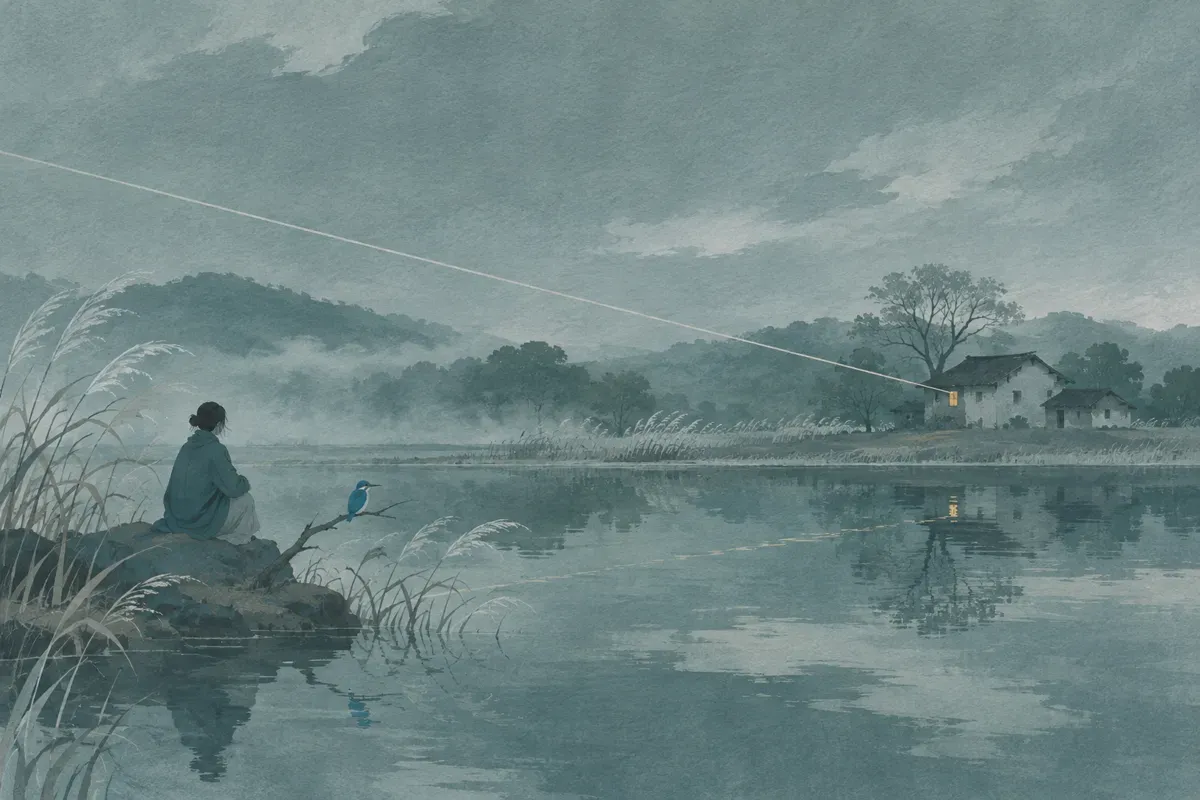
Here is the most hopeful thing about starlight. The moment you change who you are being (truly, in feeling) new light leaves you. You can’t see it yet, but it has already left, and it cannot be called back. It’s on its way to arrive as new circumstances, as surely as the old light arrived as these.
Every day you spend being the new self, you send out more of it. Every day you spend reacting to the old light, you send out more of the old.
So the question is never “why are my circumstances still like this?” That’s like asking why a star still looks the way it did centuries ago. The question is: what light am I sending today? Because that is the sky you’ll be standing under, a little while from now.
A closer lookThe question is: what light am…
This is the question that turns a person from a spectator into a source.
Watch how differently it feels from the other question, why is my life still like this? That question points backwards. It collects evidence, and it comes with a small weight in the chest, like trying to change a photograph by staring at it. The other question points forward and has your hands in it. Light, today, is something you can actually make.
What does sending light look like in an ordinary day? It is not a grand gesture. It is the feeling you carry into the first conversation. It is the sentence you say to yourself when you see the bank balance. It is the tone with which you greet your own face. These are the photons. They are small, and there are a great many of them, and they all leave.
So build a tiny daily habit around the question. Three times a day, at a point you already pass: a doorway, a kettle, a traffic light. Ask: What light am I sending right now? Don’t judge the answer. Just notice it. If it is old light, you don’t need to scold yourself. Take one breath, and send a little of the new: a relaxed jaw, a half-smile, one honest thought of this is already coming.
You can’t see the new light leave. But you can feel it go. And somewhere, quietly, a little sooner than you expect, it is on its way to becoming the sky you stand under.
Today, when your circumstances speak, remind yourself: that’s old light. I’m sending new.