Chapter 13
The Open Hand
Grasping pushes the good away.
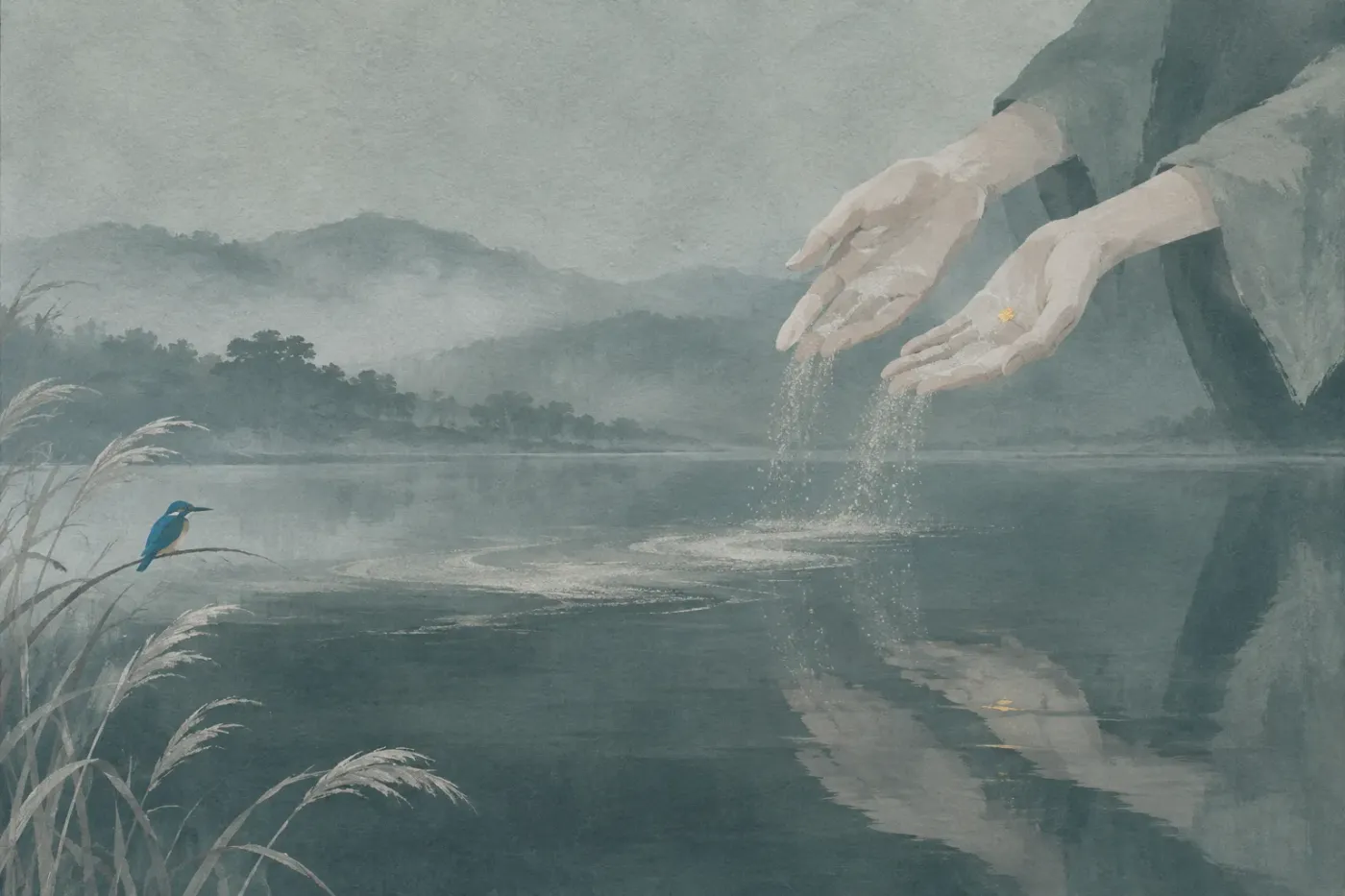
Try to fall asleep. Really try. Concentrate hard on falling asleep. Clench your will around it. Focus every ounce of effort on sleep, now.
You know what happens. The harder you try, the more awake you become. Sleep comes only when you stop trying, when you turn over and stop caring whether it comes at all. Some of the most important things in life work exactly like sleep.
The fist full of sand
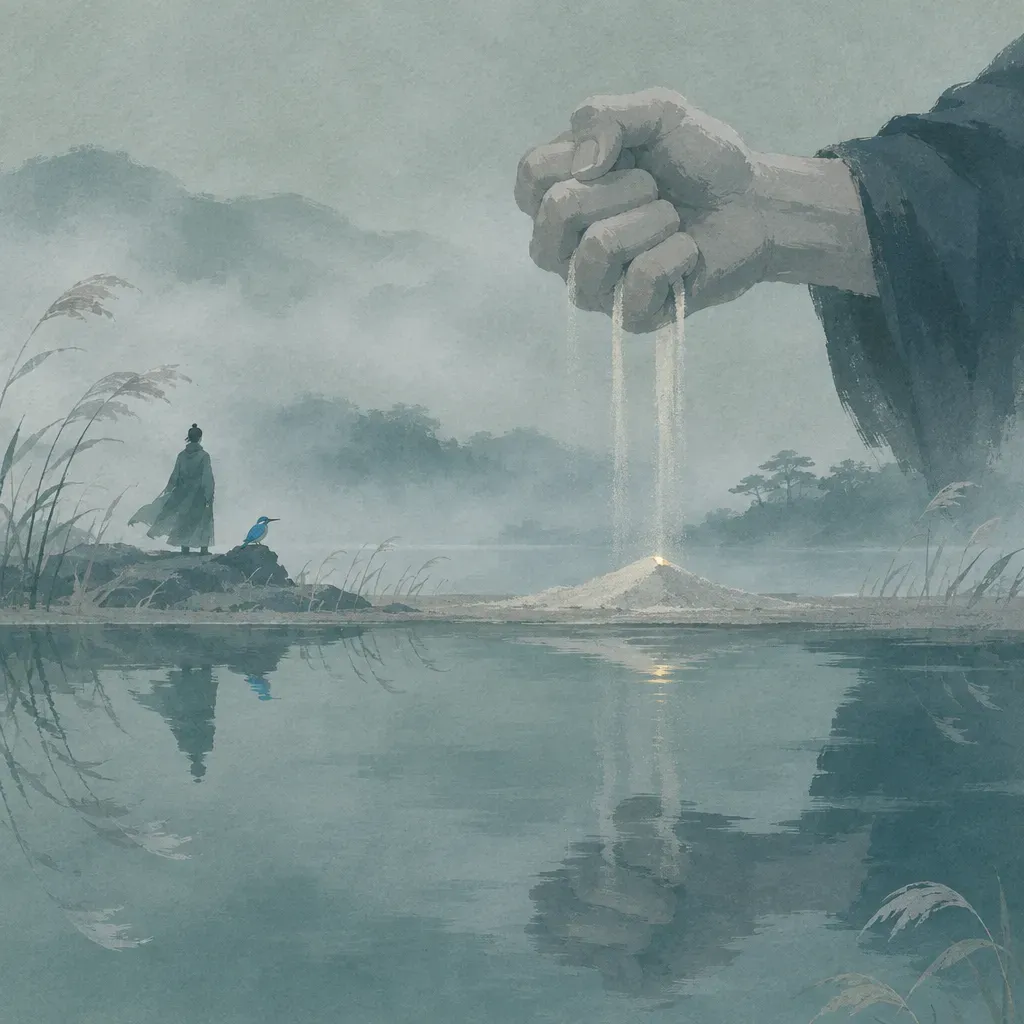
Pick up a handful of dry sand. Squeeze it tight, determined not to lose a single grain. Watch what happens. The tighter you squeeze, the faster it runs out between your fingers.
Now open your hand, palm up, relaxed. The sand rests there, quietly, as much as your hand can hold.
A closer lookThe fist feels stronger. The open…
The first half of this line is the one you have been trained to believe. The second half is the one your life has been trying to show you.
Why does the fist feel stronger? Because it feels like doing something. Gripping gives the nervous system a job. When we’re afraid of losing something, tightening is the nearest thing to protection we know. So we tighten our jaws on the money, our attention on the person, our schedules on the future. And for a moment it feels safe.
But a fist can only hold what fits inside it. It cannot receive anything new, because it is already full of effort. Notice, too, what it does to everything near it. A friend who feels gripped steps back. An opportunity that feels forced starts to feel heavy. Even you, gripping a plan, stop seeing the better road that is going by on your left.
An open hand is not weak. It is available. It can hold what it has, and it can take what is offered, and it can put things down when it needs to.
Try this with your body today, for real. Every few hours, check your hands. Are they clenched, even slightly, on the wheel, the phone, the pen? Open them, palm up, on your lap or beside you, and breathe out. It takes four seconds. You are not performing a ritual. You are telling your nervous system a different story about what is safe, and the story will travel from your hands to everything else you hold.
You’ve probably felt this in love. The person who clings too tightly, who checks and texts, often pushes away the very person they’re afraid to lose. And the one who loves with an open hand, glad of the other’s freedom, is often the one people stay with.
It’s the same with money, with work, with health, with every desire. When something becomes too important, when you grip it with everything you have, you create a kind of pressure around it, and pressure pushes back.
Too important
There’s a simple test. Think of something you want. Now ask: if it didn’t happen, would I still be all right?
If the honest answer is no, I’d be devastated, my life would be ruined, then you’ve made it too important. You’ve attached your whole self to it. And that need is exactly what the mirror reflects: not the thing you want, but the desperate gap between you and it.
This doesn’t mean you should stop wanting things. Want them fully. Want them with joy. But hold them as a preference, not a need. A preference says: I’d love this, and I’m open to it, and I’m whole either way. A need says: I’m not complete without this. The mirror can deliver a preference easily. A need it can only reflect as more need.
A closer lookA preference says: I'd love this…
This is a sentence worth learning by heart, because it dissolves a problem most people think is unsolvable: how to want something very much without being ruled by it.
The old advice goes: “Don’t want it too badly.” That never works, because wanting isn’t a switch. The wanting is the point. What you can change is the position you want from. A need says, I am incomplete until this comes. Everything you do is then a pull toward the missing half. A preference says, I am whole, and this would be a joy. The wanting is just as real, even warm and alive, but it stands on solid ground.
Here is a test you can do tonight. Take the wish. Imagine, honestly, a life in which it doesn’t come in the form you picture. Not forever, only for the moment you are imagining. Does the ground vanish, or is there still a person standing on it, with friends, with work, with the morning light? Often the answer is surprising: I’d be all right. That feeling, there, is what the open hand feels like.
You haven’t lowered the wish. You’ve given yourself a floor. And from a floor you can lean, reach, and enjoy the wanting.
Say it aloud once: I’d love this, I’m open to it, and I’m whole either way. Pay attention to where in your body the sentence lands. That place is where the grip lives, and where it can soften.
Want it with your whole heart. Hold it with an open hand.
The truth about hard work
You may have been raised to believe that everything worth having must be paid for with struggle. That if it comes easily, it doesn’t count, because you haven’t earned it.
This is one of the most widespread contracts in the world, and the mirror reflects it faithfully. If you believe that good things require hard struggle, you will find that good things require hard struggle.
But look closely, because there are two kinds of effort. There’s the effort of the fist: grinding, forcing, pushing against resistance, working from fear that if you stop, everything will fall apart. It’s heavy, and it often produces less than it costs.
And there’s the effort of the open hand: action that flows from enthusiasm and trust. You may work long hours, but it doesn’t feel like struggle. It feels like play, or like simply doing the next thing that’s obviously yours to do. A painter painting for twelve hours because she can’t stop. A gardener out at dawn because he loves the light on the beans.
Both kinds of effort can look the same from outside, but the mirror can tell the difference. Effort from the fist reflects as more resistance. Effort from the open hand reflects as more flow.
So the question is never “should I work hard?” It’s “where is my work coming from?” Act when you feel moved to act. Rest when you feel the urge to rest. Do the step that feels light and obvious, and trust that the next one will appear.
A closer lookAct when you feel moved to…
This is the line that makes people nervous, because it sounds like permission to do nothing. It isn’t. It is permission to stop acting from fear, which is a much harder thing to give up.
Look at what usually moves you. A great deal of effort comes from a low, constant alarm: if I stop, it will all fall apart. That alarm is not wisdom, and it produces a particular kind of action, rushed and tense, full of second-guessing. You can recognise it by how it feels afterwards: used up, a little bitter, never quite finished.
Action from being moved feels different. There is a lightness in it. The next step is obvious, even if the whole road is not. You do it, and you are not wondering whether you did it right. It might be answering a message, starting the draft, walking to the shop that has the thing you need.
The practice is to ask one question before each task: Am I moving toward this, or running from something? No need to decide. Simply let the answer register. If it is running, pause for one slow breath and look for the lightest, most obvious first step. Do only that.
And rest honestly. Not collapsing at the end of a day of gripping, but stopping before you are empty, because you trust that stopping is part of the work.
The river does not push. It moves by being open to the way downhill.
Letting go is not giving up
People sometimes hear “let go” and think it means “give up.” It’s nearer the opposite. Giving up says: it won’t happen, so I’ll stop wanting it, and that’s despair. Letting go says: it’s on its way, so I don’t need to strain, which is trust. The person who gives up walks away from the door; the person who lets go sits down beside it, relaxed, knowing it will open.
When you notice yourself gripping (checking, worrying, forcing, trying to control every detail of how something should happen), try asking yourself three simple questions, slowly:
Could I let go of needing this, just for now? Would I? When?
Don’t force an answer. Just ask, and feel what happens. Often something in your body releases by itself, like a fist that suddenly remembers it can open.
The river
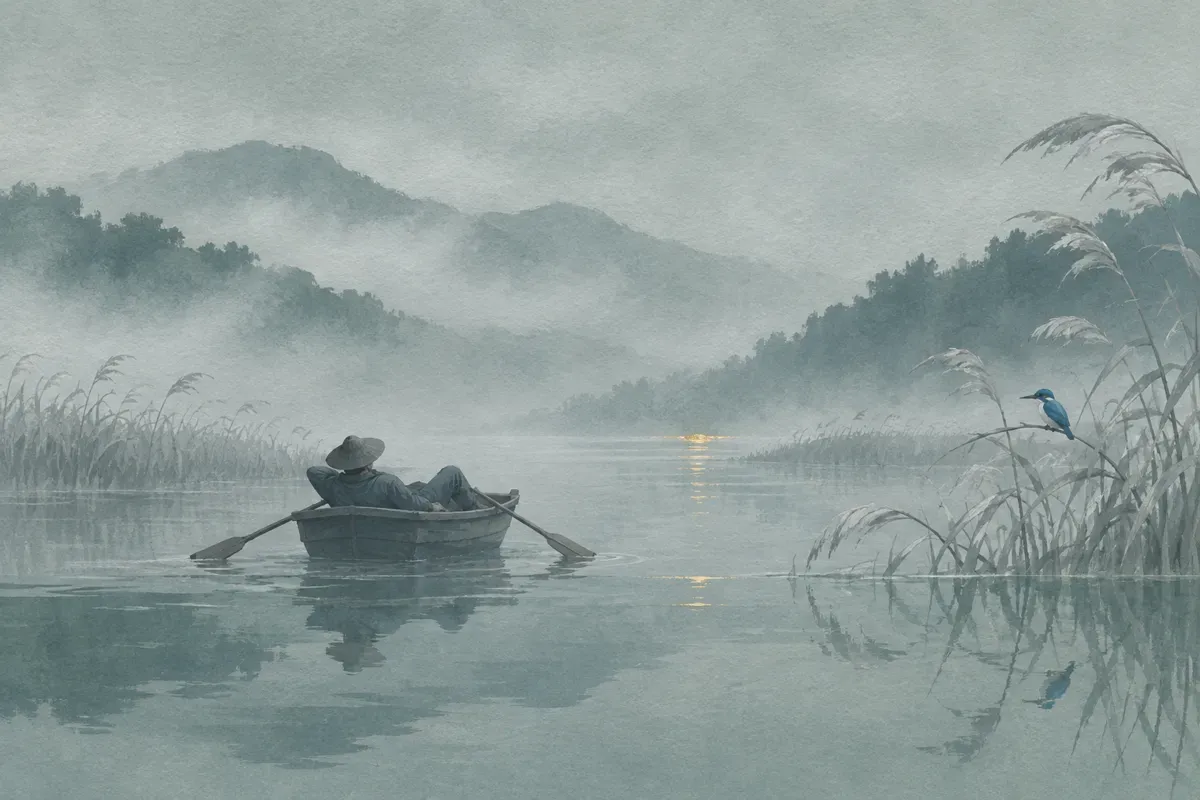
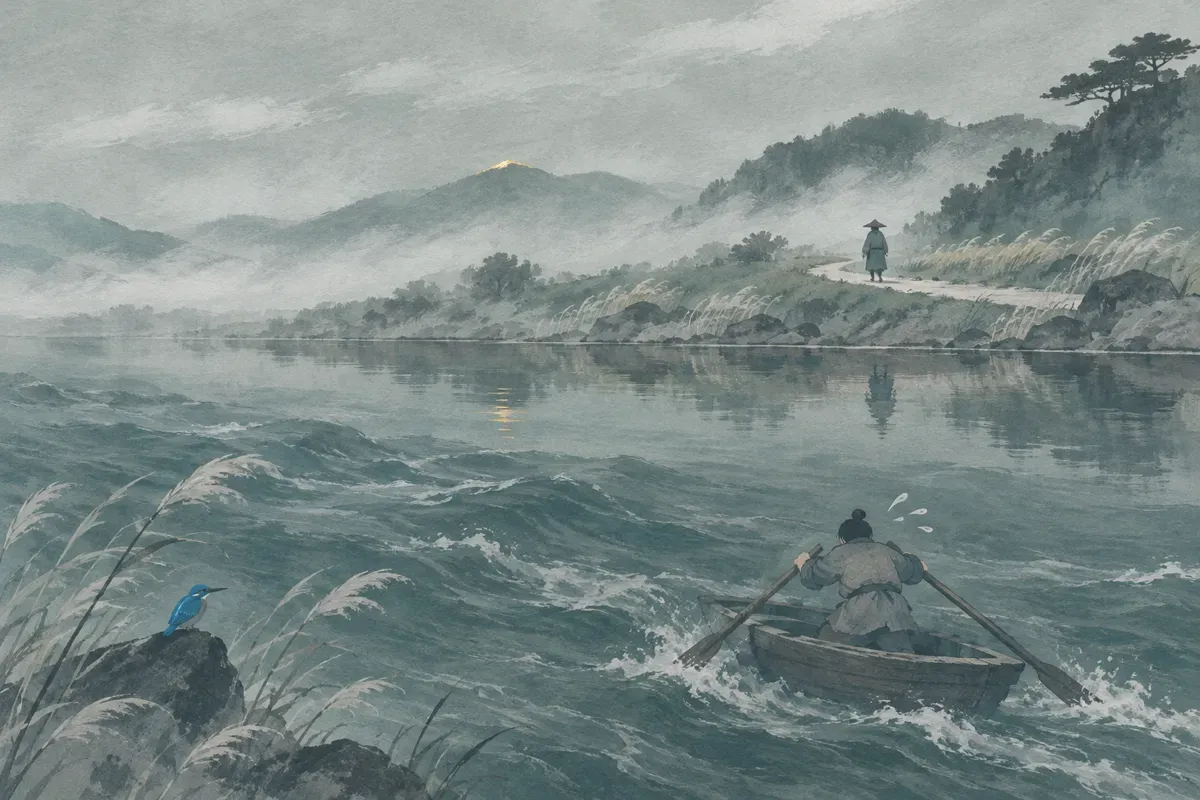
There’s a river that runs through your life. It flows toward everything you truly want. You can row upstream, against it, with enormous effort, and many people do, all their lives, proud of how hard they’re working. Or you can turn the boat around, put down the oars for a moment, and let the current take you.
You’ll still steer, and sometimes you’ll still row. But you’ll be moving with the current instead of against it. And you’ll be amazed at how far you go, and how little it costs.
Sleep comes when you stop trying to sleep, and love tends to stay where nobody is gripping it. Money behaves much the same way. So open your hand.
Today, when you notice yourself gripping, open your palm and let it rest.