Chapter 15
Paper Crowns
Stop putting your authority on other heads.

Before she moved to another country, Katarína asked everyone.
She asked her mother, who said it was too risky. She asked her best friend, who said she’d miss her too much. She asked a colleague, who said the job market there was terrible. She read forums full of people who had tried and failed. She asked a fortune teller, half joking. She made a list of pros and cons and showed it to three more friends.
By the end she had twelve opinions and a headache. She knew less about what she wanted than when she started.
Late one night, alone, she closed her laptop and asked one last person. What do I want? The answer came in less than a second.
The paper crowns
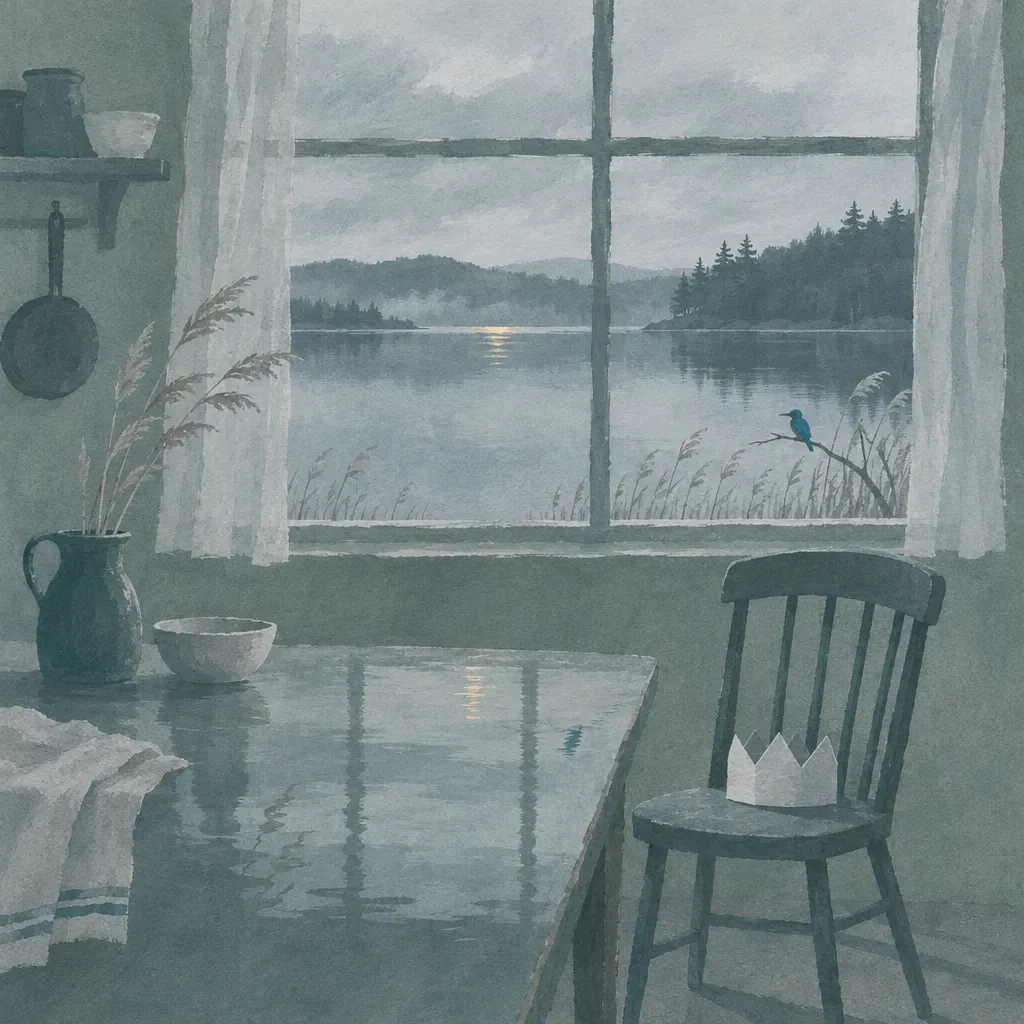
When you were a child, the adults around you wore crowns. They decided what was safe and what you were capable of. You needed them to. But many of us never took the crowns back. We just kept handing them out, to new heads.
Some crowns go to forces that feel bigger than any person. The economy is bad. The market is saturated. Statistically, people like you rarely… These sound like laws of nature. They’re the collective reflection, what many people are assuming together, and they have no more power over you than you hand them. There are always people who prosper in a bad economy, or find love at seventy. They never crowned the law in the first place.
No statistic has ever met you.
A closer lookNo statistic has ever met you
A number is a summary of people who are not you. It was built from thousands of lives, flattened into an average, and handed back as if it described the one life you are actually living. It can tell you how a crowd tends to move. It cannot tell you how you will move.
Notice how quickly we turn averages into verdicts. “Most small businesses struggle” becomes “mine will.” “People my age rarely change careers” becomes “I shouldn’t.” The jump is so fast that we feel it as realism. It is really just a crown, quietly placed on a column of figures.
Here is what you can do with information, and it is a great deal. Take the number as weather: useful to know, not binding. If the market is crowded, ask what a person would do differently in a crowded market. If the road is long, ask how others shortened it. Statistics are a fine place to find the how. They are a terrible place to find the whether.
Try this today. Think of one belief about what is possible that began with a figure, a headline or “they say.” Say it aloud, then add: “…and none of that has met me.” Then write one thing that is true only of you: your particular stubbornness, your particular friends, your particular reasons. No statistic contains those.
You are not an exception to the law. You are the one the law was never about. Walk in as the person standing at the door, and see what the door does.
Use information the way you’d use a weather map: it tells you it might rain, and you still decide whether to go for a walk.
Asking for advice

Listen to how you ask. How do I apply for that visa? What did you learn when you did this? That’s a request for information, and it serves a decision you’ve already made. Do you think I should? Am I crazy? That’s a request for permission, and it hands over the crown to someone who doesn’t feel what you feel and is looking at your dream through the window of their own fears.
Most advice is the adviser’s own reflection. When your mother says it’s too risky, she’s telling you what she would feel in your place. When your friend says the market is terrible, he’s showing you his map. It may be accurate. It still isn’t yours.
A closer lookMost advice is the adviser's own…
When someone tells you what you should do, listen to the grammar underneath. “That’s too risky” really means “I would feel afraid.” “You’ll regret it” means “I would regret it.” “Just be sensible” means “this is how I have kept myself safe.” Each piece of advice is a small self-portrait, handed to you as a map.
This doesn’t make people wrong or unkind. Your mother’s fear is love, dressed for travel. Your friend’s caution is the shape of his own history. It is just that none of it was made from your materials. It was made from theirs.
So you can receive advice the way you receive a postcard from someone else’s holiday: with interest, and with the knowledge that you are not standing where they stood. Ask yourself a simple question when you hear it: whose fear, whose hope, whose life is this describing? Often the answer is clear within seconds.
You can also change the question you bring. Instead of “should I?”, which invites a verdict, ask “what did you learn?” or “what would you do first?” Those questions get you the best of other people: their experience, their specifics, their warnings about the potholes. You stay at the wheel.
And before you talk to anyone, write down your own answer first. Even one line. That line is your compass, and it must be on paper before the other voices arrive, or it will not survive the conversation.
So gather information, and learn from those who’ve walked the road, but keep the question should I? for yourself.
Taking the crowns back

You don’t need to confront anyone, or love anyone less. You take the crowns back quietly, one at a time.
Start by catching the moment of crowning: I can’t because they said…, it’s impossible because the numbers… Before you ask anyone else, write down what your own chest says. Decide the what alone, and bring other people in for the how. Some crowns live only on attention, like the news cycle or the group that complains together; stop feeding them and they fade like a fire without wood. And don’t climb onto anyone else’s throne. Each person’s crown belongs on their own head.
A closer lookEach person's crown belongs on their…
The last thing the chapter asks is the easiest to miss: take your crowns back, and then stop handing out your own opinions as if they were royal decrees.
It is surprisingly easy to be on the other side of this. A younger cousin asks if he should take the school far away. Your first instinct is to tell him. A friend describes a new relationship, and you feel the pull to say what you see. You love them, and your loving opinion feels like help. Sometimes it is. But often what you are doing is putting your crown on your own head and wearing it in their life.
The practice is a gentler form of respect. When someone asks “what do you think I should do?”, you can answer with a question, as Katarína did: “What do you want?” Then you can listen to the answer all the way to the end. You can offer what you know about the how, if they ask. You can say, “Here’s what I’d feel in your place, but that’s mine, not yours.”
There is something deeply restful in this. You don’t have to carry anyone else’s decisions. You don’t have to be right for them. You only have to be a clear, steady mirror in which they can hear themselves.
Try it with one person this week. Ask, listen, and keep your crown in your own pocket. Notice how much more they say when no one is waiting to rule on it.
The night Katarína decided

Katarína moved. Some of the twelve opinions were partly right: the job market really was hard at first. Some were completely wrong. Neither mattered as much as she’d feared, because she was living by her own map.
A year later her younger cousin sent her a long message. He’d been offered a place at a school far from home, and everyone had an opinion. Do you think I should go? he wrote at the end.
Katarína looked out at the river for a while. Then she wrote back just four words.
What do you want?
Today, notice one paper crown on someone else’s head, and gently take it back.