Chapter 18
Everyone You Meet
People play the roles you cast them in.

Daniela’s mother-in-law didn’t like her. Daniela had known it for seven years, since the first dinner and the way the older woman looked at her shoes. She knew it from the comments about her cooking, and from the Christmases when the gifts for Daniela were a little smaller than the rest. She could have given you a long list of evidence. And every visit, she arrived already braced for the next small cut, and the cuts always came.
Then one winter, exhausted, Daniela tried an experiment. Before the Christmas visit, she sat quietly for ten minutes every evening and imagined something she had never once allowed herself to imagine: her mother-in-law smiling at her, warmly, across the kitchen. Saying something kind. Meaning it.
It felt absurd, and she did it anyway, for two weeks.
At Christmas, her mother-in-law took her aside in the hallway, held her hand for a moment, and said, a little awkwardly: “You’re good for him, you know. I don’t say it enough.”
The theatre of your life
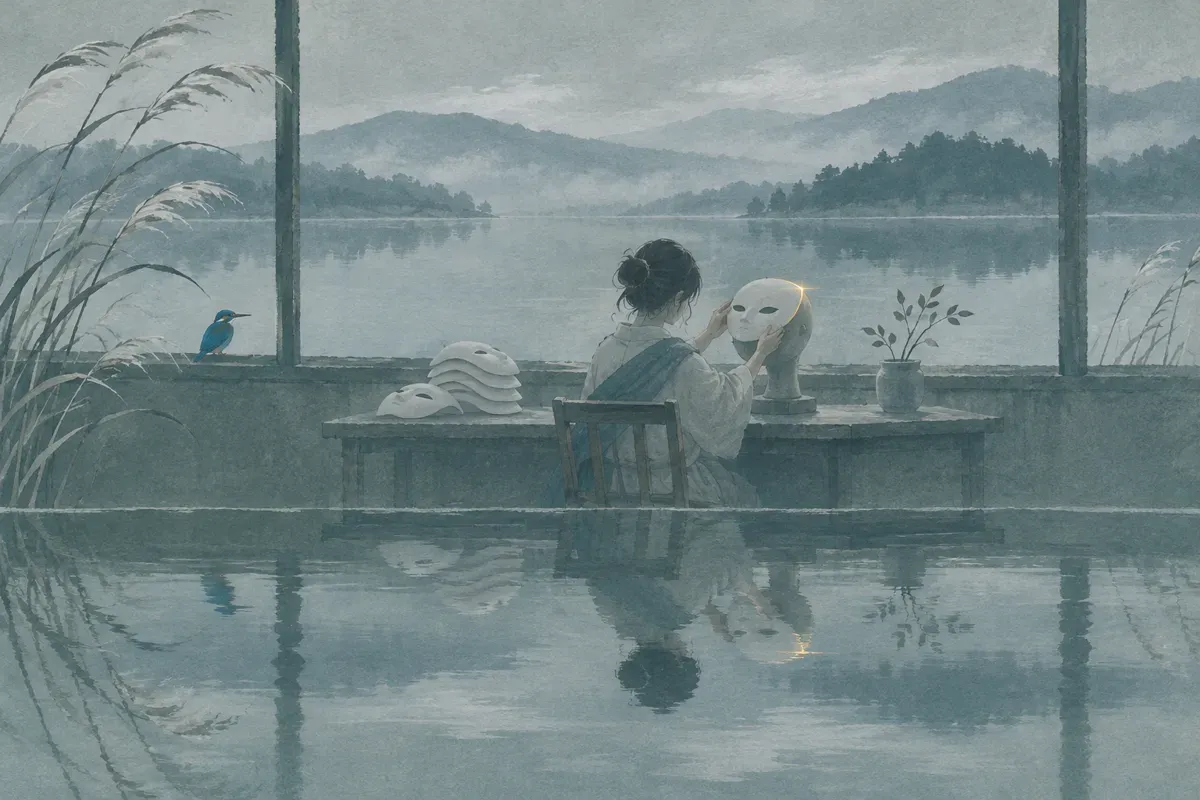
People are part of the mirror. The most vivid part, and the most convincing, because they talk back and have faces and moods of their own. It’s easy to believe they’re entirely separate from you, acting entirely on their own. And yet, again and again, people behave toward you the way you assume they will.
If you assume people will take advantage of you, you’ll meet takers. If you assume people are generally kind, the world fills up with kindness. Not because everyone in the world changed, but because the mirror reflects the cast you’ve written.
Everyone you meet is reading a script you wrote.
A closer lookEveryone you meet is reading a…
Start with the most ordinary version of this. You walk into a meeting where you expect to be interrupted. Before anyone speaks, your shoulders have risen, your voice has dropped, and you have already half-written your sentence as a defence. Now someone interrupts you. It feels like proof. But look at what came first: you arrived with the script, and the room could hardly help reading from it.
That is how a script works. It is rarely a speech you deliver. It is a posture, a tone, a half-second of bracing, a way of looking at someone’s shoes. People respond to all of it, mostly without knowing, the way you respond to a friend’s tired face before they say a word.
This is not a claim that you control other people. They have their own lines, their own weather. It is a claim about the part that is yours: what you bring through the door. And that part is bigger than most of us admit.
Try this on a small scale today. Pick one person you will see, and write down, in one line, what you expect from them. Then write the line you would like to be true. Before you meet them, spend two minutes picturing the second scene in some detail: where you stand, what they say, how you both feel. Then walk in without checking whether it has worked.
You are not forcing a change. You are changing what you offer, and letting the other person answer to it. Notice what they do with the new script. Often they don’t even notice they have picked it up, and neither do you, until one day you realise the whole room has changed its tone.
What you see in them

Look at the people who trouble you most. The ones who irritate you or make you feel small. Then ask a gentle question: what in me is this person reflecting? Sometimes they reflect an assumption, like Daniela’s: she’ll never accept me. Sometimes they reflect a part of yourself you don’t like and haven’t accepted: the impatience that drives you crazy in your colleague may be the impatience you won’t allow in yourself.
This isn’t a reason to blame yourself or excuse them. It’s a key: if the person is a reflection, you don’t have to change them, only what they reflect.
Rewriting the role
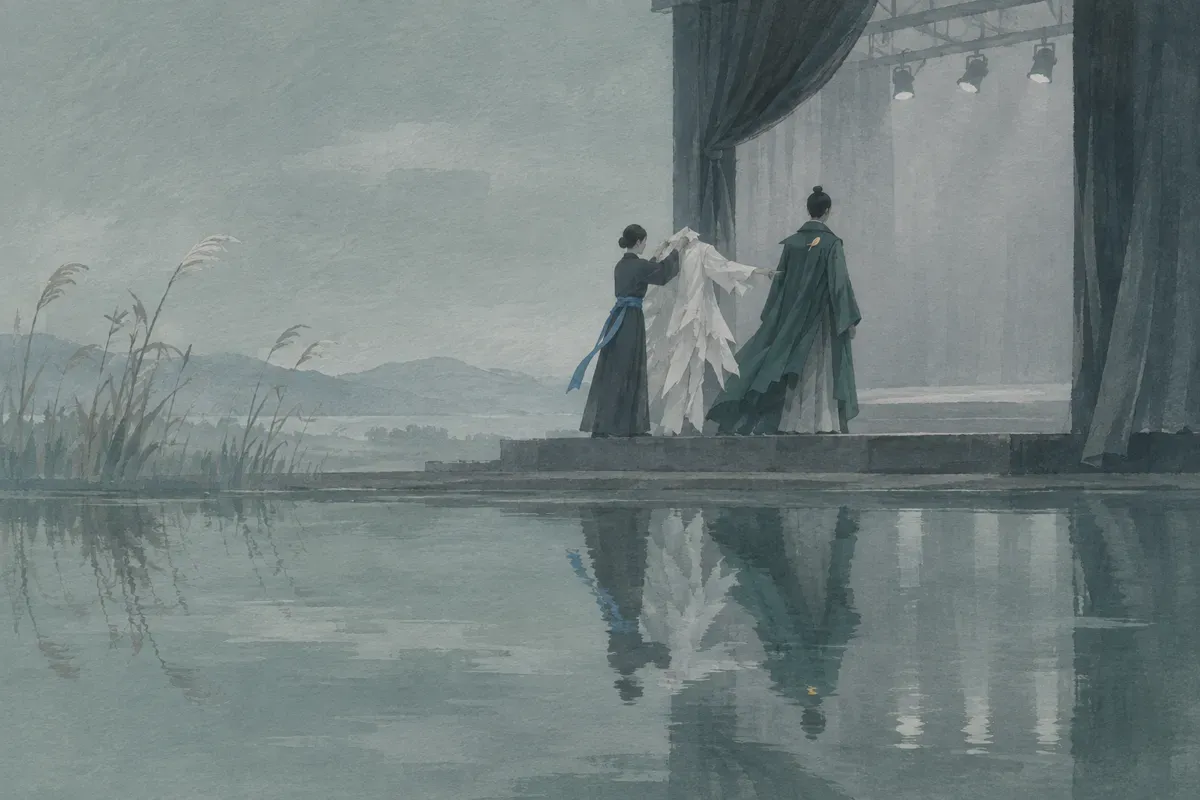
Notice the script. What do you expect from this person? Write it out honestly. He’ll interrupt me. She’ll criticise. This is the role you’ve been handing them every time you meet.
Stop rehearsing the old scene. Most of us replay our conflicts endlessly: in the shower, or at night. Each replay strengthens the role. When you catch yourself rehearsing the old argument, stop. Don’t feed it.
Rehearse the new scene. Like Daniela, imagine a short, specific moment where the person treats you the way you’d like. A kind word, or a laugh together. Feel it as real. Repeat it, especially before sleep.
Meet them as the new character. When you see them, don’t wait to see if they’ve changed. Treat them as if they already have. Greet them as the person who appreciates you. This is going first, again, with people, and you’ll be surprised how often the actor quietly picks up the new script.
Their freedom

There’s something important to say here, so that this teaching doesn’t become a burden. Other people are also dreamers, with their own mirrors and their own paths. You can’t force a specific person to do a specific thing. You can’t make someone love you or stay. When you try, you’re gripping again, and the grip pushes them away.
What you can always change is the role people play in your experience. Sometimes that means the same person begins to treat you differently, as Daniela’s mother-in-law did. And sometimes it means that person drifts out of your life, and someone who naturally plays the new role walks in to take their place. Both are the mirror answering, and both are good.
And if someone is truly harming you, you don’t need to stay and rewrite their script while they hurt you. Leaving is also a way of changing what stands in front of the mirror. Protect yourself first. You can do your inner work from a safe place.
A closer lookLeaving is also a way of…
Some readers need this sentence more than any other in the book, so read it twice.
The idea that people play the roles you assume for them can be misheard as a duty: that if someone treats you badly, you must work harder on your thoughts until they stop. That is not what the chapter says, and it is not what you are asked to do. If someone is harming you, with their words, their hands, their control or their threats, you do not owe them a better script. You owe yourself safety.
Leaving is not a failure of imagination. It is a clear act. It changes what stands in front of the glass, and it is often the strongest statement of worth you will ever make: this is not what I will be shown. You can do your inner work afterwards, in a room where nobody is frightening you.
If you are not sure whether you are in a safe situation, here are a few practical steps. Tell one person you trust what is happening. Write down what has occurred, with dates, in a place only you can find. Find out where help is near you: a trusted friend, a local support service, a helpline, the police if you are in danger. Plan a way out that does not depend on the other person agreeing.
None of it contradicts the book. You are still the dreamer, still the one who chooses. And sometimes the choice, the clearest and most loving one, is to take your light and go.
Grief and the people who go
Sometimes people leave in a way no script can change. They move far away, or they die, and the role they played in your life goes silent.
Grief is not a failure of your practice. It is love with nowhere to go, and it deserves its time. Let it move through you like weather. Don’t hurry it.
A closer lookGrief is not a failure of…
There is a quiet temptation, once you have learned to see your life as a mirror, to treat loss as a lesson you failed. Someone dies, someone leaves, and a small voice asks: what did I project? What should I have rewritten? That voice is cruel, and it is mistaken.
Grief is not an error in your thinking. It is what love looks like when the person it was meant for is no longer reachable. It does not need to be corrected, reframed or accelerated. It needs room, the way weather needs sky.
Some losses are not about a script at all. A person’s illness, a person’s choice, a person’s time simply came. Your practice was never meant to explain these, and it does not have to. You are allowed to be someone who loves, loses, and is changed by it, with no theory required.
What you can do is small and kind. Let yourself cry in the kitchen without apologising. Say their name aloud. Tell one story about them to someone who will listen. Light a candle on the day. Do the ordinary things that keep your body fed and rested, because grief is tiring work.
And be gentle with the days when you feel nothing, or feel relief, or laugh at the funeral. All of it is part of the weather moving through.
In time you may notice that the love hasn’t gone anywhere. It has become part of how you see, part of what you bring to every new scene. That is not a lesson. It is simply what is left when love has nowhere to go but you.
But you may notice, in time, that the people you love most never fully leave the theatre. Their warmth and the way they saw you are still part of you, still shaping what you bring to the mirror. You carry them into every new scene. And sometimes, in a stranger’s kindness or a voice on the phone, you’ll catch a glimpse of them again, reflected back.
The cast you choose
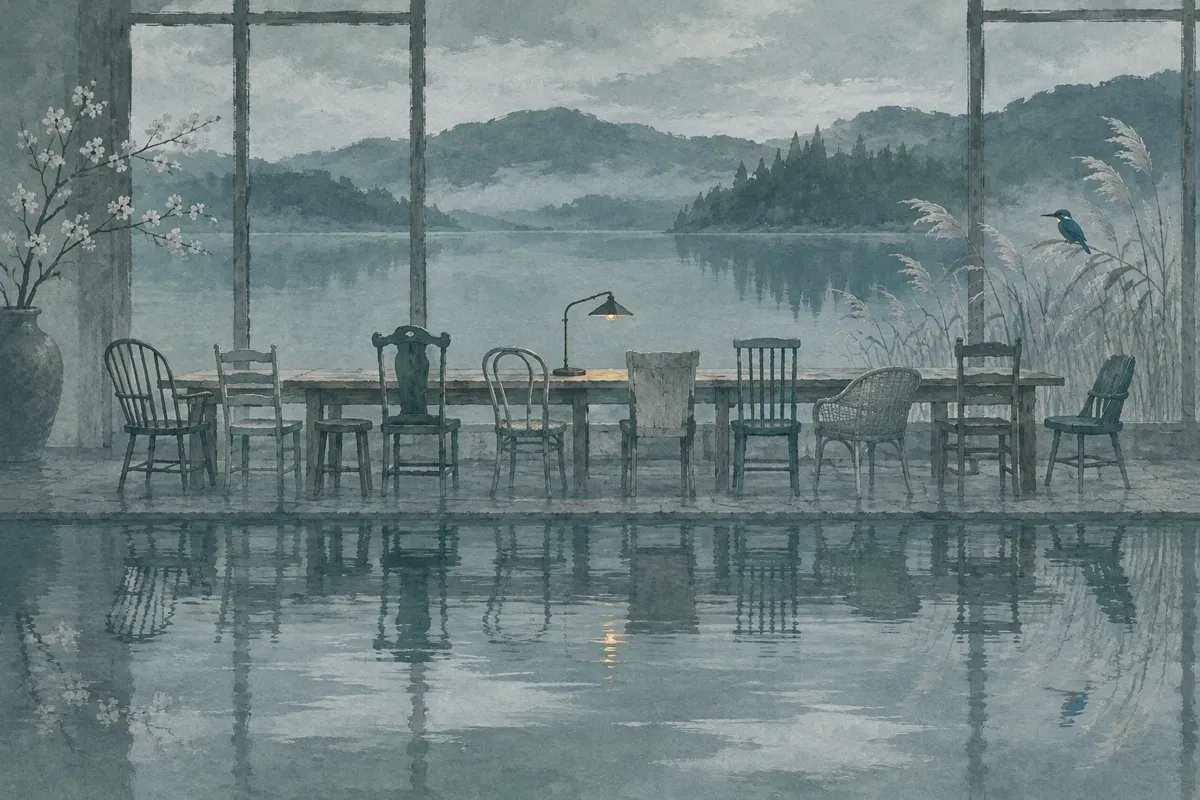
Look at the people in your life with fresh eyes. Each of them, the difficult ones included, is reading a script you wrote, at least in part. You can’t control the actors. But you are, and always have been, the one who decides the play. Write a better one, with people cast as the best version of themselves and their kindness assumed. Then watch quietly as, one by one, they step into the light you’ve written for them.
Today, choose one person and silently cast them in a kinder role.