Chapter 19
The Weather of Worry
You are the sky, not the storm.
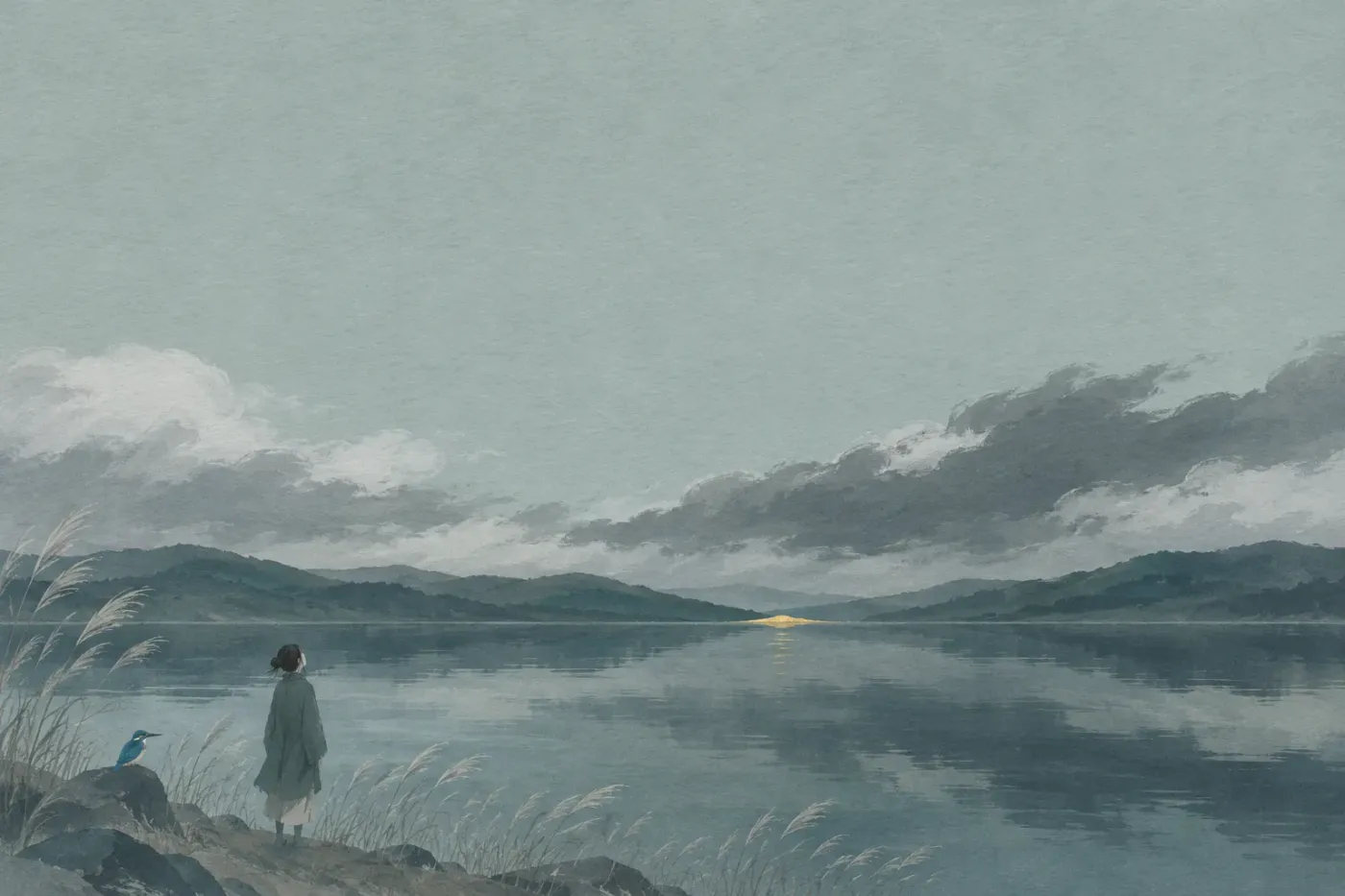
It’s three in the morning, and Martina is awake again.
Nothing is wrong. Not right now. Her daughter is asleep down the hall. The house is quiet. But her mind is running ahead into a hundred futures: the test results next week, the rent next month, the company cutting jobs, her daughter on the night bus, the noise the car made yesterday. Each thought brings a little jolt of dread, and then a little more planning for disasters that haven’t happened.
She calls it being responsible. Someone has to think about these things.
But if you could see what she’s doing from the outside, you’d see something else. You’d see a woman in a dark rehearsal room, running scene after scene of the play she least wants to see, with all her feeling, all night long.
Worry is a prayer
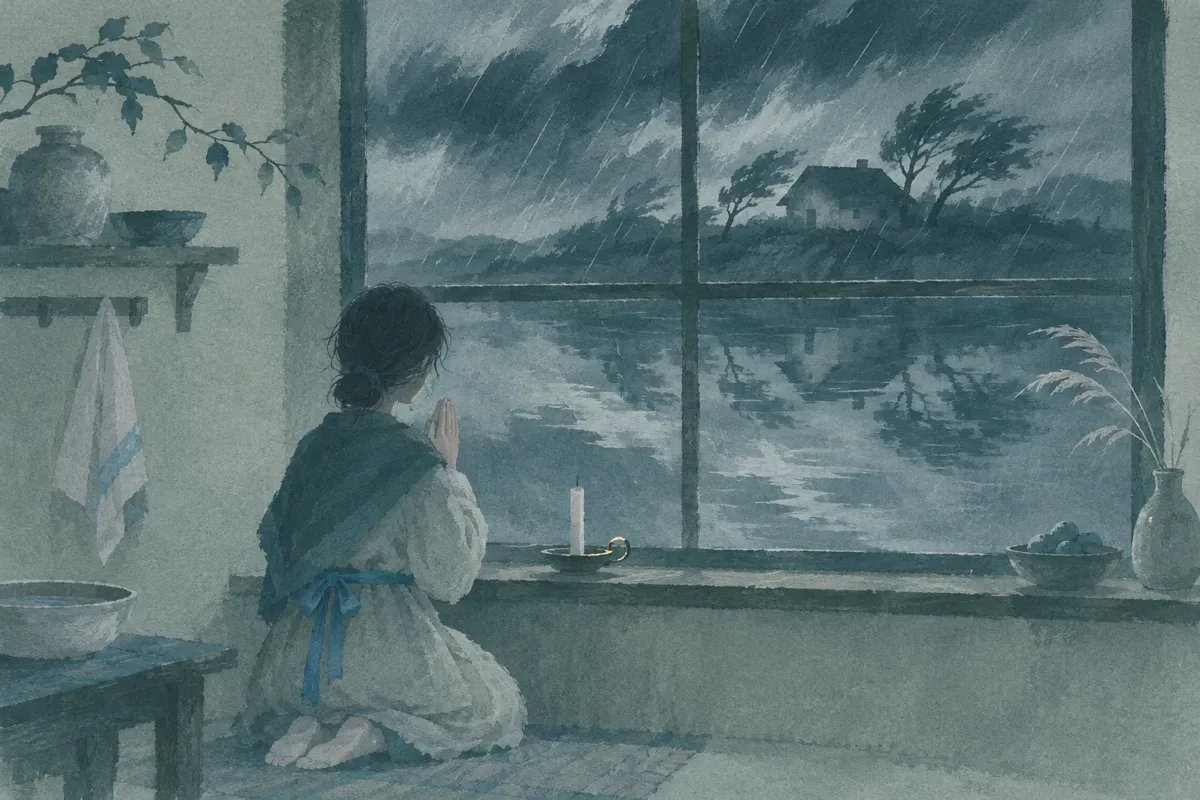
Remember the rehearsal room from earlier in this book: the mirror performs what you rehearse with feeling. Worry is rehearsal. It’s imagination in its most powerful form, vivid and repeated, pointed at exactly what you don’t want.
Worry feels like protection. It feels like you’re preparing, making sure you’re not caught off guard. But look closely and you’ll see that worry rarely prepares anything. It doesn’t fix the car or pay the rent. It simply runs the frightening scene again, and then again.
Worry is a prayer for what you don’t want.
A closer lookWorry is a prayer for what…
A prayer, in the plainest sense, is attention with feeling behind it, held steadily on one picture. By that measure, worry is some of the most devoted attention you give anything. It is vivid, it is repeated, it is felt in the body, and it often happens at your quietest hour. And it is pointed at the scene you least want.
This is not a reason to feel ashamed. Nobody taught you to do this on purpose. The mind learned that rehearsing danger felt like protection, and so it keeps rehearsing. But look at what the rehearsal actually produces. Does it fix the thing? Does it pay the bill, mend the car, change the outcome? Mostly it leaves you tired, with a body that has lived through the event without it having happened.
Here is a way to catch it. When a worry arrives, notice whether it comes as a plan or a film. A plan has a next step: call, check, book, ask. A film has only scenes, played again and again, and always with the worst ending.
If it is a plan, do the step. If it is a film, you can walk out of the cinema.
Try this tonight. When the film starts, say quietly: I know this one. I don’t need to watch it again. Then take one breath and put a different picture on the screen: the thing resolved, the people you love at ease, the next morning ordinary and bright. Give it as much feeling as you gave the other one.
You can pray for what you want with the same energy. It only takes a change of channel.
This doesn’t mean you should feel guilty for worrying. Everyone does. It means you can begin to see worry for what it is, which is weather rather than wisdom, and stop treating it as something you have to obey.
You are the sky
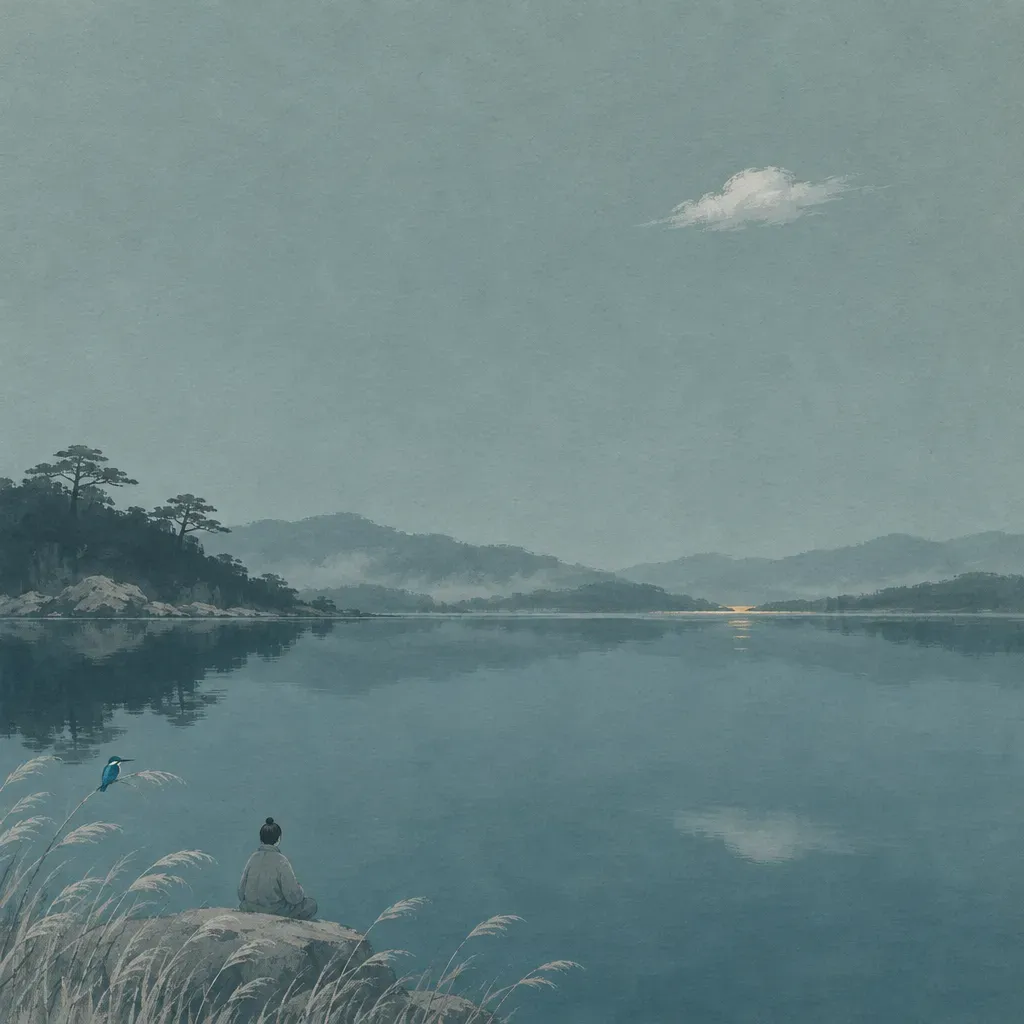
This is the dreamer from the beginning of the book, remembered again in the middle of a storm. You aren’t the frightened thought. You’re the awareness in which the frightened thought appears. And the awareness has never been harmed by any thought that ever passed through it.
When you remember this, worry loses its grip. You can watch it arrive and leave, the way you’d watch weather from a window. Ah, here comes the 3 a.m. storm. You don’t need to argue with each cloud. You just don’t need to become it.
What fear is for
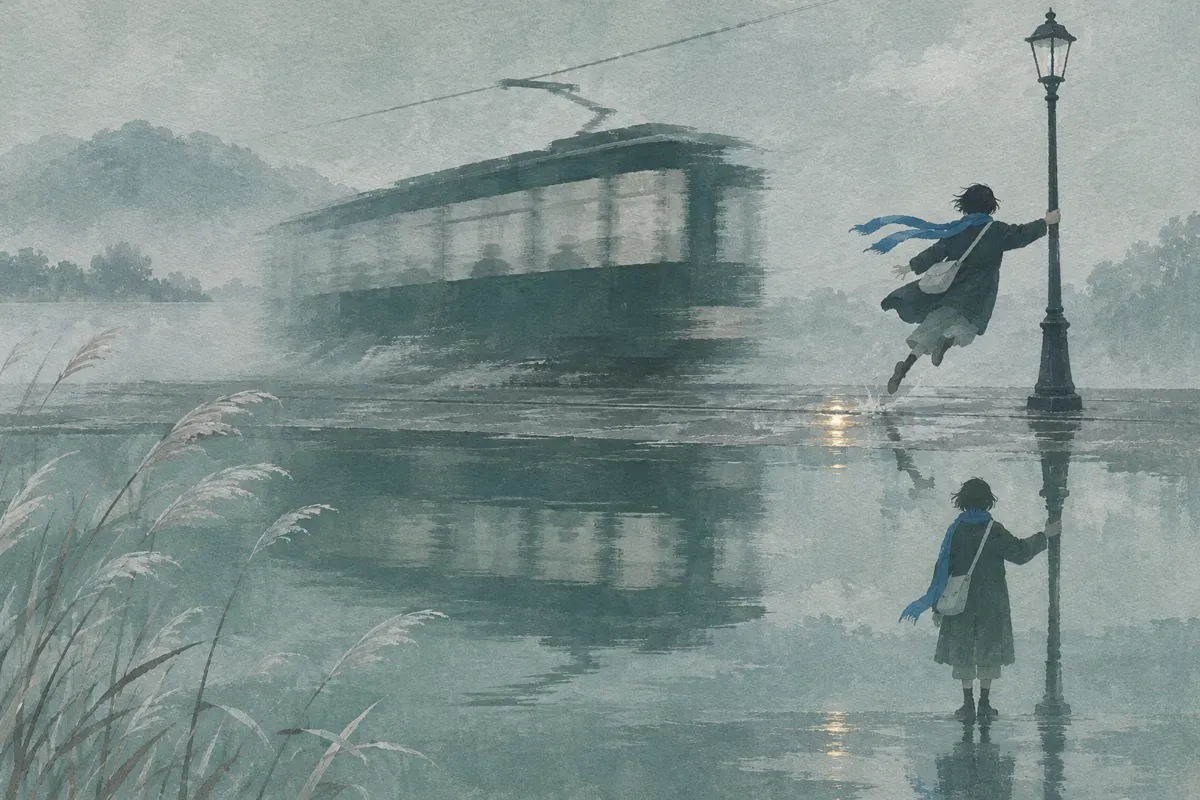
Fear has a real purpose. If a car is coming toward you, fear tells you to jump. If the stove is on fire, fear gets you moving. In those moments, fear is a gift. It’s your compass, pointing urgently at something that needs action right now.
So here’s a simple test. When fear arises, ask: is there something I can do about this, right now, in this moment?
If yes, do it. Make the phone call. Book the appointment. Check the lock. Fix what can be fixed. Then the fear has done its job, and you can let it go.
If no, if it’s 3 a.m. and the test results are next week and there’s nothing to do but wait, then the fear is no longer a messenger. It’s weather. And you don’t need to stand in the rain all night.
Changing the channel
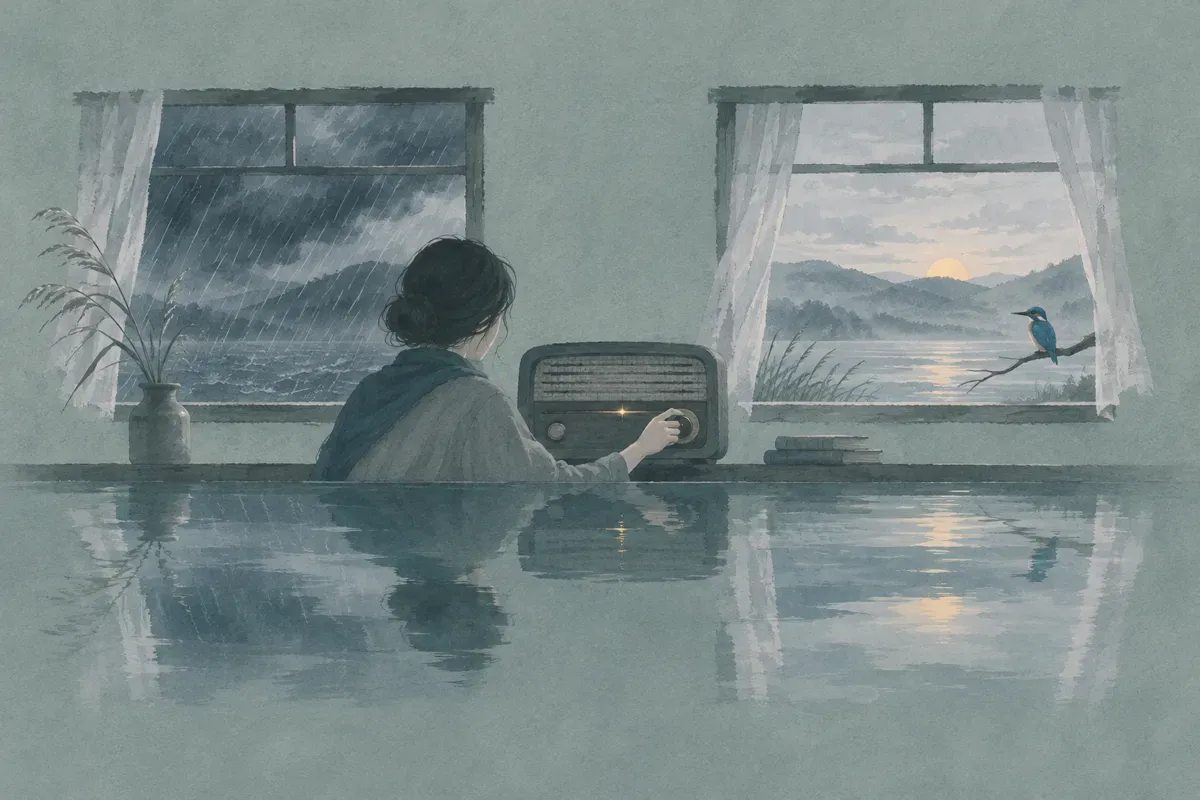
When worry starts running scenes, you can’t simply stop thinking. A mind that’s told “don’t think about it” thinks about nothing else. But you can change the channel.
Ask the opposite question. Worry asks: what if it all goes wrong? Ask instead: what if it all goes right? Then actually let yourself imagine it, in detail. The good test results, say, or your daughter walking in the door laughing. You have just as much right to that scene as to the frightening one. And it’s just as likely, probably more.
Come back to now. Worry lives in the future. In the present moment, there is rarely anything wrong. Feel your feet on the floor. Your breath going in and out. The weight of the blanket. Name five things you can hear. Each one is an anchor to now, where the storm can’t reach you.
A closer lookWorry lives in the future
Check this for yourself next time you feel the tightness of worry. Ask, honestly: right now, in this exact second, what is wrong? Not in an hour, not next week, not in a version of the story that hasn’t happened. This second.
Very often the answer is: nothing. You are sitting on a chair. Your hands are warm. The kettle is on. Everything that is wrong lives in a place you cannot stand: the not-yet.
This is not denial. It is accuracy. The body can only be in the present, so when the mind sends it into a future disaster, the body reacts as if the disaster were here. The heart speeds up for something that is not happening. You are paying for tomorrow’s storm with tonight’s sleep.
The way back is simple and physical. Feel your feet. Let them be heavy on the floor. Notice five things you can hear, three things you can touch, one slow breath going all the way out. These are anchors, and they work because the present is the one place worry cannot follow.
Then ask the question the chapter gives you: is there something I can do about this, now? If yes, do it, even in a small way. If no, the fear has nothing left to deliver. It is weather. Let it go by.
Keep a pen by the bed for the nights when thoughts won’t settle. Write the worry down, write one possible action for tomorrow, and close the notebook. The thought has been heard and filed. You can sleep.
Give worry a window. If worries keep crowding in, give them an appointment. Fifteen minutes in the afternoon, with a pen and paper. When a worry comes at another time, tell it kindly: not now, come at four o’clock. You’ll find that by four, most of them don’t show up.
Turn down the outer storm. Some weather isn’t yours. It’s collective: the endless stream of frightening news, or the anxious group chat. These storms grow on attention. You don’t need to argue with them. Just give them less of yours. Step outside and look at the real sky, which is almost always calmer than the screen.
The bad night
Some nights, none of this will work. The storm will be too big, and you’ll lie awake anyway.
On those nights, don’t add a second storm of blame. Don’t tell yourself you’re ruining everything by worrying. Just be kind. Put your hand on your heart. Say: this is a hard night. It will pass. I’m the sky. Breathe slowly. Let the storm do what storms do; morning has always come.
And if the storm doesn’t pass for a long time, if worry or fear sit heavily on you for weeks and you can’t find the sky at all, reach out. Talk to someone you trust, or to someone whose work is to help with exactly this. Asking for help is not leaving this path. It’s one of the wisest steps on it.
A closer lookAsking for help is not leaving…
This is the sentence to remember on the days when nothing in the book seems to reach you.
There is a hidden pride in many of us that says: if I really understood this, I would not need anyone. So when worry becomes heavy, we add a second weight, the belief that needing help means we are doing it wrong. It does not. A person who has taken back their pen is exactly the kind of person who can say “I can’t carry this alone.”
Notice the difference between a bad night and a long season. A bad night passes with kindness, a hand on the chest, and the knowledge that morning comes. A long season is different. If worry or fear sits on you for weeks, if sleep stays broken, if you cannot find any sky at all, or if you feel you cannot go on, it is time to reach out. Speak to someone you trust today. Speak to your doctor or a professional whose work is exactly this. If you are in danger, contact emergency services or a crisis line where you live, right now.
Reaching out does not contradict anything you have learned. It is an act of respect for the dreamer: you are saying that the one who feels this deserves care.
Practical steps: tell one person the plain truth (“I haven’t been sleeping and I’m worried all the time”), make one appointment, and accept one offer of help this week. You don’t have to explain it well.
The sky stays the sky, and sometimes the wisest thing the sky can do is ask a friend to hold the umbrella.
The morning after
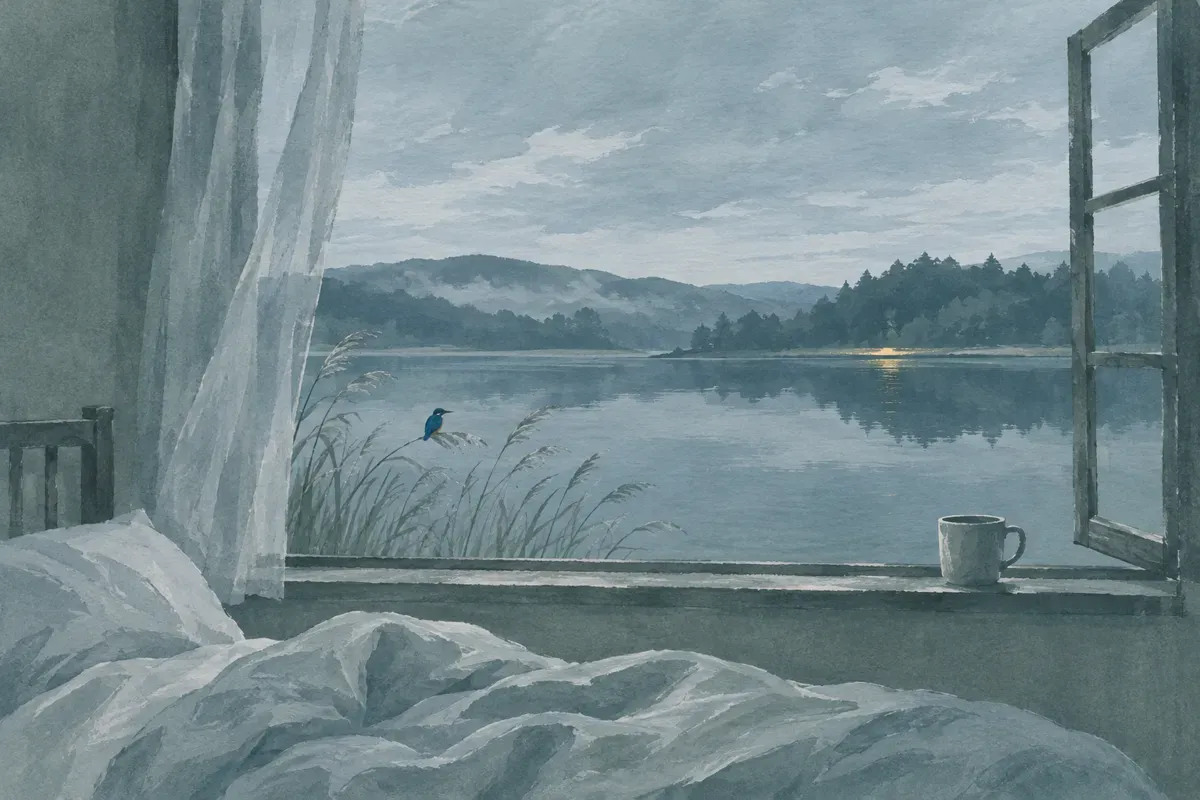
Martina still worries sometimes. Everyone does. But these days, when she wakes at three and feels the first clouds gathering, she does something different. She notices them. She asks if there’s anything she can do. Usually there isn’t. So she lays her hand on her chest, breathes, and plays a different scene: the test results fine and her daughter laughing in the kitchen. More often than not, she’s asleep before the scene ends.
Above the clouds, as always, the sky is clear.
Today, when worry comes, ask: can I act on this now? If not, remember you’re the sky.