Chapter 20
The Unwritten Page
There is no correct life. There is your life.
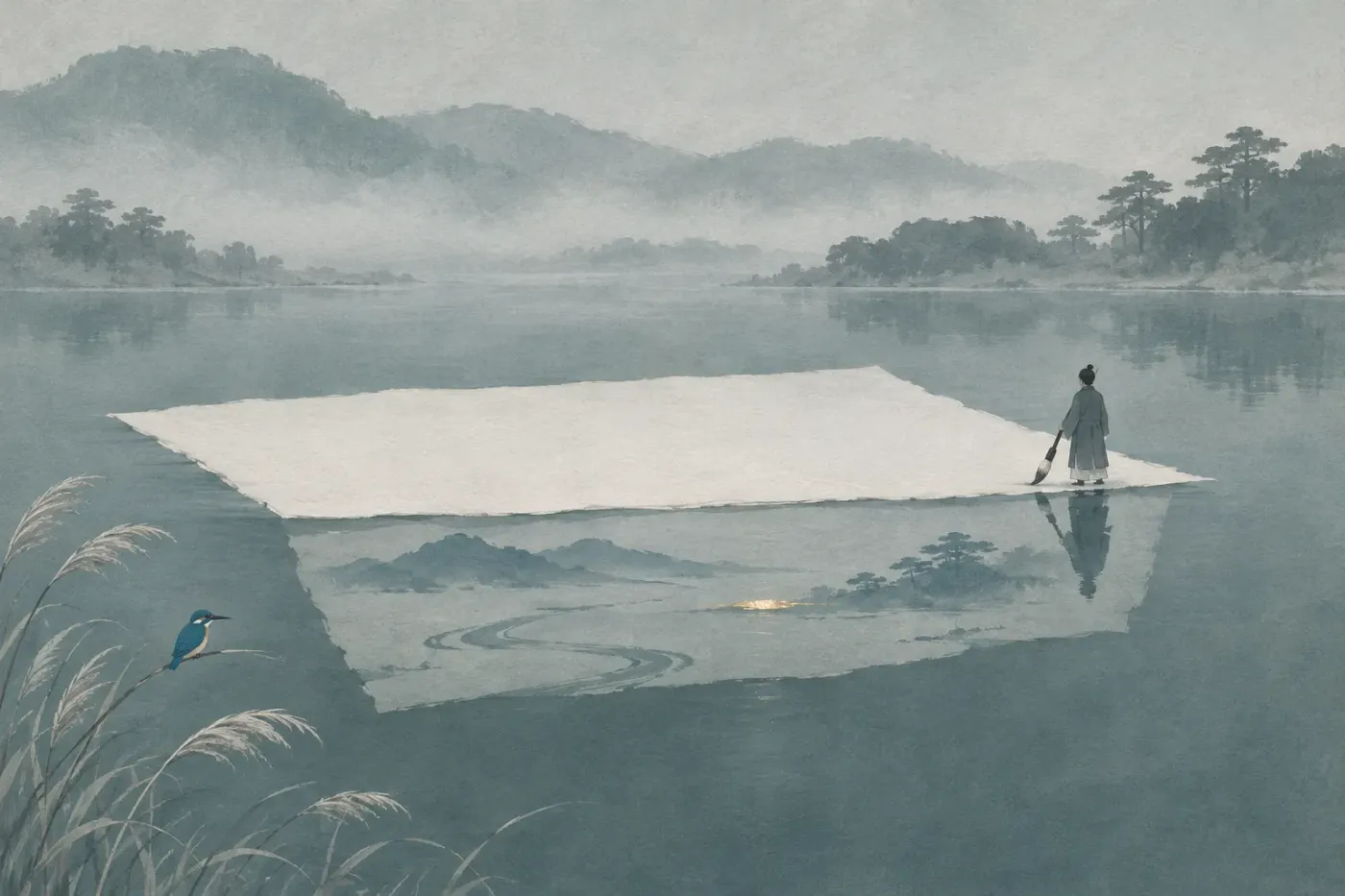
A writer sits at a desk in the early morning. In front of her is a blank page.
She could write anything. A comedy, or a quiet book about a garden. A hero who climbs mountains, or one who never leaves her village and is perfectly happy there. No one is grading her. There’s no right answer hidden somewhere, waiting to be found. There’s the page, and her freedom. For a moment that freedom frightens her, and then it starts to thrill her.
The test that doesn’t exist
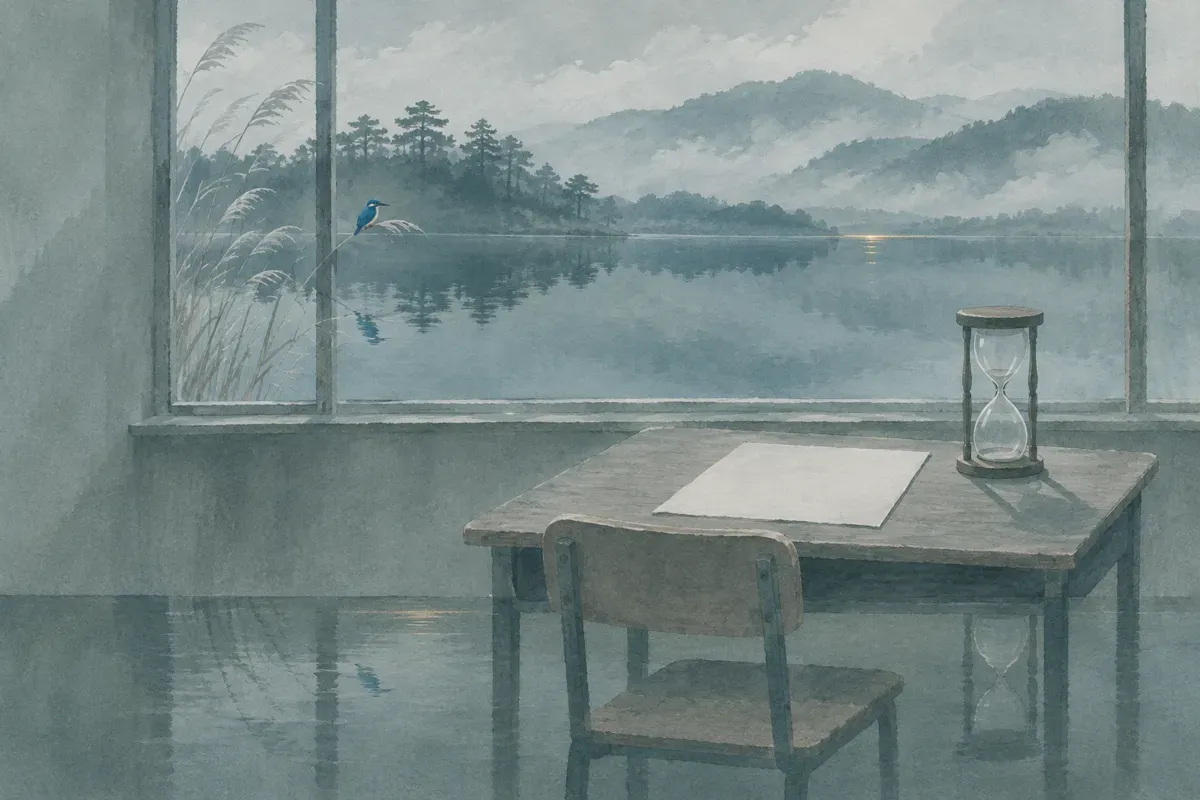
Many of us live as if life were an exam. Somewhere, we believe, there’s a right career, a right partner, a right city, even a right way to spend a Sunday, and our job is to find it and not get it wrong. We spend years comparing, afraid we’ve missed the important question. There is no exam.
The mirror reflects whatever you put in front of it with equal faithfulness: wealth or simplicity, marriage or solitude.
The mirror has no favourite story. Only you do.
Whose story are you writing?
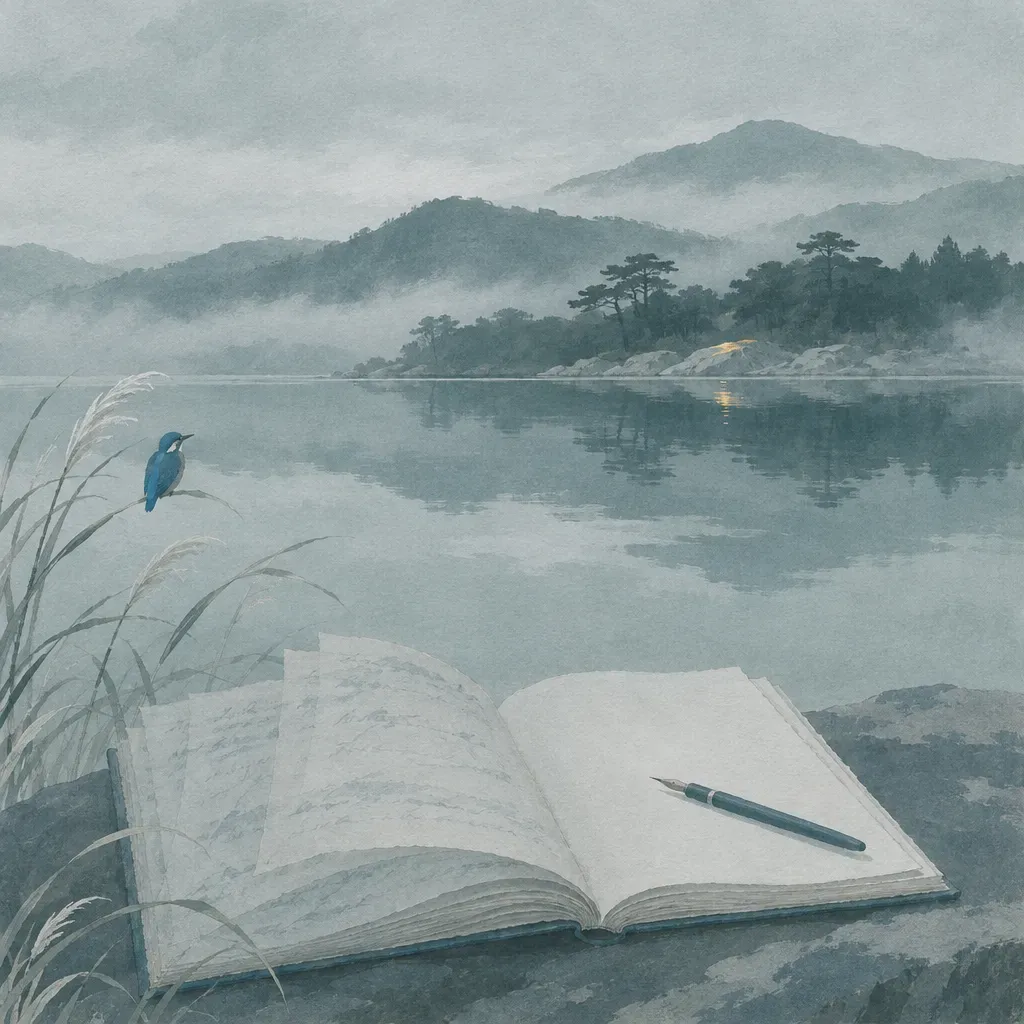
Look honestly and you may find pages in your life written in someone else’s hand. The career that made your parents proud. The house you bought because that’s what people your age do.
None of it is wrong in itself. But you’ll know those pages by a low hum of dissatisfaction, even when everything looks fine from outside, and by the odd sense of living a life that runs next to yours instead of inside it. Your own story tends to feel alive even when it’s hard, and someone else’s flat even when it’s easy.
Preferences, not rules
If anything is possible, how do you choose? Start with what you honestly prefer, before should gets a vote. Mornings or evenings. A table for four or a hall full of people.
These small preferences are clues. They’re the handwriting of your own story, and most of us have ignored them so long we barely know what we like. Each time you choose what you actually prefer (the walk instead of the bus, the honest “no” instead of the polite “yes”) you write a sentence in your own hand.
A closer lookThese small preferences are clues
When people are asked what they want from life, many go blank. The question is too large and has too many people watching. But ask something much smaller, and the answer arrives: Do I prefer tea or coffee? The early walk or the late one? A crowded table or a quiet one?
These tiny choices are the first words of your own handwriting. They feel too small to matter, which is exactly why they are honest. Nobody is pressuring you about whether you like your eggs soft. There is no right answer, so you can finally hear the real one.
A lot of us have lost the habit. We order what others order. We say “anything is fine.” We listen to what’s popular, buy what’s sensible and spend weekends the way our circle does. After years of this, “what do I like?” can feel like a foreign language.
Here is a way back in. For one week, keep a short list called I prefer. Every time a choice comes up, however small, pause for a moment and ask your chest, not your head. Write the answer. “I prefer the window seat.” “I prefer to eat alone today.” “I prefer the honest no.” By the end of the week you will have a page of your own sentences.
Read it back slowly. You will notice patterns: more quiet than you thought, more colour, more movement, more solitude. That pattern is the shape of the story you want to write, and it was there all the time.
Larger choices come more easily once the small ones have been practised.
Preferences change, too. You’re allowed to love something for ten years and then want something else. You’re allowed to write a new chapter that doesn’t match the last one. Writers call that a turn in the story.
A closer lookYou're allowed to write a new…
Many of us stay in a story long after it has stopped being ours because we are afraid of looking inconsistent. I’ve always been the responsible one. I’ve been in this career for fifteen years. I told everyone I wanted this. The past builds a kind of stage set around us, and we feel we have to keep performing in it.
But a story that must always match its earlier chapters is not a living story. It is a museum.
You are allowed to change. You are allowed to leave a field you trained for, to move cities, to love different things at fifty than at twenty, to stop being the person everyone counts on for everything. You do not have to apologise to the earlier chapters. They were true then. They got you here. You can thank them and turn the page.
That does not mean you must walk away from everything you have built. Sometimes the new chapter happens inside the same house, the same work, the same relationship, with a different tone. Sometimes it is a big departure. The page doesn’t mind either way.
Do this today. Write one sentence beginning “Something I used to want, and don’t any more, is…” Then write one beginning “Something I didn’t know I wanted until this year is…” Look at both. They are a change of plot, and it is yours to follow.
Tell one person about it, lightly, without asking permission. A turn in the story needs no committee.
Writing boldly
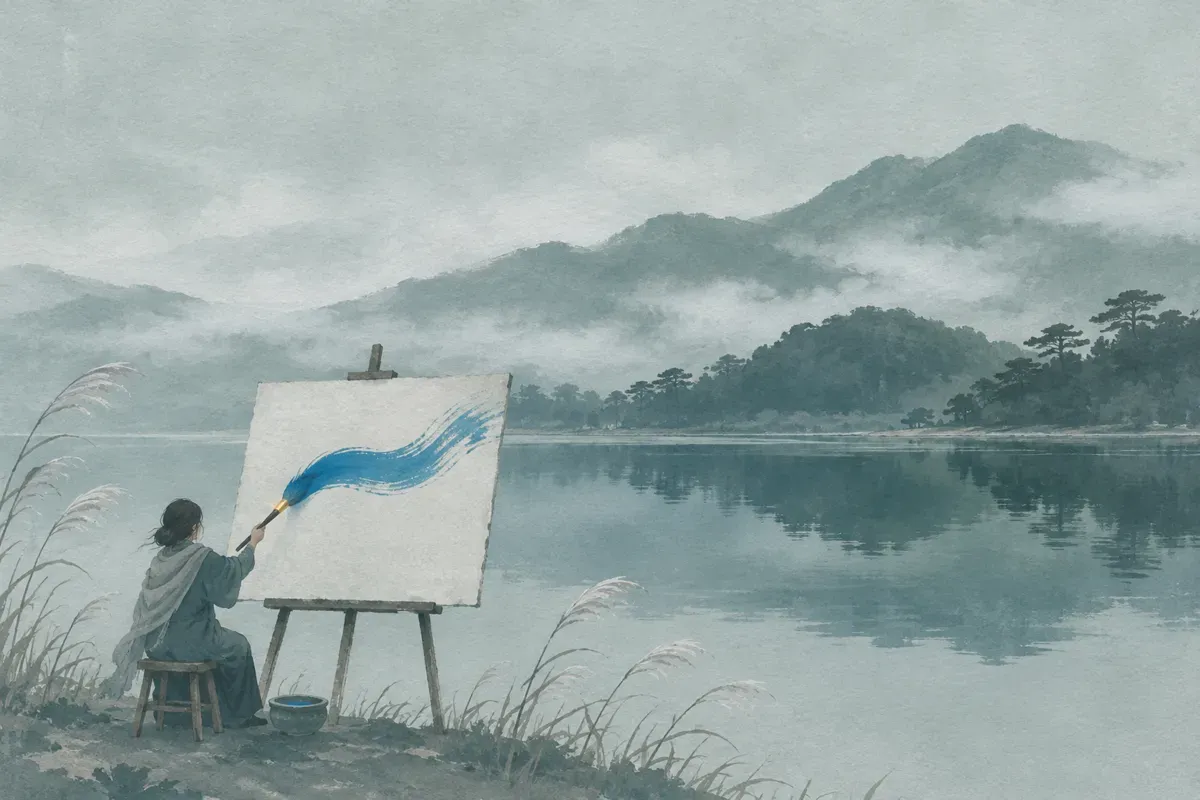
A kind of timidity creeps into many lives: small, careful pages, written so as not to make mistakes. But on an unwritten page, there are no mistakes. There are only drafts.
A closer lookBut on an unwritten page, there…
Think about how differently you move through a day when you believe in mistakes. You hesitate in doorways. You choose the safe sandwich, the safe email, the safe answer. You edit yourself in your head before anyone has heard a word. Underneath it all is a quiet marker pen: wrong, wrong, wrong.
Now think of a page with a pencil. A sketch has no mistakes, only lines that don’t yet match what you see. You rub one out and draw it again. Nobody keeps score of the lines you erased.
This is the stance the chapter invites. When you try something and it doesn’t suit you, you have not failed. You have learned something you could not learn any other way: that this is not your colour, your city, your kind of work, your kind of friend. That is information about your own handwriting, and no amount of thinking can replace it.
So make a small experiment this week. Do one thing you have been putting off because you might do it badly. Sign up for the class. Wear the colour. Speak at the meeting. Call it a draft out loud. Notice that “draft” is a lighter word than “attempt,” and it makes your shoulders drop.
When it doesn’t fit, write a single line about what you learned, and cross the page out with a clear heart. Crossing out is a part of writing.
A bold life is not one without errors. It is one where the pencil never stays in the drawer.
Try the class, the trip, the conversation you’ve been avoiding, the project that seems silly. If it doesn’t feel right, you’ve learned what you don’t prefer. That’s worth as much as learning what you do. Cross it out and write again. Some of your best chapters will begin as experiments, pages you wrote only to see what they felt like.
Most people never put their name on the cover. They let the book be written by their parents and their neighbours’ opinions. The writer at the desk doesn’t ask whether her story is allowed. She picks up the pen.
Today, choose one small thing purely because you prefer it, and let it be a sentence in your own story.