Chapter 17
Open Hands
What you give, you declare you have.
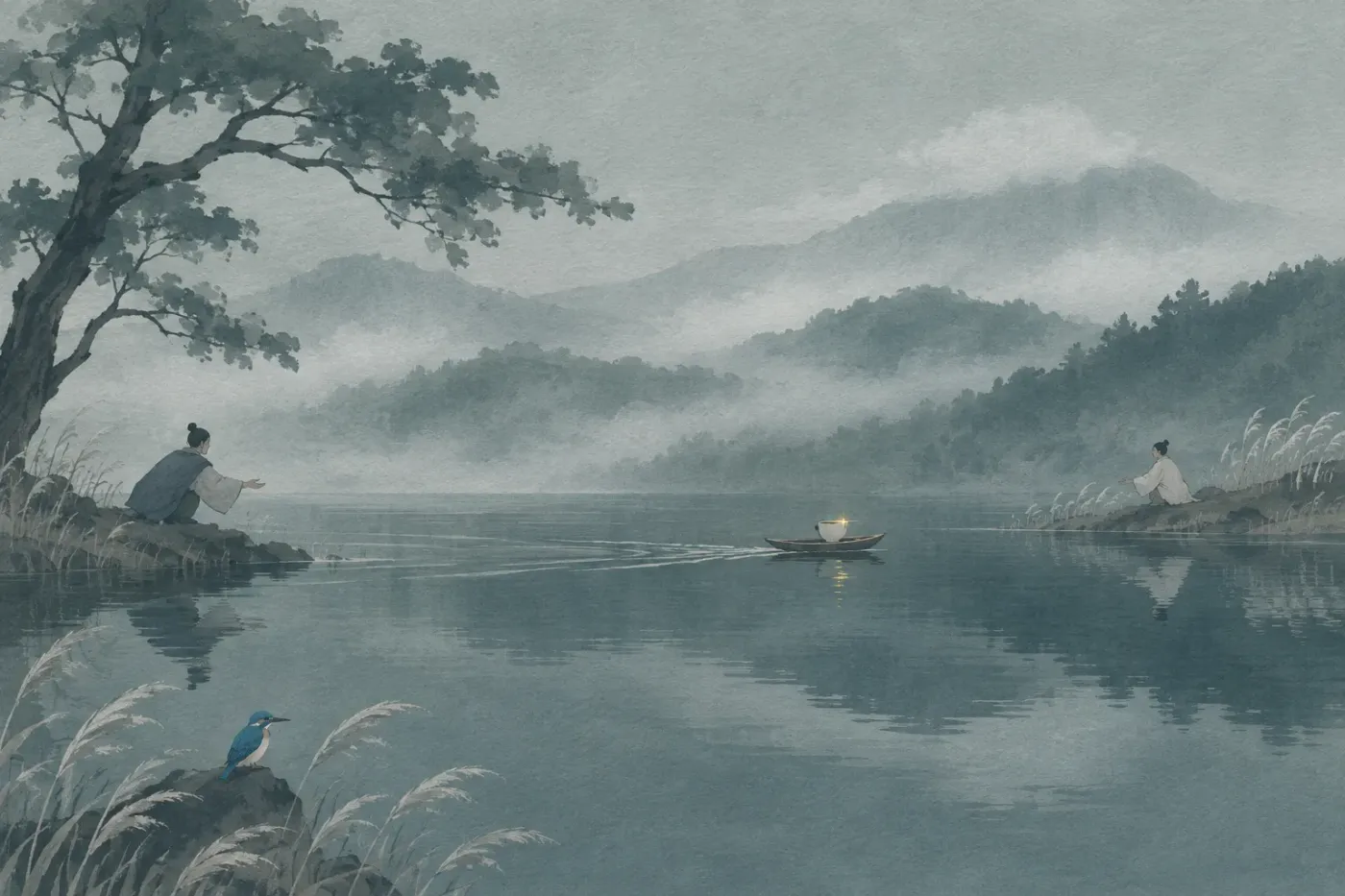
It was the end of a long month, and Miguel had almost nothing left. He counted the coins in his pocket at the counter of the café near the station: enough for one coffee, and not much more.
Behind him, an old man was searching his pockets, embarrassed, apologising to the girl at the till. He was a few coins short.
Miguel didn’t think. He put his coins on the counter. “For both,” he said.
Walking out into the cold morning with his coffee, he felt a strange thing. He had less money than ten minutes ago, and he felt richer than he had all month.
The river and the pond
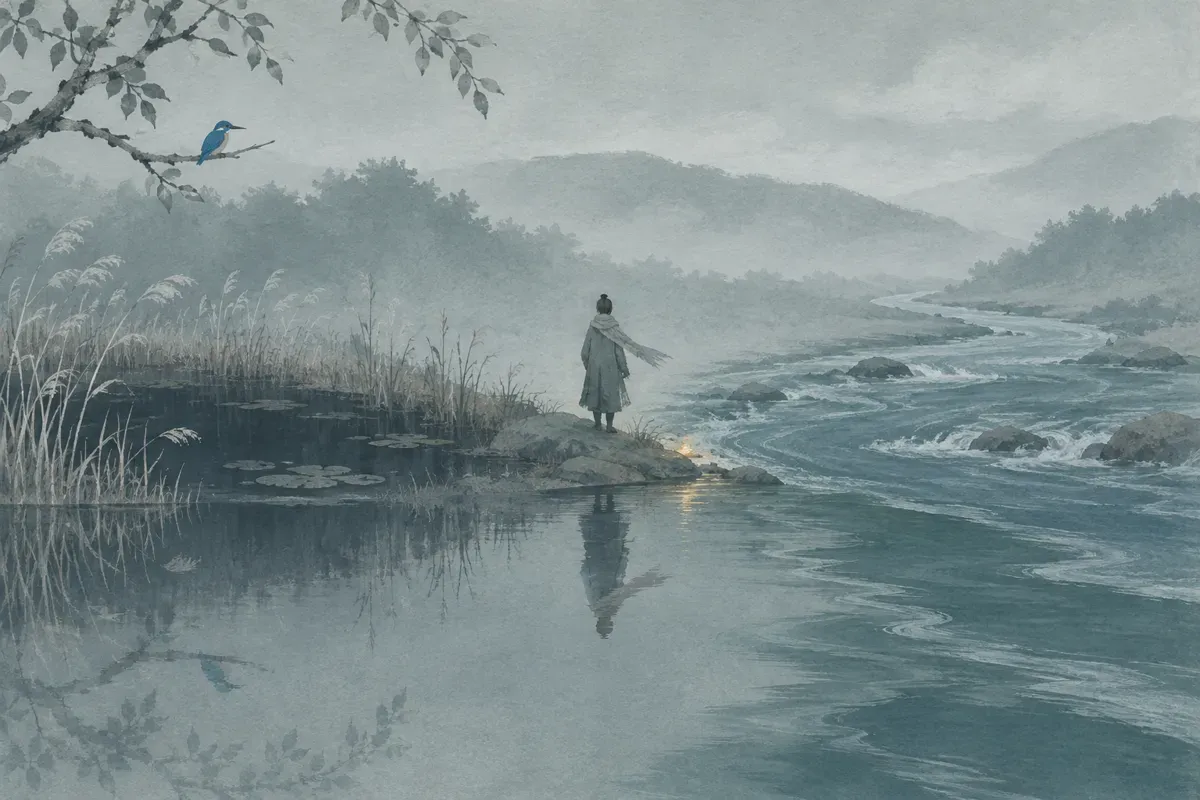
There are two kinds of water in the world.
Abundance is a river. You don’t keep it in a jar; it moves through you, and it only keeps moving while you let it out the other side. The moment you try to dam it, gripping what you have because you’re afraid there isn’t enough, the water stops coming in.
A closer lookAbundance is a river
We tend to picture abundance as a full barn: a quantity you pile up and guard. The trouble with that picture is that a barn is always one bad harvest from empty, and the person standing at the door lives in a low, constant alert. The more there is, the more there is to lose, and so the person with the fullest barn is often the one who sleeps least, listening for the sound of something going missing in the dark.
The river is a different way of living. A river is never “full.” It is moving. Its wealth is the passing of water, not the holding of it. That means you are not measured by what you have in reserve, but by how freely things pass through you: money, attention, kindness, ideas, time.
Look at your own week as a river. Where does it flow easily? Where does it pool and go still? Perhaps you spend lavishly on worry and never on joy. Perhaps you give your time to everyone but keep your praise locked away. Perhaps you hoard compliments you think about someone and never say.
Here is a practical way to feel the difference. Pick one thing you tend to hold tightly (a skill you never share, a thank-you you never say, a small sum you keep for “just in case”) and let a little of it move today. Pass on the recipe. Say the compliment. Put a coin in someone’s hand, or an hour in their day. Then notice what your body does: usually a little loosening, a lift, a sense of room.
That feeling is what the river is. You were never meant to be a reservoir, sitting still and guarding what you have, always afraid of the dry season. You were meant to be a place where life moves.
Giving as a statement
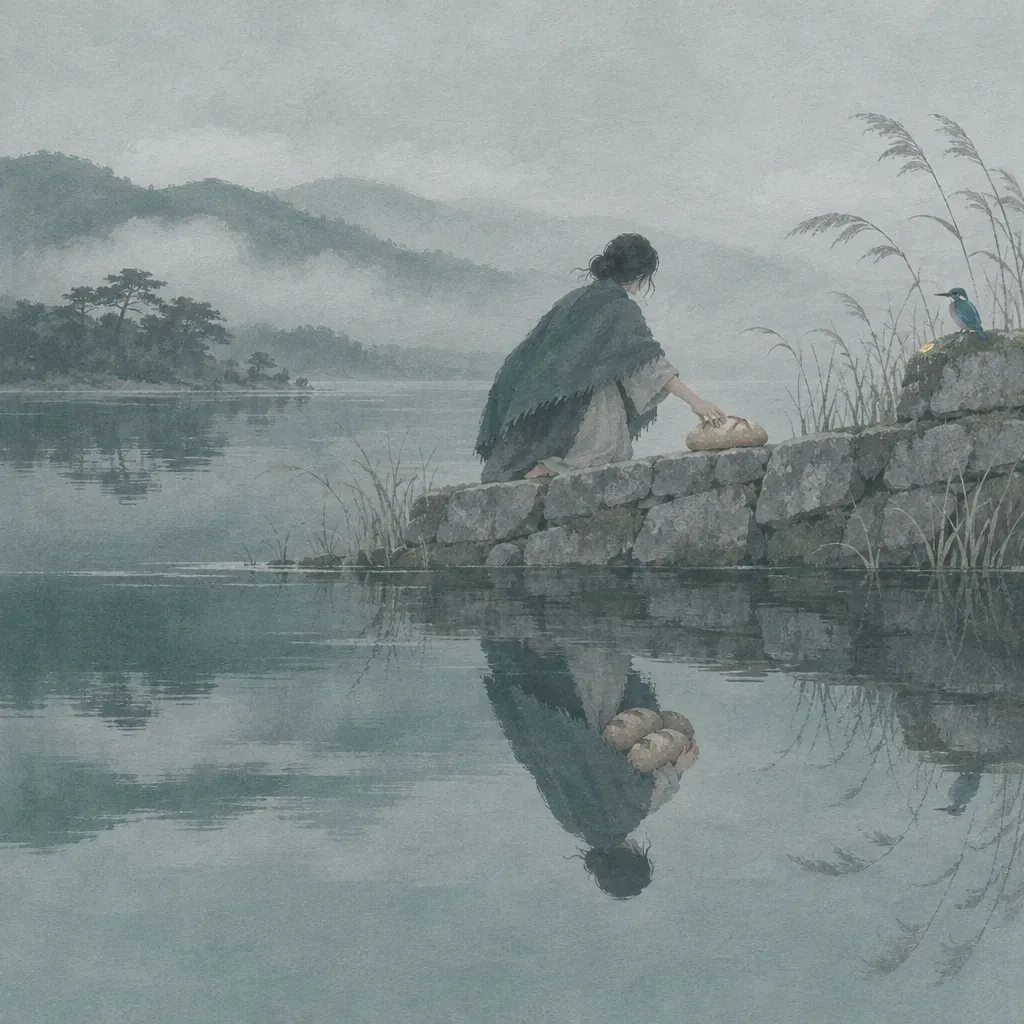
When Miguel paid for the old man’s coffee, he said, without words: I have enough that I can give. Not I’m rich, not I have plenty. Only that. Standing at the till with an empty pocket, that’s what he felt, and that’s what the mirror read.
You can’t give what you don’t have. So every gift is a small declaration. Give time, and you’ve said you have time. Give kindness, and you’ve said there’s kindness to spare.
A closer lookYou can't give what you don't…
Read this as the best news in the chapter. If giving requires that you have something, then every act of giving is proof that you do.
Picture a day when you feel empty. Your pocket is thin and your confidence is thin. Then someone needs directions, or a seat, or a minute of listening. You give it. In that moment, you had patience, a place to sit, a minute. You were not empty. You were someone with something to share, and your own body knows it. The mirror reads the gesture, not your bank balance.
This is why giving works as a fast reset. When you can’t change the circumstances, you can change the statement. “I have too little” is a sentence. “Here, I have enough to give you this” is a different sentence, and it comes with a different feeling.
Start where it is easy and honest. If money is tight, give what you can truly spare, and be generous with the things money cannot count: a message to someone who is struggling, a proper hearing for someone who rarely gets one, a hand with a heavy bag. Choose your richest currency today.
And give it as a fact, not as a performance. You don’t need anyone to notice. You are simply saying to yourself, in the clearest language there is, I am someone who has.
Do one small thing today. Then, when evening comes and the day is quiet, notice how rich you feel, and remember that nothing was added to your pocket.
Every gift is a sentence the mirror reads: I have enough to share.
Refusing out of fear says the opposite. I can’t afford to, I need everything I have. The mirror doesn’t judge that sentence; it shows you more of it.
Give what you want to receive
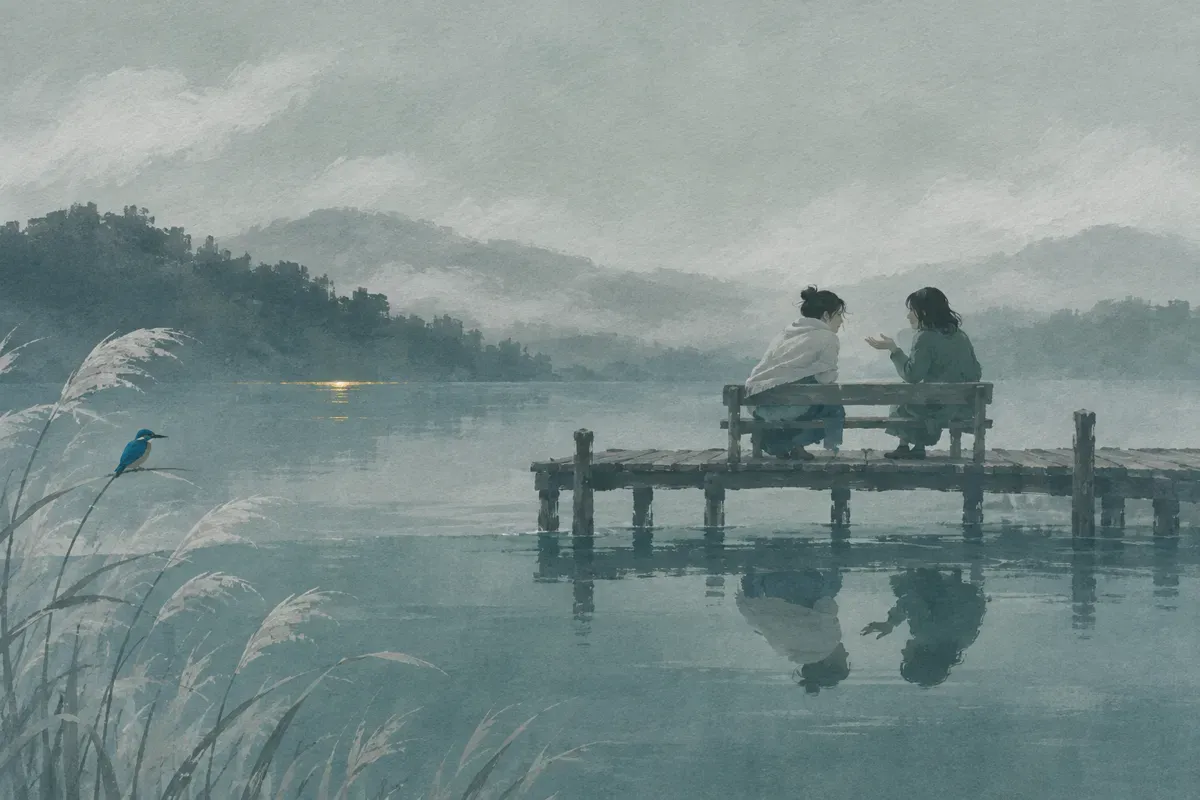
If you want more respect, give respect. If you want to be listened to, listen to someone all the way to the end of what they’re saying. You can only give from what you’re being, and what you’re being is what the mirror reflects.
Some people wait. When someone finally appreciates me, I’ll appreciate them. That’s waiting for the reflection to move first, and it never will. Give the thing you’re hungry for, and notice how quickly the hunger eases.
How to give
Give and forget it. A gift that waits to see what comes back is a loan, and the string you’ve tied to it pulls the water back into the pond. Give only what you can give with a light heart; if a big gift feels heavy, give a smaller one gladly. Try giving where nobody will ever know, because it’s very hard to do that without feeling quietly rich. And remember that money is one current among many: a long phone call or a lift to the airport flows out the same way.
Then let things in. This is the part people forget, and generous people forget it most. A river has to receive as well as give. If you wave away compliments and squirm when someone pays for your lunch, the river runs dry. Say thank you and mean it. Taking a gift gracefully is a gift to the person who gave it.
Giving is not losing yourself
Giving until you’re empty, or giving to people who only take, is a leak, and the river has nothing to do with it.
True giving comes from fullness, not from fear. If you notice you’re giving to buy someone’s approval, or giving until you’re resentful and exhausted, stop and fill yourself first, because a dry river can’t give anyone a drink.
A closer lookTrue giving comes from fullness, not…
This sentence keeps the whole chapter honest. Without it, “give more” can become a trap, especially for people who already give too much.
There is a kind of giving that is really buying. You give so they won’t leave, so they’ll approve, so you won’t be the difficult one. It looks generous, but it is paid for with your own tiredness, and underneath it hums a quiet bill: I gave, so now you owe me. The mirror reads the bill, not the gift.
Fear-giving has a recognisable feel. Tight. Your chest closes as you say yes, your mind is already counting the cost, and some small, honest part of you is saying no. You rehearse the resentment on the way home. You feel smaller afterwards, not larger. If that is the pattern, the loving step is to give less, and to give to yourself first. A river with nothing coming in has nothing to pass on.
Try a short test before you give. Ask: Can I do this gladly? If yes, do it with a full heart. If no, find the smaller version you can do gladly, or say a kind “not this time.” Both are real gifts. A clear no is not a refusal of generosity. It is the thing that keeps the water clean.
Also practise receiving. Let the compliment land. Let the friend pay. Say “thank you” and stop there. Receiving is a gift to the giver and the other half of the river’s movement.
Give from what overflows. There is always more.
What came back
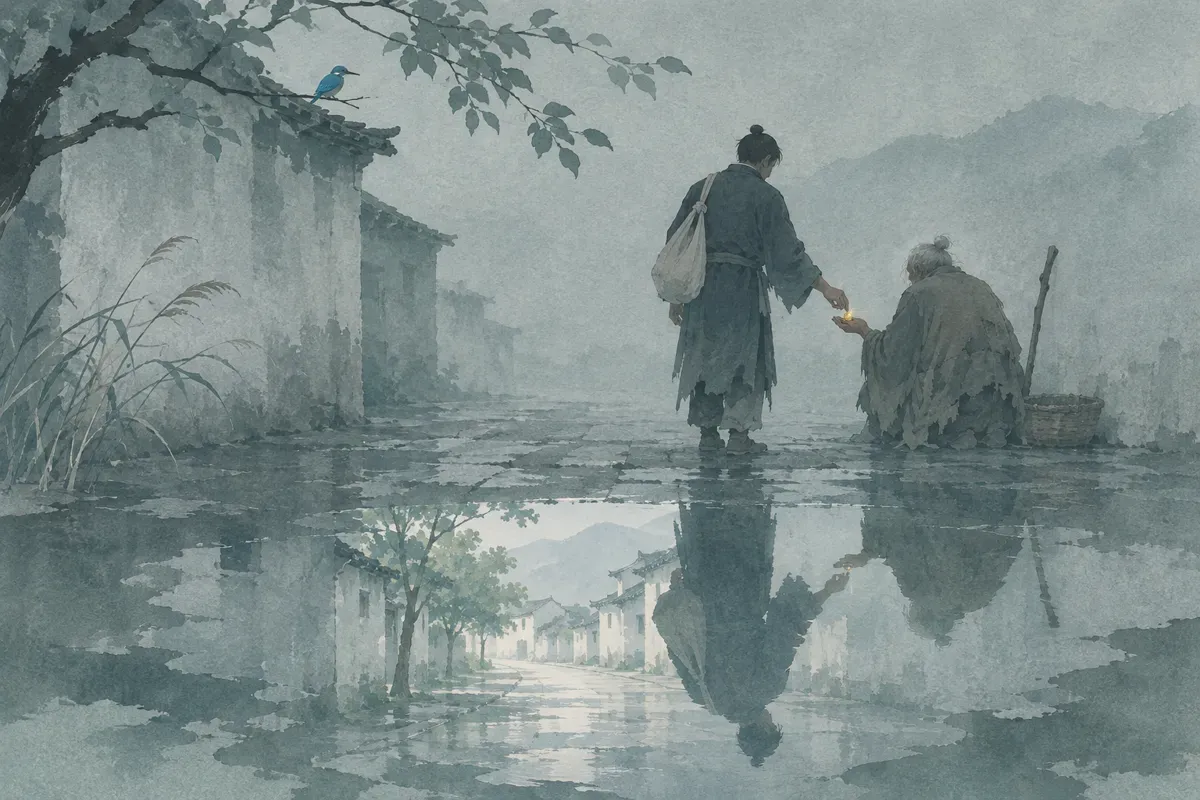
Miguel never saw the old man again. He didn’t expect to. But for the rest of that month, something odd happened. A client paid an overdue invoice. Then a friend insisted on buying lunch, and in the pocket of a winter coat he found a note he’d forgotten about.
Maybe it was coincidence. Miguel didn’t think so. He thought it was a river, remembering which way it flowed.
Today, give one thing you’d like more of, and then let it go.